
Samer Choucair: Geopolitical Volatility Is Reshaping Energy-Investment Priorities Across the Gulf
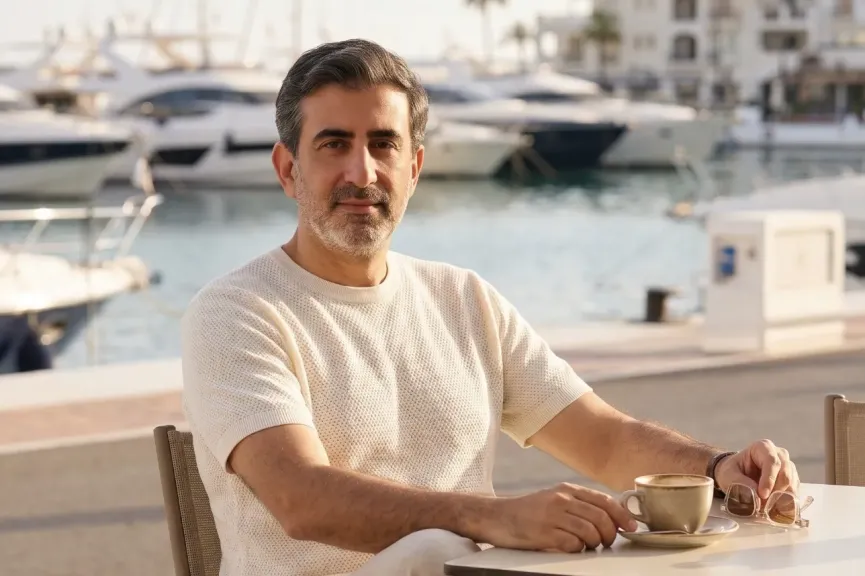
Entrepreneur Samer Choucair said the collapse of the US-Iran ceasefire agreement and the renewed escalation of regional tensions are reshaping the investment-risk landscape across energy markets.
He noted that institutional investors are placing greater emphasis on asset resilience and the ability to withstand geopolitical shocks when making long-term capital-allocation decisions.
Samer Choucair explained that renewed pressure on energy markets following the breakdown of temporary understandings between the United States and Iran has led investors to reprice risk premiums across the oil sector.
Concerns have intensified around the security of energy supplies and shipping through vital maritime corridors, particularly the Strait of Hormuz.
“Markets are not merely responding to changes in oil prices,” Samer Choucair said. “They are reassessing the geopolitical risks surrounding supply chains, energy systems, and infrastructure. Institutional investors now regard resilience as a fundamental component of asset valuation.”
Choucair noted that the return of regional tensions after a brief period of diplomatic optimism highlights the importance of incorporating geopolitical scenarios into investment models.
Short-term expectations of market stability can change rapidly when security developments threaten global energy flows.
He added that higher oil prices resulting from the return of a geopolitical risk premium provide fiscal support to producing countries.
At the same time, they increase uncertainty for companies and investors by raising insurance, shipping, and operational-planning costs.
Samer Choucair emphasized that Gulf markets are better equipped to manage this volatility than they were during previous periods, supported by substantial financial reserves and economic-diversification programmes that reduce their complete dependence on the oil cycle.
Choucair explained that Saudi Vision 2030 represents a model for converting oil revenue into long-term investment across diversified sectors, including tourism, logistics, manufacturing, renewable energy, and artificial intelligence.
“The ability to separate capital flows from the short-term oil cycle has become one of the most important indicators of investment maturity in the region,” Samer Choucair said.
“Investors are seeking real assets capable of creating sustainable value even in volatile geopolitical environments.”
Choucair noted that sovereign wealth funds and institutional investors are reassessing their portfolios by increasing their focus on infrastructure, energy, private credit, and projects supported by strong governance frameworks.
He explained that private credit and asset-based financing have become increasingly attractive in the current environment because certain instruments offer the potential for relatively stable returns while reducing direct exposure to daily volatility in commodity markets.
Choucair added that infrastructure and energy projects benefiting from government and strategic support represent some of the most important channels for attracting long-term capital, particularly as Gulf countries continue implementing their economic-transformation plans.
Samer Choucair emphasized that the digital economy, artificial intelligence, and clean energy will remain central pillars of diversification strategies because they offer growth opportunities that are relatively independent of oil-price fluctuations.
“Investors who treat the region as a single market overlook a significant part of the investment picture,” Samer Choucair said.
“Distinguishing between direct geopolitical risks and the structural opportunities created by diversification programmes has become essential for making more precise capital-allocation decisions.”
Choucair noted that certain energy and defence sectors in global equity markets may benefit from higher geopolitical risk.
By contrast, sectors sensitive to inflation and interest rates could face additional pressure if energy prices remain elevated.
Samer Choucair explained that Gulf debt markets continue to attract international investors because of strong fiscal positions, high liquidity, and favourable credit ratings.
He added that sound governance and disciplined management of major projects remain critical factors in attracting foreign capital.
Choucair noted that future risks extend beyond oil prices and include the possibility that disruption could spread to other trade corridors, affecting shipping costs and global supply chains.
He emphasized that the current environment creates opportunities for investors focused on long-term solutions, including resilient infrastructure, improved energy efficiency, and technologies that reduce dependence on high-risk regions.
“Geopolitical volatility does not eliminate structural trends,” Samer Choucair said. “It accelerates the need to build investment portfolios capable of withstanding different economic cycles and periods of crisis.”
Choucair explained that the next phase will bring greater interest from sovereign wealth funds and asset managers in assets combining growth, stability, and resilience against external risks.
Capital will continue to be reallocated toward economies with clear and credible diversification strategies.
Concluding his remarks, Samer Choucair said long-term investment in the Saudi and wider Gulf economies remains a strategic opportunity for institutional investors, provided that geopolitical risks are managed through an integrated framework combining sound governance, disciplined capital allocation, and a focus on assets capable of generating sustainable value.