
Samer Choucair: The 2026 World Cup Has Redirected Capital Flows Toward Sport as an Institutional Asset Class
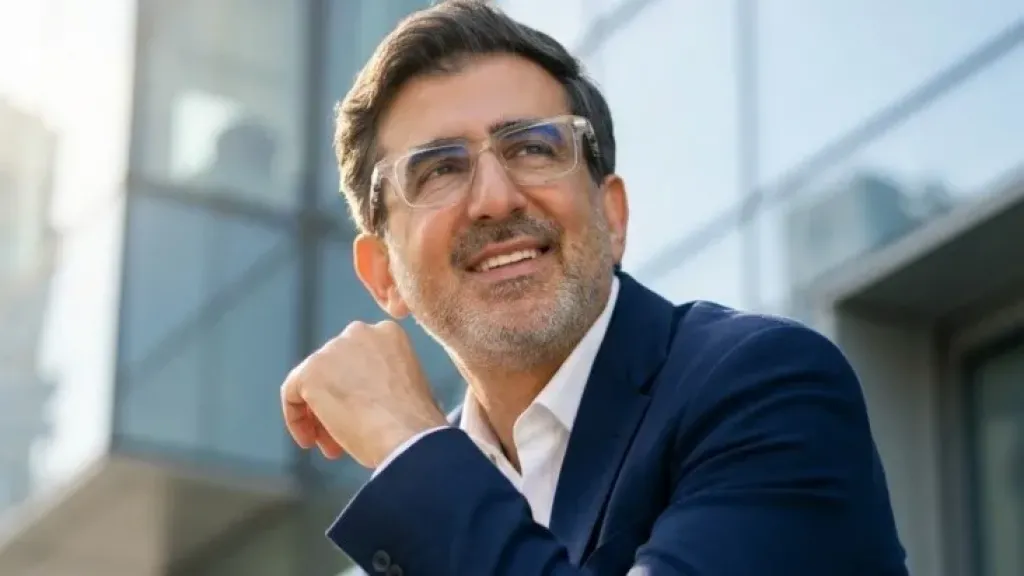
Entrepreneur Samer Choucair said the conclusion of the 2026 FIFA World Cup, hosted by the United States, Canada, and Mexico over 39 days and featuring 104 matches, marked more than the end of the largest sporting event in modern history.
It confirmed the transformation of global sport into an investable asset class capable of attracting long-term institutional capital.
Choucair explained that the tournament, the first to feature 48 national teams, generated record revenue for FIFA and attracted more than 6.8 million spectators.
Its impact extended directly to media, sponsorship, tourism, and infrastructure markets, while also influencing economic-diversification strategies, particularly across Gulf economies.
He added that these developments came as global investment institutions were searching for sources of return with lower correlation to interest-rate cycles and conventional equity markets.
The tournament demonstrated that major sporting events can generate diversified cash flows through broadcasting rights, ticket sales, sponsorship, and digital experiences, making them more comparable with entertainment infrastructure assets than with seasonal competitions.
Economic impact on host markets
Samer Choucair said the 2026 World Cup generated between $8.9 billion and $13 billion in revenue for FIFA across the tournament cycle.
This was supported by ticket sales exceeding $3 billion, broadcasting rights approaching $4 billion, and record sponsorship agreements.
He explained that the direct economic impact varied across the host countries.
Mexico’s Ministry of Tourism estimated the tournament’s direct tourism impact at approximately $2.4 billion and its total economic contribution at around $3.7 billion, while more than 130,000 temporary jobs were created.
Choucair added that the United States recorded an estimated $20 billion in consumer spending across host cities, according to banking-sector analysis.
However, the tournament’s overall contribution to gross domestic product remained limited at approximately 0.1 percentage points on a quarterly basis.
He noted that this divergence reflects the nature of major sporting tournaments as short-term demand shocks whose effects are concentrated in tourism, hospitality, transportation, and services rather than as drivers of structural economic growth.
Samer Choucair emphasized that short-term accommodation platforms generated more than $1.3 billion in revenue across host cities, while cross-border transactions through payment networks increased by approximately 20%.
He said this demonstrated that the greatest economic value lies in the repricing of assets connected to live experiences and digital content rather than in the event’s direct contribution to gross domestic product.
Media and sponsorship lead the sports-investment wave
Samer Choucair explained that expanding the tournament to 104 matches increased the number of fixtures by approximately 47% compared with the 2022 World Cup in Qatar.
This pushed media rights to record levels, although it reduced the relative value of individual matches in certain Asian and European markets because of time-zone differences.
He added that the American and Latin American markets benefited more significantly from favourable scheduling, strengthening partnerships between traditional broadcasting networks and digital streaming platforms.
Choucair noted that private equity firms and family offices continued directing capital toward sports clubs, youth platforms, and infrastructure.
Transactions involving sports teams have reached record levels in recent years, while minority investments have become increasingly popular because they provide exposure to media and sponsorship revenue without requiring investors to assume the risks of full ownership.
“Institutional investors increasingly prefer assets that combine long-term contractual cash flows, such as broadcasting rights, with variable revenue from hospitality and digital experiences,” Samer Choucair said.
“This has transformed sport from an emotionally driven asset into an investment category that can be assessed through discounted cash-flow models.”
Saudi Arabia faces a strategic opportunity ahead of the 2034 World Cup
Samer Choucair said the conclusion of the 2026 World Cup came at a strategically important time for Saudi Arabia as the Kingdom prepares to host the 2034 tournament, the first expanded 48-team World Cup to be staged by a single country.
He explained that sport has become one of the central pillars of the Public Investment Fund’s strategy, alongside expanding investment in sporting infrastructure ahead of Riyadh Expo 2030 and the 2034 World Cup.
Choucair added that Saudi Arabia is currently developing or renovating 15 stadiums across five cities and constructing more than 130 training facilities.
Several projects, including Aramco Stadium in Al Khobar, are expected to attract private-sector investment through long-term leasing structures that can strengthen government liquidity.
He noted that these initiatives are aligned with the objectives of Saudi Vision 2030 to diversify income sources and increase the contribution of entertainment and tourism to the national economy.
Samer Choucair emphasized that the 2026 World Cup demonstrated the importance of integrating the sporting event with supporting sectors such as hospitality, transportation, digital content, and supporter experiences.
Saudi Arabia has an exceptional opportunity to develop sports assets capable of generating sustainable returns after the tournament, provided that stadiums and surrounding districts are designed as mixed-use centres combining entertainment, commerce, and real estate rather than as seasonal facilities.
Investment risks and growth opportunities
Samer Choucair explained that the investment appeal of sports assets is accompanied by several challenges.
Elevated valuations could lead to price corrections if growth in media rights slows or hosting costs rise.
He added that excessive reliance on government financing in certain host markets could create long-term fiscal risks.
However, the tournament also created new investment opportunities in sports technology, including digital analytics and interactive broadcasting, as well as in women’s sport, youth competitions, and digital fan platforms.
Choucair said institutional capital is likely to continue flowing toward these sectors in the coming years as sovereign wealth funds and asset managers seek greater portfolio diversification beyond traditional assets.
He added that Gulf markets are also likely to experience increased public-private partnership activity in sports-infrastructure projects, supporting the financing of the 2034 World Cup without placing excessive pressure on public budgets.
The future of sport as an investment asset class
Samer Choucair expects sport to maintain its position as an attractive asset class in the years ahead, supported by relatively stable and inflation-resistant returns, population growth in emerging markets, and rising global expenditure on entertainment.
He explained that one of the most important lessons the 2026 World Cup offered Saudi Arabia and other Gulf countries was the need to transform a sporting event into a long-term development project capable of creating sustainable economic value after the competition ends.
Choucair added that intelligent investors will not focus solely on the valuations of major sports clubs.
They will increasingly direct capital toward platforms combining content, infrastructure, and live experiences while maintaining strong standards of governance and financial sustainability.
Concluding his remarks, Samer Choucair said the closing of the 2026 World Cup represents the beginning of a new phase in the global sports economy.
Attention will now turn to whether markets can convert the tournament’s commercial momentum into sustainable capital flows.
He emphasized that investors who recognize these structural changes early will be best positioned to capture opportunities across the sports sector during the coming decade.