
Why Are the World’s Leading Billionaires Investing in the FIFA Ecosystem? Samer Choucair Explains
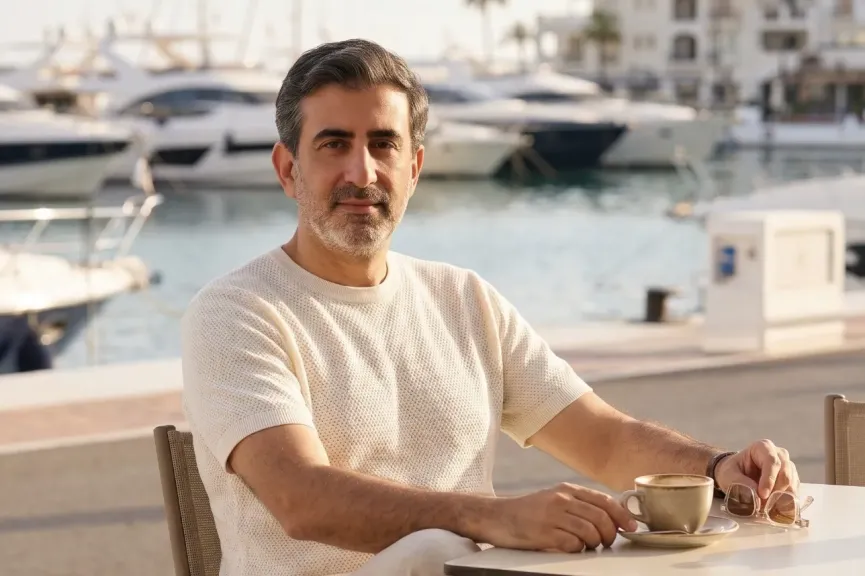
Entrepreneur Samer Choucair said the FIFA World Cup moved beyond its traditional identity as a sporting event years ago, but the 2026 tournament demonstrated more clearly than ever how it has become an integrated economic platform capable of redirecting global capital across media, technology, manufacturing, commerce, and the digital economy.
Choucair explained that the involvement of several of the world’s wealthiest business figures and their companies in rights agreements or partnerships with FIFA is not a coincidence. It reflects the increasingly important position of sport within the investment portfolios of major global financial institutions.
He added that institutional investors no longer regard sporting tournaments merely as marketing expenses or advertising opportunities. They increasingly view them as strategic assets capable of generating recurring cash flows, strengthening corporate market value, and opening new markets to global brands.
Sport becomes an investment asset class
Samer Choucair said recent years have witnessed sport’s gradual transformation from an entertainment sector into a diversified economic industry connected to advertising, television broadcasting, e-commerce, artificial intelligence, data analytics, travel, hospitality, and financial services.
He explained that FIFA has become one of the world’s most powerful commercial platforms after attracting companies from a broad range of industries, including beverages, automobiles, sportswear, technology, media, and logistics.
As a result, any partnership with FIFA provides companies with direct access to a global audience that would be difficult to reach through conventional marketing channels.
Choucair emphasized that the investment value of major tournaments is no longer limited to the sporting event itself. It now extends across an integrated economic ecosystem from which dozens of industries benefit simultaneously.
Why are major investors entering the FIFA ecosystem?
Samer Choucair explained that the list of business leaders whose companies or investments are connected to FIFA partnerships demonstrates the diversity of the economic value created by the organization.
He noted that US investor Warren Buffett has indirect exposure through Berkshire Hathaway’s investment in Coca-Cola, one of FIFA’s longest-standing commercial partners.
Rupert Murdoch is among the most prominent beneficiaries of the television-broadcasting rights economy, while Egyptian businessman Nassef Sawiris is connected through his investment in adidas, the official supplier of match balls and sporting equipment.
Choucair also referred to Michael Rubin through Fanatics, which manages official tournament merchandise and retail operations; the Chung family, associated with Hyundai and Kia; Yang Yuanqing, chairman of official technology partner Lenovo; and Brian Roberts through Comcast, which owns media platforms holding broadcasting rights in the US market.
He emphasized that the common factor among these investors is not simply an interest in football. It is their investment in a global economic ecosystem with an exceptional ability to reach billions of consumers around the world.
The tournament economy extends beyond traditional sponsorship
Samer Choucair said the economic value of partnerships with major sporting tournaments is no longer measured solely by the level of media exposure they generate.
It is now connected to a much wider range of strategic objectives, including expanding market share, strengthening brand loyalty, developing e-commerce, collecting and analyzing consumer data, supporting direct sales, and building relationships with governments and new markets.
Choucair added that this transformation explains the growing presence of technology companies, digital-service providers, and e-commerce platforms within the FIFA ecosystem, after sports sponsorship was previously concentrated mainly among beverage and automotive companies.
Media has become the highest-value asset
Samer Choucair explained that television-broadcasting rights remain one of the largest sources of revenue in the global sports economy.
However, competition is no longer limited to traditional broadcasters. It now includes digital platforms and live-streaming services.
He added that major tournaments have become strategic tools for attracting and retaining subscribers, strengthening the interest of leading media organizations in broadcasting rights and tournament-related partnerships.
Choucair emphasized that the true economic value does not lie in the match alone, but in controlling the entire content cycle—from media production and advertising to subscriptions, data, and event-related e-commerce.
Technology becomes part of the business model
Samer Choucair said the presence of companies such as Lenovo among FIFA’s official partners reflects a significant change in the structure of the sports economy.
Technology has become essential to operating major tournaments through digital infrastructure, data analytics, cybersecurity, cloud computing, artificial intelligence, data-centre operations, and logistics management.
Choucair added that the growing use of artificial intelligence to analyze sporting performance, manage audiences, and create content has transformed major tournaments into practical testing grounds for future technologies.
Nassef Sawiris as a model of indirect investment
Samer Choucair noted that Egyptian businessman Nassef Sawiris represents a clear example of indirect investment in the sports economy.
His significant stake in adidas gives him exposure to one of the world’s largest sporting ecosystems without requiring direct ownership of a football club.
Choucair added that institutional investors are increasingly interested in this model because it links capital to companies with diversified revenue streams rather than making returns dependent on the performance of a single club or tournament.
He emphasized that this type of investment provides a better balance between growth opportunities and risk management, allowing investors to benefit from the expansion of the sports economy while reducing their dependence on sporting results.
Institutional investment reshapes the sports economy
Samer Choucair said private equity firms, sovereign wealth funds, and asset managers increasingly regard sport as a long-term sector linked to population growth, the digital economy, rising consumer expenditure, and the continued expansion of broadcasting rights and e-commerce.
He explained that recent years have seen significant growth in acquisitions involving sports clubs, sports-data companies, broadcasting platforms, and sports-technology businesses, demonstrating that the sports economy now extends far beyond competition inside stadiums.
Saudi Arabia and the Gulf at the centre of the global transformation
Samer Choucair said this transformation is directly aligned with the objectives of Saudi Vision 2030, which has positioned sport as a principal instrument for diversifying the economy, attracting investment, developing tourism, and improving quality of life.
He explained that Saudi Arabia is building an integrated sports ecosystem that includes hosting international events, developing infrastructure, and attracting global companies.
This creates investment opportunities across hospitality, transportation, media, sports technology, and event management.
Choucair added that Gulf economies have a substantial opportunity to benefit from this growth if they focus on developing complete sports-related value chains incorporating technology, manufacturing, logistics, finance, and innovation rather than limiting their role to hosting tournaments.
How investors interpret these changes
Samer Choucair explained that the involvement of major investors in the FIFA ecosystem does not represent investment in sport alone.
It reflects investment in companies that benefit from strong global brands, large consumer bases, recurring revenue, and the capacity for international expansion.
He added that long-term investors seek platforms capable of generating sustainable cash flows across different economic cycles, which explains the continuing interest of financial institutions in companies connected to major sporting events.
A strategic vision for the future
Concluding his remarks, Samer Choucair said: “The sports economy has entered a new phase in which it has become part of the global investment infrastructure rather than merely an entertainment sector.”
He noted that the intersection of media, technology, e-commerce, data, manufacturing, and intellectual-property rights has transformed major tournaments into integrated economic platforms attracting institutional capital from around the world.
Choucair added that investors who focus only on match results may overlook the larger opportunity, because the greatest value is created by companies developing the commercial and technological infrastructure surrounding the sporting event.
He emphasized that continued growth in institutional investment could make sport one of the most attractive asset classes for capital seeking long-term growth in the years ahead, rather than merely temporary marketing returns.