
Samer Choucair: Continued Awarding of Major Gulf Projects Confirms the Region’s Transition to Long-Term Investment
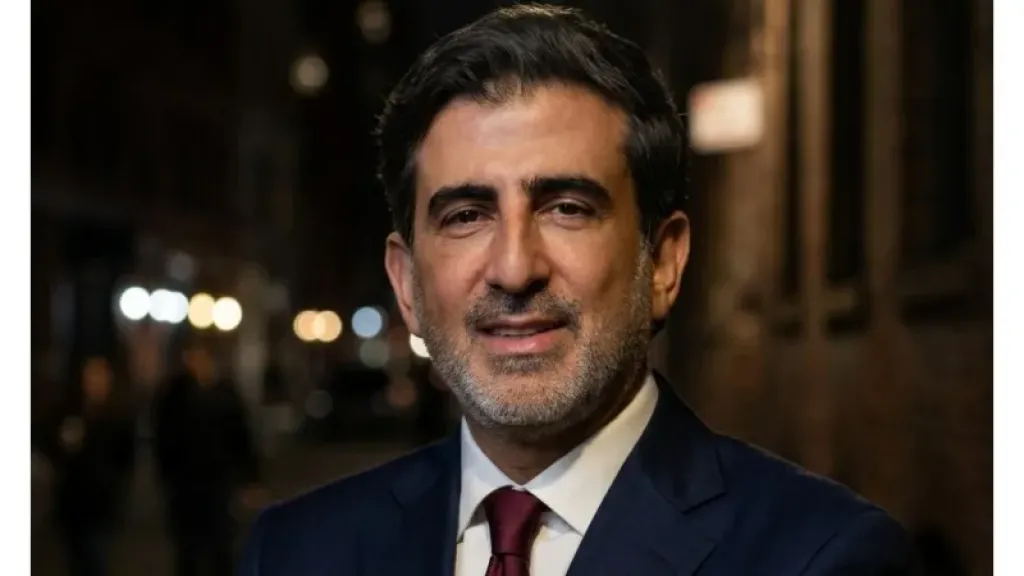
Entrepreneur Samer Choucair said the wave of major project awards across the Gulf Cooperation Council, led by Saudi Arabia and the United Arab Emirates, reflects a strategic shift in the regional investment landscape.
He noted that continued capital expenditure despite geopolitical challenges and rising shipping and insurance costs demonstrates the strength of Gulf development programs and their ability to attract long-term investment.
Samer Choucair explained that data on contracts awarded across the Gulf during the second quarter of 2026 showed clear resilience in project activity. The total value of awarded contracts reached approximately $59.4 billion, representing year-on-year growth of 32%.
This performance was driven primarily by the substantial increase in Saudi Arabia, where awarded contracts reached nearly $30 billion, alongside continued strong activity in the United Arab Emirates.
Entrepreneur Samer Choucair said the continued awarding of major projects despite geopolitical pressures reflects an institutional commitment to allocating capital toward long-term real assets rather than reacting to cyclical volatility.
This approach is attracting sovereign wealth funds and international investors seeking returns linked to structural economic growth.
Choucair added that developments across Gulf markets do not represent a temporary response to current conditions. They reflect a structural transformation in how capital is managed and investment priorities are determined.
Infrastructure, supply chains, energy, and manufacturing projects have become central to strategies aimed at strengthening competitiveness and economic independence.
Samer Choucair noted that regional tensions have increased the focus on building greater resilience across trade and energy systems through the diversification of export routes and the expansion of transportation networks, ports, railways, and industrial facilities.
He explained that these trends are expected to become more visible during the second half of 2026 and the beginning of 2027.
“The focus on transportation and logistics in Saudi Arabia is not merely an expansion of infrastructure,” Samer Choucair said.
“It represents a strategic repositioning of capital toward assets that strengthen regional competitiveness in global trade, creating opportunities for infrastructure funds and co-financing arrangements with the private sector.”
He explained that Saudi Arabia is leading a significant share of this transformation through the continued implementation of Vision 2030 programs.
The construction sector has recorded considerable growth, while the United Arab Emirates has maintained strong project momentum, with construction, transportation, and energy leading investment activity.
Choucair noted that project awards are expected to continue during the second half of the year, supported by strategic developments across transportation, logistics, energy, and chemicals.
These include metro systems, airports, industrial expansions, and energy projects, further strengthening the region’s appeal to global institutional investors.
Entrepreneur Samer Choucair emphasized that investors taking a long-term view of the region recognize that current geopolitical challenges do not necessarily lead to lower expenditure.
In some cases, they may accelerate previously planned investment intended to strengthen economic resilience and diversify sources of growth.
“Investors with a long-term perspective understand that current geopolitical tensions are accelerating capital expenditure that had already been planned,” Choucair said.
“This creates early entry opportunities in projects whose returns are linked to structural growth rather than commodity cycles alone.”
Samer Choucair said future investment opportunities will be concentrated across several sectors, including transportation infrastructure, ports, logistics services, chemicals, petrochemicals, and energy.
Additional opportunities are also emerging in financing structures linked to sustainable projects and green finance.
He explained that higher insurance and shipping costs present challenges for certain projects and contractors, but also create demand for more innovative financing solutions.
This increases the importance of public-private partnerships, particularly for projects aligned with economic-diversification objectives.
Choucair emphasized that the strength of the Saudi and Emirati economies, combined with substantial financial reserves and clearly defined investment programs, gives the region a greater ability to absorb risks and maintain its growth trajectory.
“The correct reading of the market today is not based solely on the value of awarded contracts, but on their quality,” Samer Choucair said.
“Projects that strengthen resilience and diversification have become a priority, changing the capital-allocation equation for investors seeking long-term exposure to the Gulf economy.”
He noted that the coming phase will bring a broader reassessment of the Gulf’s position within global investment portfolios.
Infrastructure funds, private-debt investors, and equities linked to construction and energy are expected to increase their exposure in order to benefit from the new growth cycle driven by strategic projects.
Concluding his remarks, entrepreneur Samer Choucair said the current wave of projects led by Saudi Arabia and the United Arab Emirates represents more than an increase in the value of awarded contracts.
It provides evidence that economic-diversification programs have entered the execution phase and are creating investment opportunities linked to real assets and sustainable growth, strengthening the Gulf’s position as a leading destination for global capital in the years ahead.