
Samer Choucair: Competition Between OpenAI and xAI Reflects a Structural Transformation in the Artificial Intelligence Industry
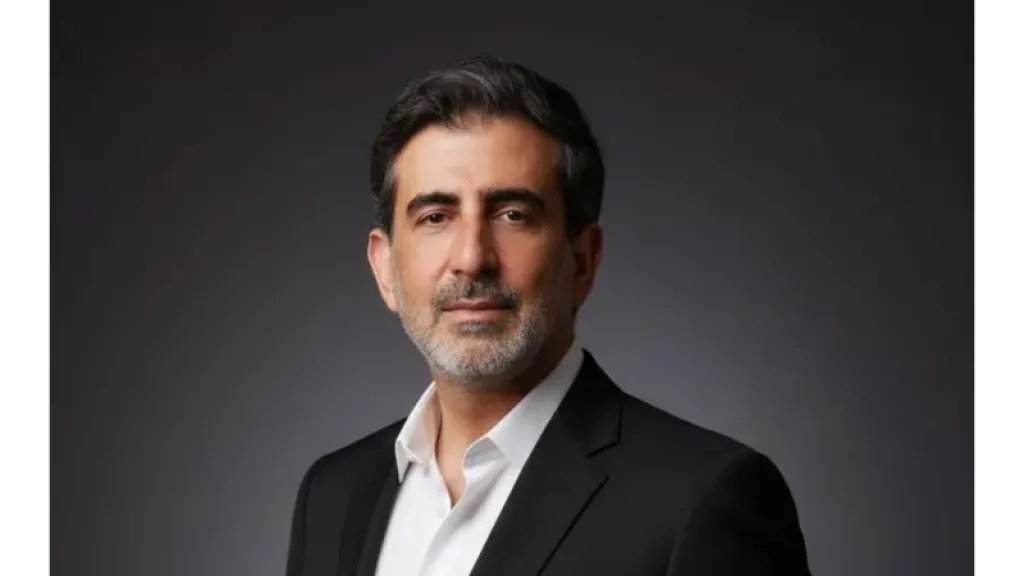
Entrepreneur Samer Choucair said the intensifying competition among major artificial intelligence companies, led by OpenAI and xAI, reflects a profound transformation in the nature of the sector.
He noted that the current phase is no longer limited to a race to develop advanced AI models. It now encompasses a broader struggle over digital infrastructure, computing capacity, strategic partnerships, and business models capable of attracting long-term capital.
Samer Choucair explained that the public tensions among artificial intelligence executives during July 2026 came at a time when the industry was experiencing unprecedented investment inflows and record valuations.
This means that developments involving governance, strategy, and relationships among founders have become increasingly influential in institutional investment decisions.
He noted that the artificial intelligence industry is moving from a period of experimental growth into a phase of broad institutional competition.
The ability to secure computing resources, gain access to advanced semiconductors, build data centers, and establish long-term partnerships with major technology companies has become critical in determining the eventual market leaders.
“This dynamic reflects a shift in institutional capital toward assets that combine technological innovation with governance that can be assessed and monitored,” Samer Choucair said.
“Personal tensions among corporate leaders may create short-term volatility in private-company valuations, but they also highlight the need to diversify portfolios rather than depend excessively on a single participant.”
Choucair explained that competition among the sector’s different models reflects two parallel investment approaches.
The first is based on rapid commercial expansion and integration with the global technology ecosystem, while the second emphasizes technological independence, long-term infrastructure, and the development of alternative models.
He emphasized that institutional investors are increasingly focused on companies’ economic fundamentals, including their ability to generate sustainable revenue, establish genuine competitive advantages, and manage regulatory risks, rather than relying solely on brand strength or media momentum.
Samer Choucair added that the elevated valuations of artificial intelligence companies require investors to conduct deeper analysis of future value creation, particularly given the substantial investment required in energy, data centers, and semiconductor supply chains.
He noted that capital is gradually shifting toward sectors supporting artificial intelligence growth, including digital infrastructure, the energy required to operate data centers, advanced manufacturing, and cloud services.
These sectors represent essential components in the development of the global digital economy.
“Intelligent capital does not search only for the companies with the best models,” Samer Choucair said.
“It also looks for the companies controlling the infrastructure that allows those models to scale and generate sustainable returns.”
Choucair explained that global markets could experience further mergers and acquisitions across the technology sector during the next phase, with investors increasingly favoring companies possessing transparent ownership structures, strong governance, and the ability to adapt to regulatory change.
He noted that sovereign wealth funds and global asset managers are paying greater attention to the risks associated with excessive dependence on individual artificial intelligence companies, particularly as strategic relationships between major technology businesses and infrastructure providers become more important.
In the context of the Gulf economy, Samer Choucair emphasized that the current transformation of the artificial intelligence sector is aligned with the region’s efforts to build innovation-driven digital economies, particularly under the objectives of Saudi Vision 2030.
He explained that investment in artificial intelligence and digital infrastructure forms an important part of the Kingdom’s economic-diversification strategy.
Developing advanced data centers and strengthening domestic technological capabilities could reinforce the region’s position as a hub for the digital economy.
Choucair added that Gulf investors have a strategic opportunity to participate in this new growth cycle by investing in companies and technologies capable of delivering genuine value, while maintaining a strong focus on governance and operational sustainability.
Samer Choucair emphasized that future investment opportunities will increasingly concentrate on commercial applications of artificial intelligence across manufacturing, logistics, healthcare, and energy, where the technology can move beyond experimentation and become a direct driver of productivity.
He noted that the principal risks include potential valuation pressure on companies that fail to convert substantial investment into stable cash flows, alongside regulatory risks and the possible effect of internal disputes on commercial partnerships.
“Long-term investors should evaluate companies’ ability to generate stable cash flows from commercial artificial intelligence applications rather than depending on successive financing rounds,” Samer Choucair said.
“Intelligent capital allocation requires balancing exposure to high-growth sectors such as the digital economy with positions in defensive assets such as energy and essential commodities.”
Choucair noted that competition among different artificial intelligence business models will continue during the next phase, with the possible emergence of new alliances linking technology companies, energy and infrastructure providers, and government institutions.
Concluding his analysis, entrepreneur Samer Choucair said the current competition among artificial intelligence giants, despite appearing in the form of personal confrontations, reflects a broader restructuring of global technology value chains.
He explained that investors best positioned to benefit from the next phase will be those relying on data and economic fundamentals rather than short-term noise.
“Artificial intelligence will become one of the most important drivers of global growth over the next decade,” Samer Choucair concluded.
“However, sustainable returns will go to investors capable of understanding the relationship between innovation, infrastructure, governance, and long-term capital allocation.”