
Samer Choucair: The AI-Powered Creator Economy Is Reshaping Investment in Digital Assets
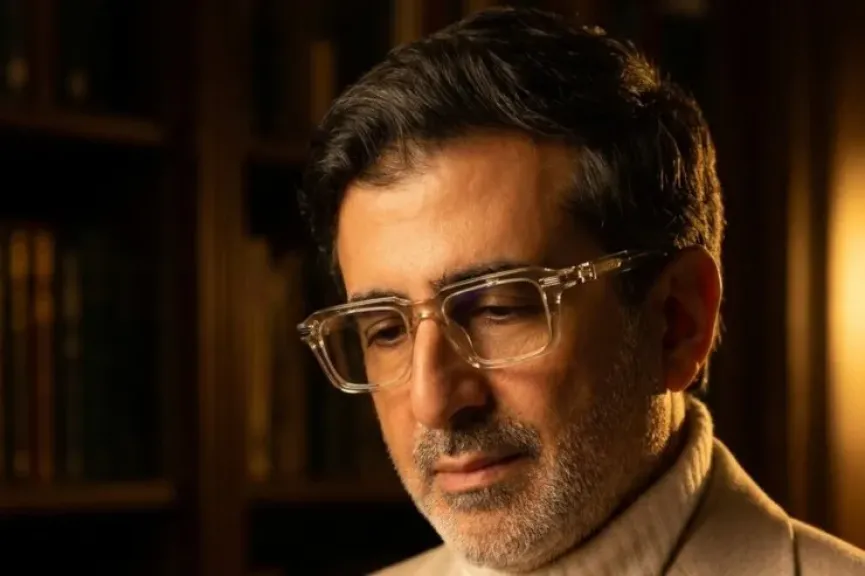
Entrepreneur Samer Choucair said the digital content economy is undergoing an accelerating structural transformation as artificial intelligence applications become increasingly widespread in content production and digital brand management.
He emphasized that these developments have created new business models built around low-cost, scalable digital assets, reshaping investor priorities across the digital economy.
Choucair explained that investors are increasingly searching for sectors offering growth opportunities beyond the traditional boundaries of the digital economy, while capital is being directed toward companies and platforms capable of converting digital engagement into sustainable cash flows.
He added that investment value is no longer determined solely by audience size, but by the ability of companies and entrepreneurs to build ecosystems generating recurring revenue from intellectual property, digital products, and direct distribution channels.
Digital assets are overtaking the traditional advertising model
Samer Choucair noted that the content sector is gradually moving away from a model primarily dependent on advertising revenue toward a more diversified structure based on ownership of repeatable digital assets.
These include educational products, subscriptions, digital tools, affiliate-marketing programs, and artificial intelligence-powered services.
Choucair added that this transition has reduced content creators’ dependence on fluctuations in digital-platform algorithms and provided them with more stable and diversified sources of income.
This has strengthened the sector’s appeal to investors seeking business models with high profit margins and substantial scalability without the need for significant capital expenditure.
Artificial intelligence enhances capital productivity
Samer Choucair explained that generative artificial intelligence applications have reduced content-production costs and accelerated digital product-development cycles, enabling companies to launch new products and services in considerably shorter periods than under traditional models.
“The true economic impact of artificial intelligence is not limited to automation,” Choucair said. “It also extends to improving capital productivity, as companies and entrepreneurs can now generate greater value from the same resources by reducing operating costs and reaching markets more quickly.”
He added that the continued development of these tools will make competition less dependent on the size of a company’s workforce and more closely tied to data quality, brand strength, and the ability to build direct and sustainable customer relationships.
Growing interest from investment institutions
Samer Choucair noted that venture capital funds and private equity firms are showing increasing interest in companies whose business models generate recurring revenue and strong operating margins, particularly across software and the digital economy.
He added that financial institutions increasingly regard the creator economy as a natural extension of the knowledge-based economy.
Data, audiences, intellectual property, and digital assets have become measurable and investable resources rather than merely marketing instruments.
Choucair explained that this trend has gained further momentum as companies direct a growing proportion of their marketing budgets toward digital channels and content creators.
This has supported demand for data-analysis solutions, audience-management tools, and artificial intelligence technologies.
Broader economic implications
Entrepreneur Samer Choucair said the expansion of digital business models could raise economic productivity and reduce the cost of establishing new ventures, supporting entrepreneurship and increasing the digital economy’s contribution to gross domestic product across a growing number of markets.
He added that lower barriers to market entry will increase competition, making content quality, trust, and customer retention more important than simply achieving rapid audience growth.
However, Choucair noted that the sector continues to face regulatory challenges involving artificial intelligence governance, data protection, and intellectual-property rights, alongside the risk of changes to digital-platform policies.
Investors must therefore evaluate operational risks alongside growth opportunities.
Strategic opportunities for the Saudi and Gulf economies
Samer Choucair emphasized that this transformation is directly aligned with the objectives of Saudi Arabia’s economy and Vision 2030, which prioritize the development of the digital economy, entrepreneurship, and technological innovation.
He explained that expanding investment in digital infrastructure and artificial intelligence could create greater opportunities for startups specializing in content tools, analytics, and creative technologies to secure financing and expand across the Kingdom and the wider region.
“Investment in Saudi Arabia and the Gulf economy is becoming increasingly connected to the development of digital ecosystems capable of producing long-term added value, rather than merely adopting modern technologies,” Choucair said.
“Capital allocation during the coming years will favor companies that successfully convert innovation into sustainable cash flows within a strong corporate-governance framework.”
Strategic outlook for investors
Samer Choucair said investors will focus more closely over the next 12 months on companies providing practical solutions for the creator economy and artificial intelligence rather than relying on technological promises alone.
Over the medium term, ownership of digital assets capable of generating recurring cash flows will become one of the most important criteria used to assess digital-economy companies.
Over the longer term, competition will not center on possessing artificial intelligence tools themselves, but on the ability to use them to build strong brands, stable customer bases, and business models capable of delivering sustainable growth.
“Institutional investors will continue directing their attention toward companies combining innovation, financial discipline, and the ability to create long-term economic value, as these businesses will be best positioned to benefit from the structural transformations taking place across the global economy,” Samer Choucair said.
Concluding his analysis, entrepreneur Samer Choucair emphasized that the AI-powered creator economy is no longer merely an emerging sector.
It has become one of the principal forces reshaping investment in digital assets and creating new opportunities for investors seeking sustainable growth across the digital economy.