
Record-Breaking 2026 World Cup Revenue Confirms Sport’s Rise as a Global Investment Asset Class, Says Samer Choucair
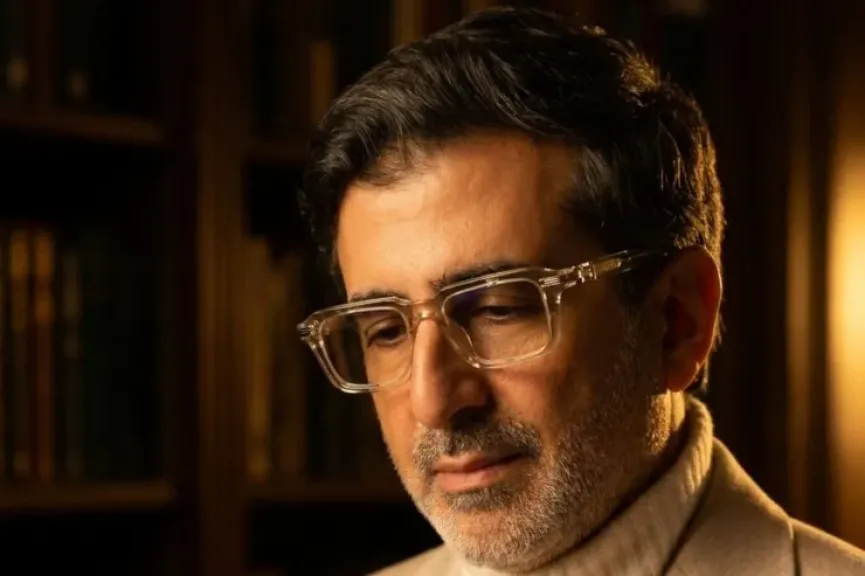
Entrepreneur Samer Choucair said the unprecedented commercial success of the 2026 FIFA World Cup confirms the transformation of sports into one of the most significant drivers of global economic growth.
He noted that the tournament’s record attendance and television audiences translated directly into stronger revenue for FIFA and expanded the commercial potential of the wider sports economy.
The tournament attracted 6,810,966 spectators across 104 matches, with stadium occupancy reaching approximately 99.7%. FIFA subsequently said its revenue for the 2023–2026 financial cycle was expected to exceed $15 billion, supported by broadcasting rights, sponsorships, ticketing, and premium hospitality.
Samer Choucair added that these results demonstrate the growing commercial strength of major sporting events as an alternative investment category, with hospitality, media, entertainment, tourism, and digital services among the principal beneficiaries.
However, he noted that controversies surrounding political involvement and the distribution of economic benefits have raised political, reputational, and social risks, requiring investors to assess capital-allocation strategies connected to sports projects more carefully.
The World Cup has become a global investment platform
Samer Choucair said the 2026 World Cup carried economic and investment significance extending far beyond the sporting competition itself.
Expanding the tournament to 48 teams and staging it across the United States, Canada, and Mexico demonstrated football’s ability to generate substantial cash flows through media rights, sponsorships, ticket sales, premium experiences, and digital engagement.
Choucair emphasized that this transformation has strengthened sports as a destination for capital seeking long-term structural growth, particularly as worldwide demand for live sporting and entertainment content continues to expand.
He added that the event also highlighted the growing connection between sports and politics, requiring sovereign wealth funds, private equity firms, and other institutional investors to develop more sophisticated risk-management models.
Record revenue reflects the maturity of the football industry
Entrepreneur Samer Choucair explained that the tournament’s structural expansion, increased number of matches, and distribution across 16 host cities in three countries significantly increased demand for tickets and hospitality programs.
FIFA had budgeted approximately $3 billion in ticketing and hospitality revenue and around $3.9 billion from television broadcasting for the cycle. Following the tournament’s commercial performance, FIFA raised its expected total cycle revenue to more than $15 billion.
Choucair said these figures demonstrate that football has matured into an industry capable of competing with the world’s largest entertainment sectors.
They also increase the value of assets connected to sports intellectual property, broadcasting rights, digital content, sponsorship portfolios, and fan engagement.
Samer Choucair noted that the tournament’s success in North America showed how geographical expansion, when supported by sophisticated infrastructure and substantial consumer demand, can turn the World Cup into an increasingly powerful source of recurring revenue across successive financial cycles.
The beneficiaries of the economic momentum
Samer Choucair said hospitality, tourism, transportation, retail, and entertainment businesses across the host countries benefited directly from the influx of visitors during the tournament.
In the United States, hotels, restaurants, event operators, and leisure-service companies experienced stronger consumer activity in host markets.
Broadcasters including Fox and Telemundo also recorded exceptional viewing figures, increasing the commercial value of advertising and future media-rights negotiations. Fox’s round-of-16 match between the United States and Belgium attracted approximately 30 million viewers, while Telemundo and Peacock reported record tournament audiences.
Choucair added that global sponsors strengthened their visibility before an audience measured in billions across traditional television, streaming platforms, social media, and digital channels.
However, he noted that several economists viewed the tournament’s overall effect on gross domestic product as relatively limited and concentrated within specific sectors and host cities.
Questions also remained about how much local communities benefited from substantial public expenditure on infrastructure and security, particularly amid criticism of high ticket prices and limited accessibility for ordinary supporters.
Governance and political risks
Entrepreneur Samer Choucair explained that the tournament’s organization was also associated with support from the US political leadership.
FIFA President Gianni Infantino publicly praised President Donald Trump’s contribution to the event and described the tournament as a major success.
Choucair said this relationship renewed debate concerning the politicization of sport and its potential effect on the independence and credibility of international sporting institutions.
It also brought renewed attention to visa policies, governance standards, disciplinary decisions, and the distribution of economic and social benefits.
Samer Choucair emphasized that these issues increase the political and reputational risk premium attached to investments associated with major sporting events.
Institutional investors should therefore incorporate scenarios involving political intervention, regulatory change, public opposition, and governance disputes into their risk models, particularly when considering infrastructure projects and long-term partnerships.
Important lessons for Saudi Arabia and Vision 2030
Samer Choucair said the experience of the 2026 World Cup carries considerable significance for Saudi Arabia as the Kingdom prepares to host the tournament in 2034.
Maximizing domestic economic returns, developing tourism and hospitality, and strengthening community participation will be essential to achieving the Kingdom’s economic-diversification objectives.
Investment in sports technology, intelligent infrastructure, transportation, digital ticketing, broadcasting, cybersecurity, and fan-experience platforms could also support durable returns extending beyond the tournament itself.
Choucair added that the North American experience demonstrates the importance of creating an event-hosting model focused on sustainable economic value rather than direct tournament revenue alone.
This will require integrating sports investment with tourism, entertainment, technology, education, and urban development while maintaining the flexibility to respond to geopolitical and economic changes.
New capital-allocation opportunities
Samer Choucair said the tournament’s commercial success creates new opportunities for sovereign wealth funds, private equity firms, and institutional asset managers to invest in sports broadcasting rights, digital streaming platforms, premium hospitality, sports infrastructure, and fan-engagement technologies.
He added that the coming years could bring greater merger and acquisition activity across sports media and related digital services.
However, investors should avoid excessive concentration in assets dependent on politically sensitive events and prioritize businesses possessing stable cash flows, diversified sources of revenue, and broad geographical exposure.
Entrepreneur Samer Choucair also emphasized the importance of monitoring how FIFA reinvests its financial surplus in developing football worldwide, as sustained investment in competitions, infrastructure, and national associations will be essential to preserving long-term global demand.
The strategic outlook
Concluding his remarks, Samer Choucair said institutional investors will focus over the next 12 to 36 months on three principal areas: how FIFA deploys its record revenue across global development projects, how tournament-hosting policies evolve amid political changes, and what new opportunities emerge in esports and technologies connected to the fan experience.
Over a three-to-five-year horizon, the ability to measure the true economic impact of hosting major tournaments—not merely their direct revenue—will become decisive in assessing the viability of sports-related investments.
Over a longer horizon of five to ten years, Choucair expects football’s increasing professionalization and integration with the digital economy to consolidate sports as a core alternative asset category within institutional diversification portfolios.
Entrepreneur Samer Choucair concluded that sport is no longer simply a form of entertainment. It has become an integrated global industry, and investors capable of understanding its economic, technological, political, and social dimensions will be best positioned to achieve a competitive advantage in capital allocation during the coming decade.