
Samer Choucair: The AI Race Is No Longer About Models, but Chips and Computing Capacity
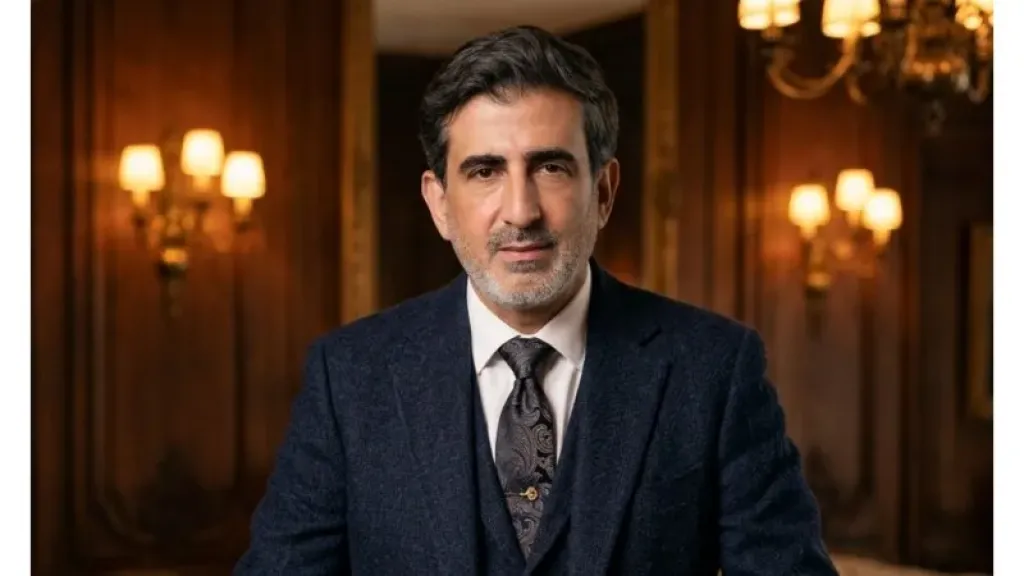
Entrepreneur Samer Choucair said the shift in the artificial intelligence race from competition over model development to competition for chips and computing capacity represents a new phase in the industry’s value structure.
He noted that this transformation requires capital to be redirected toward computing infrastructure, which is expected to become the principal driver of competitive advantage in the coming years.
Samer Choucair explained that the observations made by Hani Nofal, Regional Head of Technology for the Middle East and Africa at NTT DATA, reflect a fundamental transformation across the artificial intelligence industry.
Access to computing resources has become the decisive factor in companies’ ability to compete and innovate at scale.
This requires institutional investors to reassess their portfolios and increase exposure to assets supporting the sector, including semiconductors, data centers, and energy infrastructure.
Choucair added that this transformation creates a strategic opportunity for Saudi Arabia and other Gulf countries under the objectives of Vision 2030.
By expanding investment in the digital economy and developing domestic capabilities, the region can reduce its dependence on volatile global supply chains.
Samer Choucair noted that artificial intelligence no longer depends solely on software innovation, as was previously assumed.
It increasingly relies on essential physical resources, particularly advanced chips and computing infrastructure.
The continued increase in model complexity and the volume of data required for training and deployment has made computing capacity a critical factor in determining which companies will lead the next phase.
Choucair emphasized that investors must consequently reconsider their strategies.
Their focus should extend beyond companies developing models and applications to the complete artificial intelligence value chain, including businesses supplying the infrastructure required to support it.
This gives regions possessing competitive advantages in energy and infrastructure—particularly Gulf countries—an opportunity to become global centers for hosting advanced computing capacity.
Samer Choucair explained that advanced artificial intelligence models require enormous volumes of parallel computation, making access to AI accelerators essential to maintaining competitiveness.
As scaling continues, demand for these resources is rising rapidly, while global production capacity remains relatively constrained by technical complexity and geopolitical pressures.
He noted that companies securing priority access to chips, or investing in the development of their own processors, are better positioned to preserve their competitive advantage.
Startups and developers lacking sufficient computing capacity, by contrast, face growing challenges.
This could result in greater industry consolidation in favor of larger organizations capable of making substantial infrastructure investments.
Entrepreneur Samer Choucair said this transformation will produce a clear change in institutional capital-allocation patterns.
Investor interest in artificial intelligence infrastructure assets is expected to increase relative to certain categories of traditional software investment.
Hedge funds and private equity firms may increasingly seek opportunities among semiconductor manufacturers, data-center operators, and energy projects dedicated to high-performance computing.
Sovereign wealth funds are particularly well positioned to make long-term investments in the sector because they can tolerate the extended repayment periods typically associated with major infrastructure projects.
Samer Choucair said investors need to adopt a new analytical framework reflecting the capital-intensive nature of artificial intelligence.
They should prioritize companies and projects supplying the fundamental resources needed to develop the industry rather than concentrating exclusively on end-user applications.
Choucair explained that Saudi Arabia and the wider Gulf possess strong foundations for benefiting from this transformation, including access to energy, government support for digital development, and a clear ambition to build advanced national artificial intelligence capabilities.
Investment in sophisticated data centers, combined with strategic partnerships with global technology providers, could attract additional foreign direct investment and create high-value employment opportunities.
Projects such as NEOM and initiatives led by the Saudi Data and Artificial Intelligence Authority provide a supportive environment for developing an integrated computing infrastructure capable of advancing the digital economy.
Samer Choucair added that investment in artificial intelligence infrastructure across the Gulf must form part of a comprehensive economic-diversification strategy.
It should be accompanied by the development of national skills, stronger regulatory frameworks supporting innovation, and higher cybersecurity standards.
He noted that investors must nevertheless account for several important risks.
These include the concentration of semiconductor production among a limited number of companies and countries, potential volatility in energy prices, and changes in international trade policies governing the export of advanced technologies.
Choucair explained that large infrastructure investments require careful evaluation of long-term returns, particularly because emerging technologies could eventually reshape demand for current generations of chips.
Samer Choucair stressed the importance of geographical and technological diversification within investment portfolios.
He warned against excessive dependence on a single supply chain or geographic market while geopolitical tensions continue to affect the global technology industry.
Choucair expects major international companies to continue increasing capital expenditure on computing capacity over the next 12 months, potentially supporting related sectors across global financial markets.
Over a three-to-five-year horizon, he expects the Gulf region to launch major AI-powered data-center projects, particularly if it succeeds in attracting strategic partnerships with leading global technology companies.
Samer Choucair added that access to advanced chips and reliable, clean energy will become a principal determinant of competitiveness for companies and economies during the next decade.
Countries capable of developing sophisticated computing infrastructure will be best positioned to benefit from the artificial intelligence economy.
Concluding his remarks, entrepreneur Samer Choucair emphasized that institutional investors should continue monitoring capital-expenditure announcements from global technology companies, the progress of digital projects across the Gulf, and changes in international policies governing semiconductors and artificial intelligence.
He said this will enable investors to make more efficient capital-allocation decisions based on a thorough assessment of long-term risks and opportunities.