
Samer Choucair: The Success of the 2026 World Cup Shows Capital Flows Are More Resilient Than Trade and Political Disputes
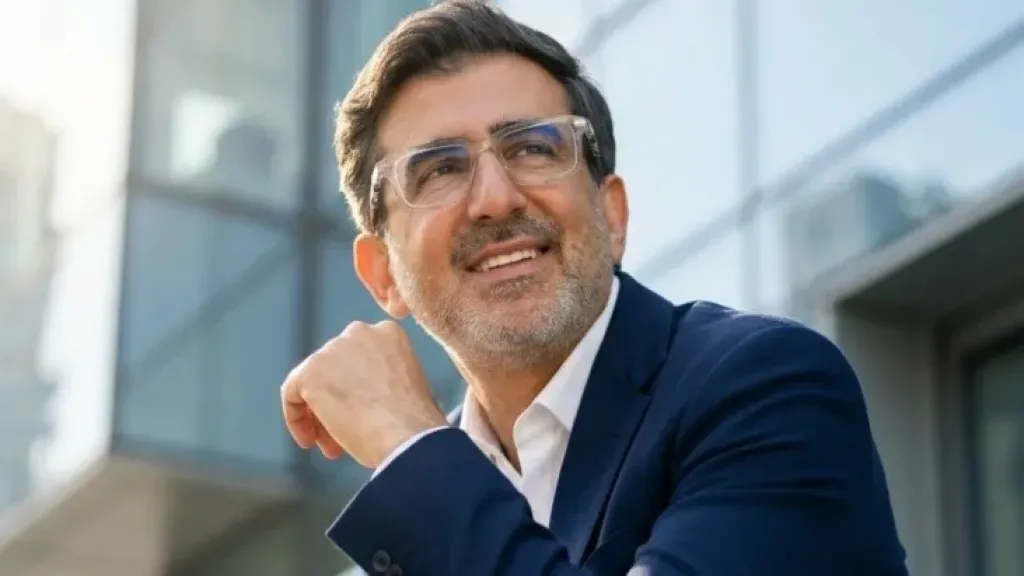
Entrepreneur Samer Choucair said the 2026 FIFA World Cup provided an economic model demonstrating the ability of global markets to withstand short-term political tensions.
He noted that the tournament’s commercial success, despite trade and political disputes between the United States and several of its international partners, confirmed the resilience of capital flows and the continuing appeal of consumer, entertainment, and infrastructure sectors to institutional investors.
Samer Choucair explained that the tournament concluded with Spain defeating Argentina in the final at MetLife Stadium in New Jersey before a high-level official audience.
He said the occasion represented more than a major sporting event. It provided a practical test of the real economy’s ability to maintain momentum in an international environment characterized by escalating trade and political disagreements.
Choucair noted that FIFA generated record revenue exceeding $15 billion from broadcasting rights, sponsorships, and hospitality, while host cities across the United States, Canada, and Mexico recorded meaningful economic activity across hospitality, tourism, transportation, retail, and services.
He emphasized that these results reinforce investor confidence in the ability of North American markets to continue attracting capital despite persistent geopolitical tensions.
Samer Choucair added that the strategic priority for institutional investors will be to monitor how the tournament’s commercial returns are distributed and how this affects the valuations of companies operating in sports, media, hospitality, entertainment, and infrastructure over the next 12 to 36 months.
He emphasized that the World Cup’s influence extended beyond sporting results and direct revenue.
The tournament became an indicator of markets’ ability to absorb political disagreements without materially disrupting economic activity across the host countries.
Choucair explained that trade and political disputes between Washington and Madrid, which became more prominent during the tournament across areas including trade, migration, and defense, did not prevent the competition from generating unprecedented revenue or restrict tourism activity in the host cities.
He said this reflected a growing separation between short-term political dynamics and actual economic outcomes.
Samer Choucair noted that this reality carries important implications for asset managers and investment funds, particularly as protectionist trade policies continue to create potential risks for supply chains and foreign direct investment.
He explained that expanding the tournament to 48 national teams helped raise revenue beyond earlier expectations, supported by substantial growth in broadcasting rights, sponsorship agreements, premium hospitality, and additional commercial partnerships.
Choucair added that host cities, particularly New York and New Jersey, benefited from significant tourism flows that generated direct economic activity estimated by some regional studies at billions of dollars.
Although the distribution of local economic benefits varied, hospitality, retail, and transportation businesses recorded strong activity throughout the tournament.
He emphasized that this performance reflected the continuing strength of US consumer demand despite moderate inflationary pressures and changes in interest-rate conditions.
Samer Choucair said disagreements between the United States and Spain over trade, migration, and defense directly intersected with the interests of several European companies operating in the American market.
However, these tensions did not disrupt commercial activities, cause sponsors to withdraw, or weaken tourism demand.
He explained that this demonstrates a development in financial-market behavior, as investors become more capable of distinguishing political noise from genuine economic flows, particularly in sectors supported by strong domestic consumer demand, including entertainment and hospitality.
Choucair cautioned that the risk of escalating protectionist policies remains present.
Such developments could eventually affect the valuations of European companies with substantial exposure to the US market and influence investment flows toward Latin America, particularly sectors connected to the Argentine economy.
Entrepreneur Samer Choucair said sovereign wealth fund managers, hedge funds, and private equity firms are closely monitoring how the tournament’s commercial returns are divided among media partners, sponsors, and host cities.
He noted that its significant commercial success strengthens the investment appeal of sports-media businesses, broadcasting rights, and real estate investment funds connected to stadiums and tourism infrastructure in the United States.
Choucair added that continuing trade disputes with Europe and Latin America may encourage investors to reprice certain risks associated with cross-border investments.
Nevertheless, the success of the joint hosting model involving the United States, Canada, and Mexico demonstrated its economic efficiency.
This could encourage similar arrangements for future international tournaments, creating additional opportunities for investment in shared infrastructure projects.
Samer Choucair said the success of the 2026 World Cup despite political disagreements illustrates markets’ ability to distinguish short-term commercial developments from longer-term geopolitical tensions.
This supports continued capital allocation toward consumer-oriented sectors in the United States.
He added that institutional investors will closely monitor how FIFA distributes its record revenue among commercial partners because the process could lead to a reassessment of media and hospitality companies over the following two quarters.
Choucair noted that continuing disputes concerning trade and migration require sovereign wealth funds and hedge funds to include more detailed political scenarios within the risk-management models used for investments in European and Latin American markets.
He emphasized that the tournament’s economic and infrastructure legacy could attract additional investment into tourism and development projects across host cities over the medium term, provided that appropriate levels of political stability are maintained.
Samer Choucair explained that investors will focus on three principal areas over the next 12 to 36 months: the performance of sports-media companies following the distribution of tournament revenue, the effect of any escalation in trade disputes on hospitality supply chains, and the attractiveness of real estate investment in cities that hosted major matches.
Over a three-to-five-year horizon, the successful joint-hosting model adopted by the United States, Canada, and Mexico could become a reference for future tournaments, creating further opportunities for public-private partnerships in major infrastructure developments.
Concluding his remarks, entrepreneur Samer Choucair emphasized that the greatest challenge will be converting the temporary economic momentum generated by the tournament into sustainable development benefits for local communities.
He said investors who incorporate these considerations into their strategies will be better positioned to capture future opportunities while managing geopolitical risks more effectively.