
Samer Choucair: HUMAIN Is Redirecting Capital Toward Artificial Intelligence Infrastructure
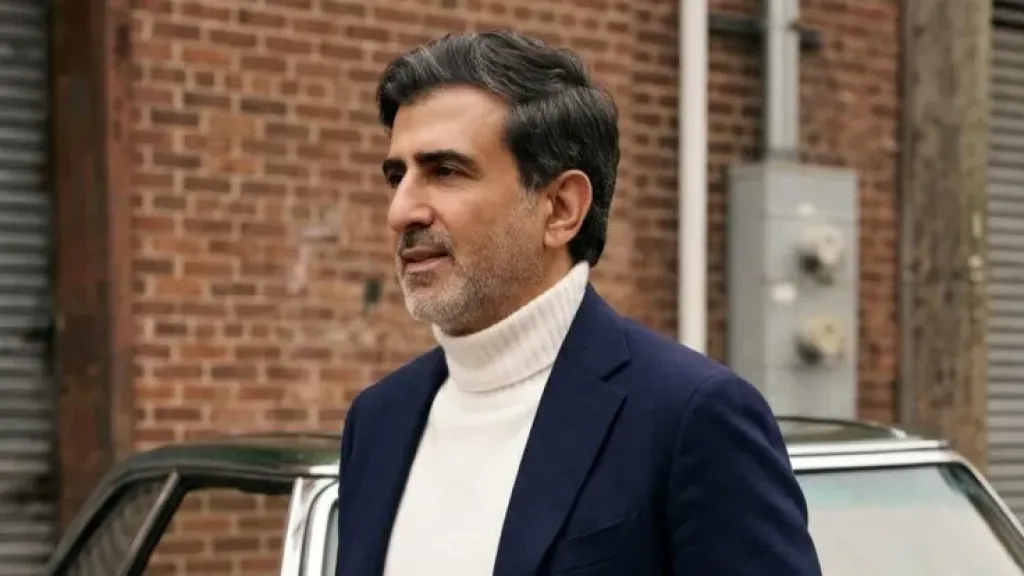
Entrepreneur Samer Choucair said HUMAIN’s launch of its first artificial intelligence data-center projects represents a turning point in institutional investment trends.
He noted that capital allocation is shifting decisively toward digital infrastructure, strengthening Saudi Arabia’s position as a regional center for computing capacity supported by energy resources and sovereign investment.
Samer Choucair explained that HUMAIN, the new Saudi artificial intelligence company backed by the Public Investment Fund, is preparing to bring its first data centers in Riyadh and Dammam into operation by the second quarter of 2026.
Each location is expected to have an initial capacity of up to 100 megawatts and use advanced processors supplied by Nvidia and AMD.
He said the projects form part of a national strategy to strengthen domestic computing capacity and expand Saudi Arabia’s digital infrastructure.
Choucair added that the initiative has direct implications for the redirection of institutional capital toward artificial intelligence infrastructure, particularly in markets possessing competitive advantages such as abundant energy, sovereign support, and the capacity to deliver large-scale strategic projects.
Samer Choucair noted that institutional investors are closely monitoring these developments as a practical test of whether energy-rich economies can transition from exporting conventional resources to providing high-value computing services.
He explained that global demand for artificial intelligence capacity is growing faster than many conventional electricity grids in advanced markets can accommodate.
This gives Saudi Arabia an opportunity to attract part of the substantial capital expenditure being committed by international technology companies to data-center development.
Samer Choucair emphasized that HUMAIN’s establishment in May 2025 under the Public Investment Fund reflects a strategic effort to build an integrated ecosystem encompassing artificial intelligence products and services, cloud infrastructure, and advanced models.
He added that construction has already begun at the Riyadh and Dammam locations, alongside plans to import advanced American processors, including Nvidia’s latest generation of chips, following the completion of the necessary regulatory approvals.
Center3, a subsidiary of stc, has also signed a memorandum of understanding with HUMAIN to develop a portfolio of data centers designed for artificial intelligence workloads.
Choucair noted that Saudi Arabia’s data-center market is expanding rapidly.
Installed capacity increased from approximately 68 megawatts in 2021 to around 467 megawatts in 2026, while the National Data Center Strategy aims to reach 1.5 gigawatts by 2030, supported by rising demand for artificial intelligence applications.
He explained that these indicators reflect a structural transformation in public- and private-sector capital-expenditure priorities, with a growing share of investment moving toward the digital sector as a principal driver of future economic growth.
Entrepreneur Samer Choucair emphasized that artificial intelligence data centers require substantial and continuous electricity consumption.
Reliable energy at competitive costs will therefore be one of the most important determinants of these projects’ success.
He said Saudi Arabia possesses a clear competitive advantage through its energy resources, including expanding gas-fired power generation and renewable-energy projects that could be connected directly to data centers.
However, successful implementation will also require parallel investment in electricity networks and advanced cooling systems suited to local climatic conditions.
Samer Choucair said:
“Saudi Arabia’s true competitive advantage lies in its ability to combine substantial sovereign capital with competitively priced energy. This is a combination that many advanced markets facing structural electricity-grid constraints cannot easily replicate.”
He added that the projects’ success will depend heavily on the timely conclusion of long-term power-purchase agreements and the development of electricity-transmission infrastructure, rather than solely on announcements concerning computing capacity.
Choucair noted that HUMAIN’s launch sends a clear message that sovereign wealth funds are moving toward direct investment in the physical infrastructure of artificial intelligence—the industry’s essential tools and enabling assets—rather than concentrating exclusively on software and intelligent models.
Samer Choucair explained that this direction could encourage pension funds, private equity firms, and family offices to increase their investments in emerging markets offering political stability and a clear long-term strategic vision.
He added that local companies such as stc, together with construction, energy, and utility businesses, are positioned to benefit from greater demand for data-center-related services.
American semiconductor manufacturers could benefit from supply contracts, while global technology companies may regard Saudi Arabia as an additional location through which to diversify their data-center operations and reduce geographic concentration risks.
Samer Choucair emphasized that institutional investors increasingly favor markets combining clear sovereign support with the ability to complete major projects within relatively short timeframes.
This gives Saudi Arabia a strong position on the global digital-infrastructure investment map.
He added that HUMAIN’s success will not be measured solely by the amount of computing capacity brought into operation.
It will also depend on the company’s ability to attract international customers, including cloud-computing providers and institutions seeking sovereign or geographically distributed computing resources.
Choucair noted that the projects nevertheless face several execution challenges.
These include securing additional electricity capacity, attracting specialized talent, developing effective cooling systems suitable for a desert environment, and continuing dependence on imported advanced processors, with the associated risks involving global supply chains and export policies.
He explained that investors should focus on tangible implementation indicators, particularly the signing of long-term power-purchase agreements, completion of grid connections, and adherence to schedules for bringing new capacity into operation.
Samer Choucair added that markets will ultimately reassess these initiatives according to their ability to convert investment ambitions into recurring computing-service revenue, rather than installed capacity alone.
He said investors will monitor over the next 12 to 36 months the volume of new capacity delivered by HUMAIN and its partners, alongside the participation of global cloud-computing companies in operating these facilities.
Over a three-to-five-year horizon, the project’s true economic viability will be determined by its contribution to non-oil gross domestic product and its ability to attract high-quality foreign direct investment into the digital sector.
Concluding his remarks, entrepreneur Samer Choucair said that if HUMAIN successfully expands to gigawatt scale, Saudi Arabia could consolidate its position as a major regional center for artificial intelligence infrastructure.
This would create a new economic pathway based on exporting computing capacity alongside conventional energy resources.
He emphasized that achieving this scenario will depend on execution speed, the quality of international partnerships, and the ability to build a sustainable business model that earns the confidence of global investors.