
Samer Choucair: Bitcoin Volatility Confirms Risk Management Has Become a Priority in Institutional Investment Decisions
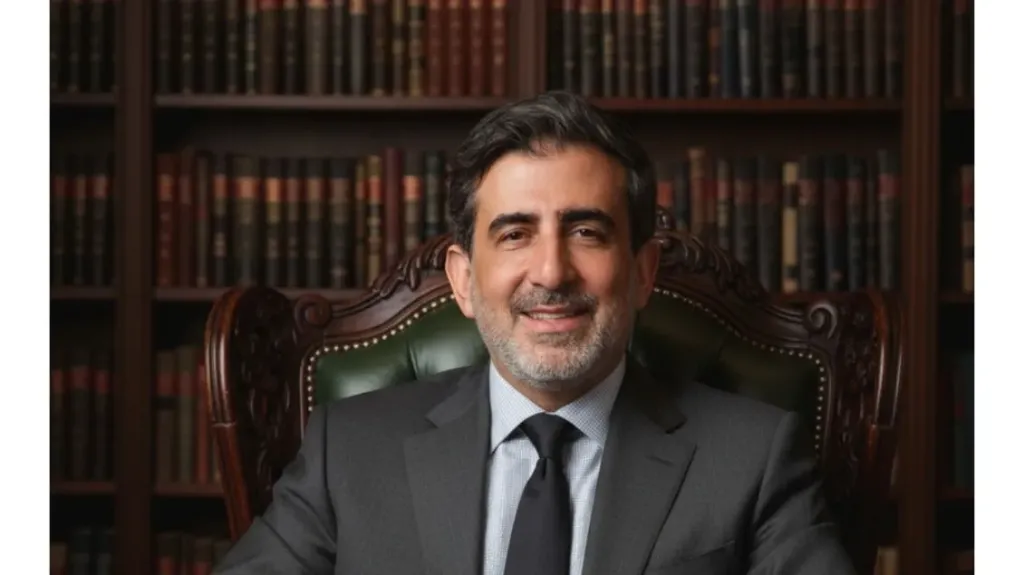
Entrepreneur Samer Choucair said recent movements in the Bitcoin market reflect a clear change in how investors perceive the risks associated with digital assets.
He noted that geopolitical developments in the Middle East, combined with the continuing restrictive global monetary environment, have subjected Bitcoin’s status as an investment asset to a new test.
Samer Choucair explained that Bitcoin’s recent performance demonstrated considerable sensitivity to geopolitical tensions rather than behaving as an independent safe-haven asset.
Its movements more closely resembled those of higher-risk asset classes, while investors shifted toward bonds and conventional investment instruments offering more stable and attractive returns under current interest-rate conditions.
Choucair added that these developments have direct implications for capital-allocation strategies across financial institutions.
They require investors to reassess their exposure to digital assets and strengthen risk-management mechanisms while clearly distinguishing between the economic potential of blockchain technology and the risks associated with speculative cryptocurrency price movements.
Samer Choucair noted that recent fluctuations in Bitcoin are no longer confined to digital-asset markets.
They now directly influence the decisions of major institutional investors concerning the distribution of assets within their portfolios.
He explained that the combination of geopolitical shocks and the monetary policies adopted by central banks to control inflation requires investors to determine whether current movements represent temporary volatility or a fundamental change in the asset’s underlying characteristics.
This assessment directly affects expectations for risk-adjusted returns and decisions concerning the allocation of capital across different asset classes.
Samer Choucair emphasized that the policies adopted by major central banks continue to influence the attractiveness of assets that do not generate recurring income.
Maintaining interest rates at elevated levels for an extended period increases the opportunity cost of holding assets whose returns depend primarily on future capital appreciation.
He said the current environment requires institutional portfolios to reorder their priorities.
Assets capable of generating positive real returns have become more attractive than those dependent on expectations of future price appreciation without regular cash flows.
Samer Choucair noted that recent geopolitical tensions in the Middle East, including developments involving Iran, provided a clearer test of Bitcoin’s response to risk.
The asset demonstrated significant sensitivity to rising risk aversion and moved broadly in line with speculative investments, while government bonds and other conventional defensive assets benefited from investors seeking safety.
Choucair explained that these developments support the view that Bitcoin has not yet acquired the structural characteristics required to function consistently as a safe haven during periods of economic and geopolitical stress.
Samer Choucair added that geopolitical events reveal underlying market realities quickly because they test whether an asset provides genuine value during crises or merely follows the broader risk cycle.
Current indicators suggest that Bitcoin continues to behave largely as a high-risk asset.
Choucair emphasized that present conditions are placing companies that adopted Bitcoin as part of their treasury or long-term investment strategies under meaningful pressure.
Any adjustment to these positions, even when limited and motivated by operational considerations, could affect the credibility of earlier claims presenting Bitcoin as a long-term store of value.
Such decisions also highlight the gap that can emerge between strategic conviction and short-term liquidity and risk-management requirements.
Samer Choucair noted that sovereign wealth funds, pension funds, family offices, and hedge funds should conduct detailed reviews of their exposure to digital assets.
They should adopt a more disciplined approach based on clearly defined exposure limits, favor regulated products offering high levels of transparency, and maintain allocations that allow participation in potential growth without placing portfolio stability at excessive risk.
He added that institutional investment in emerging asset classes is more likely to succeed when supported by a clear risk-management framework.
Such a framework should establish exposure levels and predetermined criteria for increasing or reducing positions rather than relying on short-term narratives or immediate market movements.
Samer Choucair explained that Gulf economies remain relatively less exposed to Bitcoin volatility because several countries in the region have adopted cautious regulatory policies.
However, this does not prevent continued investment in the digital economy under economic-diversification programs, including Saudi Vision 2030.
Choucair noted that the region possesses promising opportunities in practical blockchain applications across financial services, supply-chain management, tourism, and other industries.
The priority should remain on uses capable of creating genuine economic value rather than exposure driven primarily by digital-asset price speculation.
Samer Choucair emphasized that institutional investors should focus during the next phase on capital flows into regulated investment products and regulatory developments in major markets.
These will be among the most important indicators determining Bitcoin’s future position as an institutional investment asset.
Over a three-to-five-year horizon, he said the sector’s prospects will increasingly depend on blockchain technology’s ability to demonstrate economic value through practical applications.
The longer-term role of digital assets will be determined by whether the industry can balance wider adoption with institutional stability.
Concluding his remarks, entrepreneur Samer Choucair said the most compelling strategic opportunity lies in investing in infrastructure and technological solutions that improve the efficiency of the financial system.
Direct exposure to highly volatile digital assets, however, requires the highest level of risk-management discipline and a long-term investment horizon appropriate to the considerable uncertainty that continues to surround this asset class.