
Samer Choucair: UAE and Saudi Arabia’s Global Trust Rankings Strengthen Their Investment Advantage
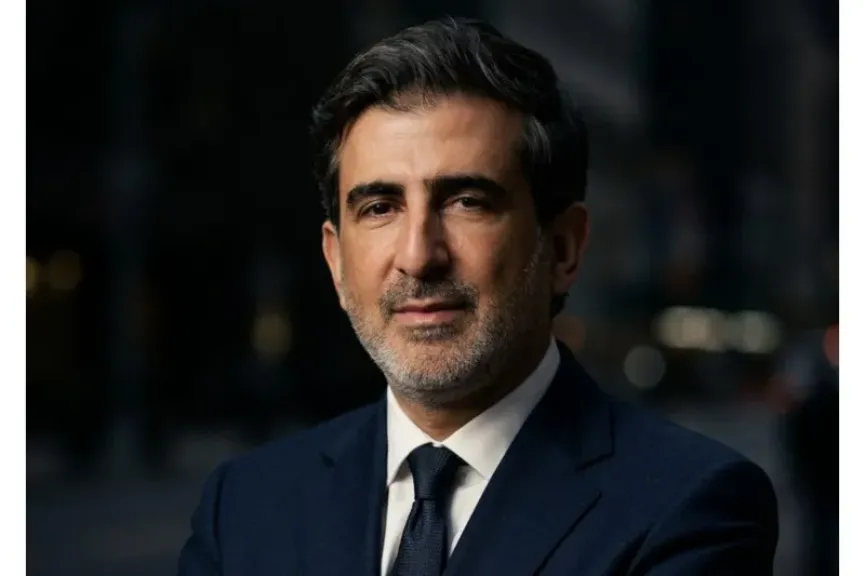
Entrepreneur Samer Choucair said the United Arab Emirates and China jointly leading the 2026 Edelman Trust Index with scores of 80, followed by India at 74 and Indonesia and Saudi Arabia at 73, signals an important change in perceptions surrounding major emerging economies.
The Edelman index measures public trust in four institutions: business, government, media, and non-governmental organizations. Developing markets occupied the leading positions in 2026, while several advanced economies appeared near the bottom of the ranking.
Choucair explained that strong institutional trust does not automatically guarantee investment inflows or lower financing costs. However, it can strengthen perceptions of political stability, regulatory credibility, and institutional effectiveness, all of which influence how investors evaluate long-term opportunities and sovereign risk.
Samer Choucair added that Gulf economies are increasingly well positioned to access debt and capital markets, supporting their economic-diversification ambitions, including the objectives of Saudi Vision 2030.
Trust has become an important factor in capital allocation
Samer Choucair explained that institutional capital-allocation decisions no longer depend solely on economic growth rates and conventional financial indicators.
Measures of institutional trust, regulatory quality, government effectiveness, and policy consistency have become increasingly relevant to the risk-management frameworks used by sovereign wealth funds, pension funds, asset managers, and family offices.
Choucair added that the UAE and China’s position at the top of the index demonstrates the high level of domestic confidence in their principal institutions.
He noted that economies capable of combining institutional credibility with political stability, business-friendly policies, and international economic engagement may be better positioned to attract patient capital, even during periods of heightened geopolitical uncertainty.
The economic context and changing patterns of trust
Entrepreneur Samer Choucair said the ranking emerged as the global economy continued moving toward a more multipolar structure.
Economies that have invested in improving the business environment, strengthening governance, modernizing regulation, and expanding international partnerships are increasingly benefiting from stronger perceptions of institutional capacity.
Choucair emphasized that Gulf countries have strengthened their position as investment destinations by combining competitive returns, ambitious development programs, political stability, and increasingly sophisticated financial markets.
He added that the UAE’s joint-leading score reflects the country’s long-term efforts to develop an international financial and commercial center supported by modern infrastructure, regulatory efficiency, global connectivity, and economic openness.
These characteristics have made the UAE an increasingly important destination for institutional investors seeking a combination of stability, access to international markets, and sustainable growth opportunities.
Implications for capital flows
Samer Choucair said strong institutional trust can contribute to more favorable perceptions of sovereign and corporate credit risk.
When accompanied by sound fiscal management, transparent regulation, and credible economic policy, stronger trust may support demand for government and corporate debt while improving international investors’ willingness to consider domestic assets.
Choucair added that institutional credibility may also help attract foreign direct investment into infrastructure, technology, renewable energy, advanced manufacturing, tourism, and financial services.
However, he emphasized that actual investment decisions will continue to depend on projected returns, liquidity, governance, currency risk, market accessibility, and the enforceability of legal protections.
Samer Choucair noted that China’s position at the top of the index, despite international trade tensions, demonstrates that institutional trust can remain strong even when an economy faces external geopolitical and commercial pressures.
He explained that investors across emerging markets and the Global South are increasingly focusing on economic scale, infrastructure, trade resilience, and access to supply chains alongside short-term geopolitical considerations.
This shift may create additional opportunities for joint investment, technology partnerships, logistics development, and supply-chain integration between China and Gulf economies.
Samer Choucair’s perspective
Samer Choucair emphasized that Saudi Arabia’s position among the five highest-scoring countries reflects confidence in the institutions supporting the Kingdom’s economic and social transformation.
The 2026 Edelman Trust Index placed Saudi Arabia at 73, alongside Indonesia, although the report also identified a significant difference between the trust levels of higher- and lower-income respondents in the Kingdom.
Choucair said the ranking may reinforce international awareness of Saudi Arabia’s regulatory reforms, institutional modernization, and continued efforts to attract foreign investment into non-oil industries.
It may also complement the Kingdom’s efforts to market sovereign and corporate issuances internationally and secure financing for major projects associated with Vision 2030.
Entrepreneur Samer Choucair noted that tourism, entertainment, financial services, commercial real estate, technology, renewable energy, and advanced logistics could be among the sectors benefiting from increased institutional attention toward the UAE and Saudi Arabia.
He stressed, however, that trust remains dynamic rather than permanent.
Preserving it requires continued improvements in governance, transparency, regulatory consistency, public-sector effectiveness, and communication between institutions and society.
Any deterioration in these areas could influence future trust scores and gradually affect international perceptions of investment risk.
The strategic outlook
Concluding his remarks, entrepreneur Samer Choucair said the next 12 months could bring greater interest from sovereign wealth funds, asset managers, and family offices in Gulf debt instruments and equities connected to priority economic sectors.
He added that, over a three-to-five-year horizon, sustained institutional trust could contribute to a broader redistribution of international assets toward economies that successfully combine credible governance with competitive investment opportunities.
Samer Choucair emphasized that the 2026 Edelman Trust Barometer provides a significant message for institutional investors: economies that invest consistently in institutional credibility, governance, and social confidence can develop a genuine competitive advantage.
He concluded that the UAE and Saudi Arabia are well positioned to benefit during the next investment cycle, provided they continue translating institutional trust into regulatory quality, productive investment, stronger private-sector growth, and measurable long-term economic returns.