
Samer Choucair: Trump”s Accusations Against China Put Global Markets and the Gulf Before a New Investment Equation
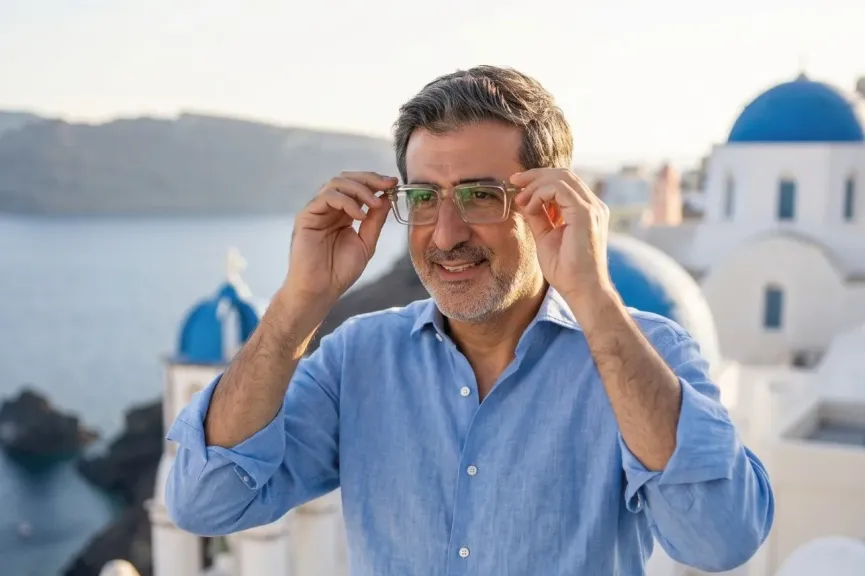
Investment entrepreneur Samer Choucair stated that US President Donald Trump renewing his accusations against China over interference in American elections represents a new escalation that could raise uncertainty levels in the global economy once again, threatening the fragile truce between the world's two largest economies ahead of the anticipated US China summit.
Choucair explained that this development carries direct implications for global growth expectations, adding pressure to supply chains dependent on Chinese manufacturing, while requiring institutional investors and sovereign wealth funds to reassess geographic and sector exposure within their portfolios, with a focus on building strategies more resilient to potential trade or technology escalation.
He added that Gulf economies, led by Saudi Arabia, could benefit from any support to oil prices, providing additional revenue to fund economic diversification projects, though these developments could simultaneously complicate efforts to attract foreign direct investment in technology and advanced manufacturing sectors.
Tensions reshape investor priorities
Samer Choucair explained that this escalation comes at a stage when the global economy is trying to move past the effects of inflation and tight monetary policy, making any new tension between Washington and Beijing an influential factor in global capital allocation decisions.
Choucair added that institutional investors no longer treat such developments as separate political events, but as indicators directly affecting corporate valuations, international trade flows, and the appeal of emerging markets.
He noted that portfolio managers are now required to reassess expected returns across asset classes, alongside reviewing the long term strategies of sovereign funds amid continued polarization between the world's two largest economies.
US China rivalry enters a new phase
Samer Choucair affirmed that the latest American accusations reflect the continuation of the competitive approach that has governed relations between Washington and Beijing for years, particularly on national security, technology and trade.
Choucair explained that despite the relative truce that helped achieve a degree of trade stability in recent times, the timing of this escalation ahead of the anticipated summit could negatively affect global market sentiment.
He added that multinational companies may delay some capital spending decisions, while plans to diversify supply chains and reduce dependence on China could accelerate, a trend that already began in past years but may gain further momentum going forward.
Anticipated volatility in global markets
Samer Choucair said global equity markets could see higher levels of volatility, particularly in advanced technology sectors and companies with strong ties to Chinese exports.
Choucair added that listed Chinese companies face additional pressure, while American companies heavily reliant on the Chinese market are also affected.
He noted that fixed income markets benefit from increased demand for US government bonds as a safe haven, leading to a temporary decline in yields.
Regarding commodity markets, Choucair explained that oil will remain one of the most notable variables, since any slowdown in the Chinese economy reduces global demand, while geopolitical risk provides short term price support, affirming that investors will need to continuously track Chinese industrial activity indicators and global energy demand data.
Direct implications for the Saudi and Gulf economy
Samer Choucair explained that Gulf countries, led by Saudi Arabia, face a dual investment equation amid these developments.
Choucair added that any rise in oil prices resulting from geopolitical tensions supports government revenue and strengthens funding for strategic projects, such as NEOM and tourism and manufacturing projects tied to the Kingdom's Vision 2030.
He noted that escalating US China competition complicates efforts to attract foreign direct investment in digital and technology sectors, amid growing restrictions on technology transfer and advanced exports.
Choucair added that sovereign funds in the region should continue accelerating economic diversification efforts, while building balanced partnerships that reduce geopolitical risk stemming from reliance on a single side, explaining that sovereign funds, led by Saudi Arabia's Public Investment Fund, are compelled to review their exposure to assets tied to China or affected by new American policies.
Reshaping capital allocation strategies
Samer Choucair noted that institutional investors tend, in such environments, to strengthen hedging tools within their portfolios, whether through increased exposure to defensive sectors and traditional energy, or investing in companies pursuing reshoring or manufacturing strategies within allied countries.
Choucair added that private equity and venture capital markets are seeing growing interest in opportunities tied to reshaping global value chains, particularly in logistics and advanced manufacturing outside China, while expecting greater reliance by banks and hedge funds on currency and commodity risk management tools.
He affirmed that success in this environment depends on the ability to distinguish between short term volatility and long term structural shifts, while maintaining sufficient flexibility to reallocate assets according to international policy developments.
The sectors that benefit most
Samer Choucair explained that domestic manufacturing in the United States and allied countries could be among the most notable beneficiaries, particularly in semiconductors, defense equipment and energy infrastructure.
Choucair added that artificial intelligence and clean technology companies also benefit if investment accelerates in domestic alternatives.
Regarding the Gulf region, Choucair noted that opportunities are concentrated in developing alternative logistics and industrial hubs, alongside renewable energy projects that reduce reliance on traditional Chinese demand.
Choucair explained that some consumer and electronics industries tied to the Chinese market face additional pressure, saying he sees investors focusing on companies with strong governance and high adaptability to regulatory change as best positioned to achieve sustainable long term value.
The strategic outlook
Samer Choucair concluded by affirming that investors will watch in the coming period for the outcome of the US China summit and any new trade or regulatory measures from Washington, alongside China's economic growth indicators and their effect on global demand.
He added that over the medium term, spanning 3 to 5 years, efforts to diversify supply chains and build independent technological capacity are expected to accelerate, creating new investment opportunities in economies with stable environments and reliable partnerships.
Over the long term, Choucair explained that priority will remain on building investment portfolios capable of benefiting from structural shifts in the global economy, drawing on the strategic position of Gulf countries in supporting energy security and economic development.
Samer Choucair concluded by affirming that institutional investors' success will depend not only on reading political developments, but on the ability to convert geopolitical shifts into sustainable investment opportunities through more flexible and efficient capital allocation.