
Samer Choucair: BitMine’s Growing Ethereum Holdings Signal an Institutional Shift Toward the Infrastructure of the Digital Economy
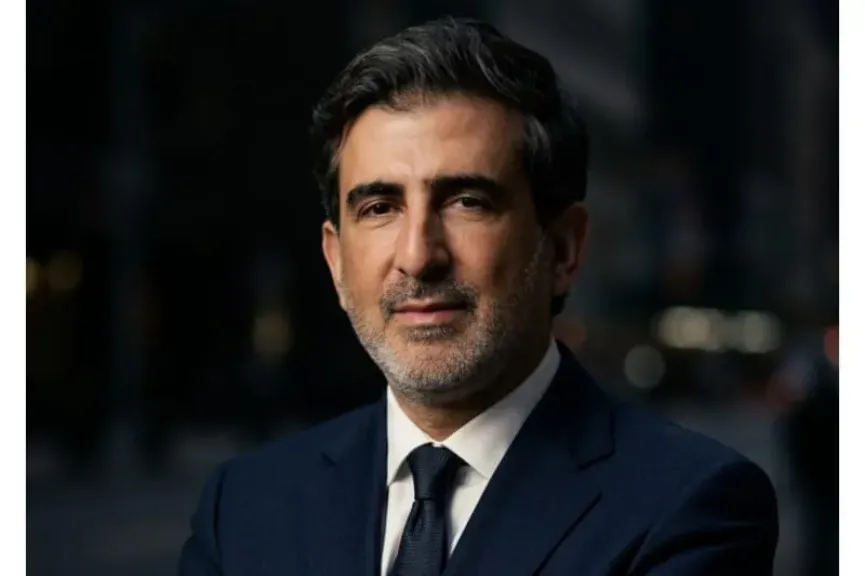
Entrepreneur Samer Choucair said BitMine Immersion Technologies’ continued accumulation of Ethereum reflects a growing transformation in how institutional investors approach digital assets.
He noted that the strategy extends beyond direct financial investment and indicates increasing confidence in blockchain networks as a potential component of the infrastructure supporting the future digital economy.
Samer Choucair explained that BitMine’s reported additional Ethereum purchase, valued at approximately $42.9 million, forms part of a long-term accumulation strategy resembling the approach adopted by companies that treat digital assets as strategic treasury reserves.
According to BitMine’s latest official disclosure, the company held approximately 5.77 million ETH as of July 12, 2026, equivalent to around 4.8% of Ethereum’s total supply. Approximately 4.92 million ETH had been staked.
Choucair said large institutional transactions in Ethereum demonstrate a fundamental change in the nature of demand for digital assets.
Investors are no longer evaluating them solely according to price movements. They are increasingly assessing their capacity to support practical applications, including asset tokenization, digital payments, modern financial services, decentralized applications, and technologies connected to artificial intelligence.
Ethereum supports smart contracts, decentralized finance, stablecoin settlement, and the tokenization of real-world assets, giving the network a broader function than that of a conventional digital currency.
Samer Choucair added that greater participation by major institutions can contribute to the maturation of the market by increasing liquidity and broadening the investor base.
He explained that institutional investors are beginning to consider selected digital assets as possible components of long-term diversification strategies, although their volatility, liquidity conditions, and regulatory risks remain materially different from those of traditional investments.
Samer Choucair noted that BitMine has continued accumulating Ethereum during a period of price corrections and volatility associated with changing global monetary-policy expectations.
Such transactions may reflect the different perspective of long-term investors who focus on the underlying value and potential uses of the technology rather than only on current market conditions.
Choucair emphasized that Ethereum possesses strategic appeal because of its role as programmable digital infrastructure, particularly as the use of smart contracts, decentralized finance, stablecoins, and real-world asset tokenization continues to expand.
These developments could influence the structure of financial markets, settlement systems, and institutional services over the coming years.
Entrepreneur Samer Choucair said digital assets capable of producing returns through operating mechanisms such as staking and infrastructure provision may become more attractive to investors seeking sources of income that are not completely dependent on traditional financial markets.
Ethereum’s proof-of-stake system allows participants to commit ETH to network validation and potentially receive rewards, although staking also involves technical, market, liquidity, and smart-contract risks.
Choucair added that inflation uncertainty and changing central-bank policies are encouraging some institutions to explore new methods of portfolio diversification.
Investment in digital assets with practical applications, such as Ethereum, may form part of a broader capital-growth and risk-management strategy, provided that exposure remains proportionate and supported by rigorous governance.
Samer Choucair noted that the effects of these developments extend beyond cryptocurrency markets to financial technology, artificial intelligence, digital infrastructure, cybersecurity, and blockchain services.
Greater institutional adoption could accelerate investment, strategic partnerships, product development, and merger-and-acquisition activity throughout the blockchain ecosystem.
Choucair explained that Gulf markets, particularly Saudi Arabia, could benefit from these transformations by expanding investment in the digital economy, financial technology, secure data infrastructure, and modern payment systems in line with economic-diversification programs and Saudi Vision 2030.
Samer Choucair said strategic investors should monitor the effect of large institutional holdings on Ethereum’s supply-and-demand dynamics, alongside the development of infrastructure supporting real-world asset tokenization.
He described tokenization as one of the areas with the potential to become a significant source of digital economic growth, although its success will depend on legal recognition, custody standards, cybersecurity, liquidity, and regulatory clarity.
Choucair emphasized that investment institutions must balance the opportunities created by the digital economy against the regulatory, technological, market, custody, and concentration risks associated with digital assets.
Building successful strategies in this field requires strong governance, disciplined position sizing, appropriate diversification, and careful analysis of the characteristics and risks of each asset.
He added that investors will increasingly focus on regulatory developments across major markets and on how new laws affect the capacity of digital assets such as Ethereum to attract further institutional capital.
Choucair explained that Ethereum’s long-term investment potential will depend on the network’s ability to support applications across asset tokenization, institutional payments, digital financial services, and technologies connected to artificial intelligence while maintaining security, scalability, and regulatory compatibility.
Concluding his remarks, entrepreneur Samer Choucair said the accumulation of substantial Ethereum holdings by institutions signals that selected digital assets may be entering a more mature stage of development.
He encouraged portfolio managers to reassess the potential role of this category within long-term investment strategies while maintaining strict commitments to diversification, governance, liquidity management, and disciplined risk control.