
Samer Choucair: Saudi Property Deals Concentrated in Strategic Regions Are Redrawing the Capital Allocation Map
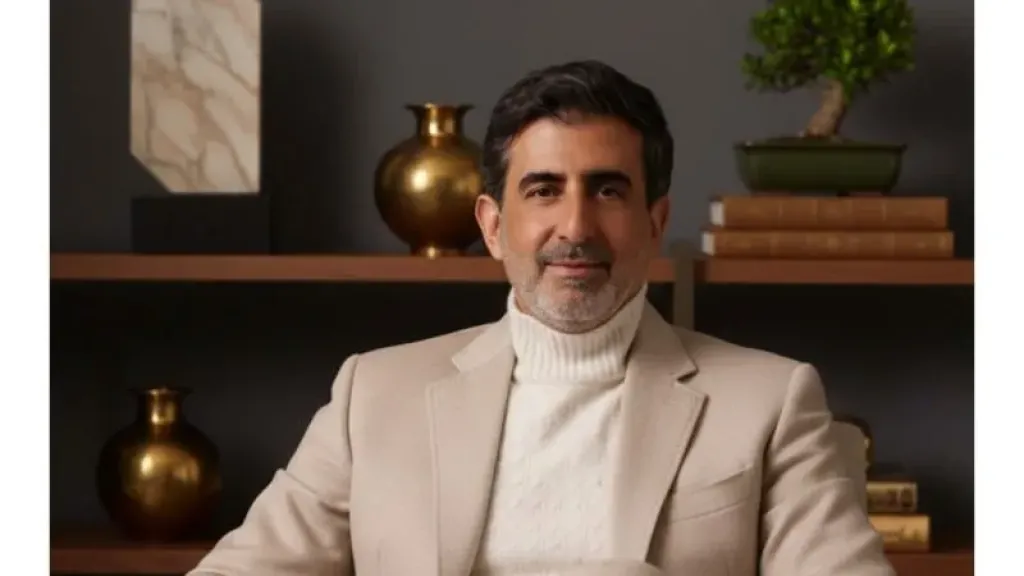
Entrepreneur Samer Choucair said Saudi real estate transactions reached a total value of SAR 23.7 billion in June 2026, with three leading regions accounting for approximately 75% of overall activity.
He explained that this concentration reflects a clear transformation in capital-allocation dynamics within the Saudi property market, as liquidity increasingly moves toward regions offering advanced infrastructure, major development projects, and demand supported by the economic transformation associated with Vision 2030.
Samer Choucair said: “The concentration of real estate activity in selected regions is not a temporary phenomenon. It represents a strategic reordering of investor priorities, as institutional capital increasingly seeks assets capable of combining visible demand, strong infrastructure, and regulatory support. Together, these factors can reduce operational risk and improve the efficiency of long-term asset allocation.”
Choucair explained that recent regulatory developments, particularly the implementing regulations governing real estate ownership by non-Saudis, represent an important step toward improving market transparency and strengthening Saudi Arabia’s ability to attract foreign direct investment.
He added that the establishment of designated geographical zones and clearer rules for international buyers provides greater certainty for investors assessing opportunities in Riyadh, Jeddah, and other approved areas, while Makkah and Madinah remain subject to specific provisions reflecting their unique status. The Saudi Cabinet approved the implementing regulations and designated zones on June 23, 2026.
Samer Choucair said: “The new regulatory framework provides an important foundation for future growth, but it will not necessarily produce immediate and substantial investment inflows. Institutional investors base their decisions on a comprehensive assessment of projected returns, demand sustainability, governance standards, and each project’s ability to generate stable cash flows.”
Choucair emphasized that current property activity forms part of a broader transformation across the Saudi economy, in which major projects and regions associated with tourism, entertainment, urban development, and the digital economy are becoming increasingly important.
He added that demand across strategically important development corridors is supported by different growth drivers, including Diriyah and Qiddiya in the Riyadh region, NEOM in Tabuk, and tourism, hospitality, and pilgrimage-related development in Makkah and Madinah.
Samer Choucair said: “Vision 2030 projects have become major forces directing real estate capital because they bring together anticipated population growth, expanding economic activity, and large-scale infrastructure development. This makes them increasingly relevant to sovereign wealth funds and international asset managers.”
Choucair added that the non-residential sector continues to attract investor interest because of its potential to provide more stable income streams, particularly across commercial property, hospitality, logistics, and mixed-use developments.
He explained that partnerships between private investors and sovereign entities, including the Public Investment Fund, are contributing to the development of new investment structures based on real estate investment trusts, joint ventures, and institutional development platforms.
Samer Choucair noted that institutional investors increasingly regard Saudi Arabia as one of the most compelling emerging real estate markets because of its economic diversification programs and accelerating regulatory reforms.
He said: “The next phase will not be determined solely by the volume of property investment, but by asset quality and the ability to create sustainable value. Investors focusing on governance, transparency, and locations with genuine competitive advantages will be best positioned to benefit from the transformation taking place across the market.”
The broader Saudi property market was undergoing a period of rebalancing during the first half of 2026, with liquidity becoming more selective and investors increasingly prioritizing assets supported by genuine demand and stronger investment fundamentals.
Choucair noted that the relationship between property ownership opportunities and Premium Residency pathways may gradually encourage greater participation by international investors.
However, he emphasized that the success of this approach will depend on the continued development of the investment environment, a deeper real estate financing market, and the expansion of financial instruments connected to the sector.
Over the medium term, Samer Choucair expects investors to distinguish more carefully between individual property projects, directing capital toward assets with genuine growth fundamentals rather than pursuing expansion based primarily on transaction volume.
He said: “The winners in the next investment cycle will be the organizations capable of establishing strategic partnerships, benefiting from digital transformation, and developing projects aligned with sustainability requirements and changing patterns of demand.”
Choucair emphasized that the Saudi real estate market remains exposed to external factors such as global interest-rate movements and energy-price volatility.
Nevertheless, it continues to benefit from long-term structural drivers, including economic growth, infrastructure expenditure, urban development, regulatory modernization, and national transformation programs.
Concluding his remarks, Samer Choucair said: “The transactions recorded in June 2026 reflect the beginning of a new phase in the maturity of the Saudi property market, in which attention is shifting from transaction volume alone toward the quality and sustainability of investment.”
“With continued reform and greater clarity surrounding the Kingdom’s economic direction, Saudi Arabia has an opportunity to strengthen its position as a leading destination for institutional real estate capital at both the regional and global levels.”