
Samer Choucair: AI Model Distillation Is Redefining the Global Technology Race and Creating New Investment Priorities
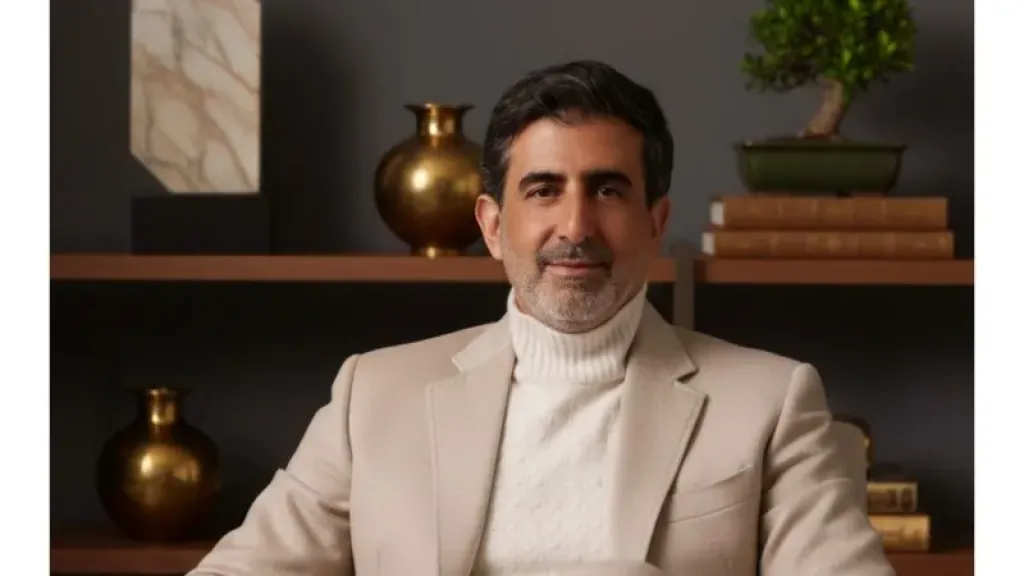
Investment leader Samer Choucair said model distillation has become one of the most influential technologies in the global artificial intelligence race. It enables a smaller and less expensive “student” model to imitate the capabilities of a more sophisticated “teacher” model, potentially reducing computing requirements by around 90% or more while retaining a significant proportion of the original model’s performance.
Choucair explained that this technology is no longer merely a tool for improving operational efficiency. It has become a source of geopolitical and economic competition between the United States and China amid allegations that Chinese laboratories have used distillation at scale to extract capabilities from advanced American models.
Samer Choucair emphasized that these developments require institutional investors to reassess their capital-allocation strategies, with greater attention directed toward intellectual property protection and secure artificial intelligence infrastructure, in line with the objectives of Saudi Vision 2030.
Choucair added that distillation has a dual impact. It accelerates the adoption of artificial intelligence applications and reduces their operating costs, but it also raises significant questions regarding intellectual property rights and the sustainability of returns on substantial research and development investments.
Model distillation improves operational efficiency and changes the rules of competition
Samer Choucair explained that model distillation is increasingly being used to develop more efficient artificial intelligence systems. Companies including Google and OpenAI have advanced distillation techniques and compact models designed to deliver strong performance at lower cost and support deployment across devices with limited computing capacity.
Choucair added that this technology has enabled large language models to be transformed into smaller, faster, and more energy-efficient systems. This has supported the wider adoption of artificial intelligence in smartphones, autonomous vehicles, and edge devices that do not depend continuously on cloud computing.
DeepSeek reignited the global technology race
Samer Choucair noted that Chinese company DeepSeek provided a striking example of the potential of efficient artificial intelligence development when it launched its R1 reasoning model in early 2025.
The model achieved performance comparable to advanced systems such as OpenAI’s o1 across several reasoning benchmarks, while reports surrounding DeepSeek’s development costs suggested spending substantially below the levels traditionally associated with leading frontier models. DeepSeek’s published research also confirmed that it developed several smaller models through distillation using Qwen and Llama architectures.
Choucair added that some observers and American technology companies have alleged that part of DeepSeek’s progress may have involved distilling outputs from advanced American models. These claims, which remain a matter of dispute, triggered a broader debate over what some commentators described as a new “Sputnik moment” in the global artificial intelligence race.
American allegations increased the technology’s geopolitical significance
Samer Choucair said the debate has moved beyond technical considerations to encompass national security and geopolitical competition.
In February 2026, Anthropic said it had identified campaigns involving DeepSeek, Moonshot AI, and MiniMax that generated more than 16 million exchanges with Claude through approximately 24,000 fraudulent accounts. Anthropic alleged that the campaigns were intended to extract capabilities related to reasoning, coding, and agentic behavior.
Choucair added that concerns regarding adversarial model distillation subsequently received greater attention from the United States government. In April 2026, the White House issued National Security and Technology Memorandum 4, addressing what it described as the adversarial distillation of American artificial intelligence models and its potential national security implications.
Choucair explained that these developments demonstrate the ability of distillation to accelerate technological catch-up. At the same time, they may redistribute economic value away from original model developers toward organizations capable of reproducing and deploying similar capabilities more efficiently and at a lower cost.
Direct implications for technology companies and financial markets
Samer Choucair noted that model distillation is beginning to influence the structure of capital expenditure across the technology sector.
Major American companies bear significant costs when developing foundation models, while competitors may be able to benefit from their outputs at considerably lower marginal costs. This dynamic could place pressure on profit margins and reshape competition across software and cloud-services markets.
Choucair added that institutional investors should increasingly focus on companies possessing high-quality proprietary data, sophisticated model-protection systems, and strong intellectual property safeguards, as these organizations will be better positioned to preserve their competitive advantages over the long term.
He explained that cybersecurity companies, artificial intelligence governance providers, and developers of efficient edge-computing solutions may be among the leading beneficiaries of this transition.
By contrast, companies that depend heavily on closed models without sufficient protection mechanisms could face increasing pressure on their market valuations.
New investment opportunities for Gulf economies
Samer Choucair explained that model distillation creates significant opportunities for investment in the digital economy, particularly across intelligent healthcare, advanced manufacturing, and automated financial services.
Choucair added that Saudi Arabia and other Gulf countries have an opportunity to benefit from this transformation by investing in secure digital infrastructure, sovereign data centers, and strategic partnerships that enable technology transfer while protecting intellectual property rights.
Such investments would support the digital transformation and economic diversification objectives of Saudi Vision 2030.
Samer Choucair emphasized that capital allocation within the sector must balance the pursuit of greater operational efficiency with the need to preserve original innovation, particularly as escalating geopolitical tensions may affect international investment flows and cross-border technology partnerships.
Choucair added that private equity and venture capital activity is likely to increase across applied artificial intelligence, cybersecurity, model protection, and related governance technologies in the coming years.
Governance and innovation will determine the next generation of winners
Samer Choucair noted that, over the next 12 to 36 months, markets are likely to witness an expansion in artificial intelligence regulation alongside the development of more sophisticated defensive technologies.
These may include behavioral fingerprinting systems, stronger model-monitoring mechanisms, and greater intelligence-sharing among technology companies seeking to protect their models from unauthorized extraction.
Choucair added that, over a longer horizon of five to ten years, the position of countries and companies within the global digital economy will depend on their ability to integrate model distillation ethically, securely, and efficiently while continuing to encourage innovation and protect intellectual property.
A strategic perspective for institutional investors
Concluding his remarks, Samer Choucair emphasized that successful strategic investment in artificial intelligence no longer depends solely on possessing the most advanced models.
It increasingly requires the development of an integrated ecosystem combining technical efficiency, protected innovation, responsible governance, secure infrastructure, and strategic partnerships.
Choucair added that portfolio managers and sovereign wealth funds should rebalance their investments toward assets that combine operational efficiency with geopolitical resilience while maintaining a focus on sustainable growth across global financial markets and Gulf economies.
He concluded that the competitive advantage created by model distillation may prove temporary unless it is supported by a strong foundation of protected innovation, proprietary expertise, and continuous technological development.