
Samer Choucair on How China”s Gen Z Is Rewriting the Rules of Competition in the Luxury Sector
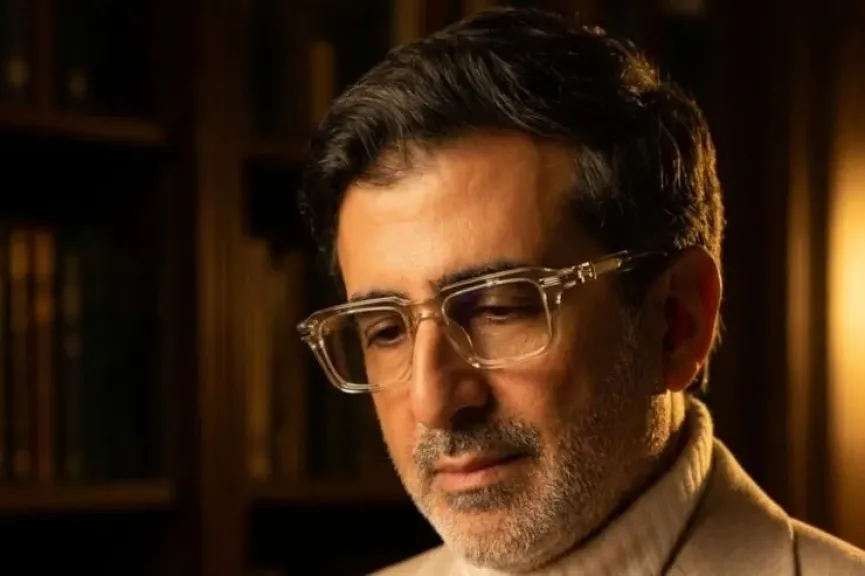
Investment entrepreneur Samer Choucair said that China's personal luxury goods market is undergoing a structural shift reflecting a clear change in consumer priorities, explaining that Gen Z and millennials, who represent around 70% of total spending in this sector, are no longer focused on visible logos and brand names, but have moved toward products and experiences that offer emotional and spiritual value, including spiritually themed accessories, perfumes, and fashion inspired by Zen philosophy.
Choucair added that this shift coincided with mainland China's personal luxury goods market contracting between 3% and 5% during 2025, with signs of partial recovery emerging in the third quarter, placing pressure on the revenue of major global groups heavily reliant on the Chinese market, while opening new opportunities for local brands and companies specializing in wellness and personal experiences.
Choucair affirmed that institutional investors now need to distinguish between cyclical weakness resulting from economic conditions and a structural shift in the consumer values system, noting that these changes could push capital reallocation away from traditional models toward sectors better able to adapt to growing demand for meaning and psychological wellbeing.
A Strategic Shift in One of the World's Most Important Luxury Markets
Samer Choucair explained that institutional investors and sovereign funds are facing a fundamental shift in one of the historic growth drivers of the global luxury goods sector, noting that Chinese demand is no longer driven by the desire to display social status through logos, but has become a reflection of a growing search for emotional and spiritual comfort amid an economic environment marked by significant uncertainty.
Choucair added that this shift carries direct implications for listed company valuations, profit margins, and cross-border capital flows, affirming that companies failing to adapt to this reality could face continued pressure, while new business models capable of capitalizing on shifts in consumer behavior will emerge.
Economic Challenges Are Reshaping Consumer Priorities
Samer Choucair noted that this consumer trend has emerged amid structural challenges facing the Chinese economy, including slowing growth rates, rising youth unemployment, and continued pressure on the real estate market, factors that have pushed a generation that grew up during a period of rapid economic expansion to reassess sources of satisfaction and social status.
Choucair added that these changes have led to a relative decline in spending on goods reflecting social display, against rising spending on products and services that offer a sense of reassurance and psychological balance, expecting this pattern to continue unless core economic indicators, particularly confidence and employment data, show tangible improvement.
Gen Z and Millennials Are Leading the Shift in the Luxury Sector
Samer Choucair affirmed that market data showed Gen Z and millennials continuing as the main drivers of luxury goods spending in China, though the concept of value for them has changed clearly, as focus has shifted toward experiences, stories, and products capable of meeting emotional and spiritual needs rather than relying solely on brand strength.
Choucair added that categories such as accessories and spiritually themed products recorded strong growth through e-commerce channels, driven by the search for alternative sources of reassurance amid economic uncertainty, while hashtags linked to "Zen" style saw wide engagement on social media platforms.
Choucair explained that this shift was not merely a temporary response to economic conditions, but reflected a deeper change in the values system of an entire generation facing a more complex reality, requiring companies and investors to redefine the value they offer to consumers.
Pressure on Global Brands and the Rise of Local Competitors
Samer Choucair said that major global groups operating in the luxury goods sector, chief among them LVMH and Kering, faced clear pressure on their sales in China and the broader Asia region in recent periods, after many years of heavy reliance on this market.
Choucair added that local Chinese brands have gained growing momentum by offering products aligned with the cultural identity and new emotional needs of young consumers, affirming that this divergence in performance reflects a shift in the competitive landscape, as the ability to understand local context and deliver meaningful experiences has become more important than brand-logo strength alone.
Choucair noted that companies unable to transition from a display-consumption model to one based on experience and meaning will face gradual decline in their competitiveness, particularly amid the rise of local competitors with greater cultural sensitivity to ongoing shifts.
Redistributing Capital Toward New Sectors
Samer Choucair explained that sovereign funds, private equity funds, and hedge funds now need to reassess their exposure to the discretionary consumer goods sector in China, noting that some investors may prefer to reduce their positions in traditional brands heavily reliant on logo-driven sales, while redirecting part of their capital toward wellness companies, digital platforms, and local brands capable of meeting the new demand.
Choucair added that monitoring consumer confidence indicators and data related to spending on experiential and spiritual categories has become a key tool for risk management and anticipating trends before they are fully reflected in companies' financial results.
Choucair affirmed that the most attractive investment opportunities over the medium term lie in companies combining innovation and cultural sensitivity, whether local Chinese companies or global brands that have succeeded in adapting to the new shifts, expecting this to help reshape investment portfolios over the next three to five years.
A Strategic Outlook for Investors
Samer Choucair concluded his remarks by affirming that markets will closely watch the earnings results of luxury goods companies during the third and fourth quarters of 2026, to determine whether the partial recovery that began in late 2025 represents the start of a sustained rebound, or whether the structural shift in consumer preferences will remain the more influential factor.
Choucair added that over the medium and long term, this direction is likely to lead to a partial restructuring of the luxury goods industry's value chain, with greater focus on sustainability, personal experiences, and products with cultural and spiritual dimensions.
Choucair noted that institutional investors, including those linked to economic diversification strategies in the region, can benefit from monitoring these dynamics in China, as one of the world's largest trading partners, given the early indicators it offers about the evolution of global demand for goods and services, and the potential to apply these models to tourism and experiential entertainment sectors.
Choucair concluded by saying that success in investment during the coming period will not depend only on knowing what consumers buy, but on understanding the reasons that drive them to buy, and how these motivations evolve alongside changing economic and social conditions over the next decade.