
Samer Choucair on How the Knowledge Economic City School Contract Confirms Education Infrastructure”s Rise as an Investment Asset
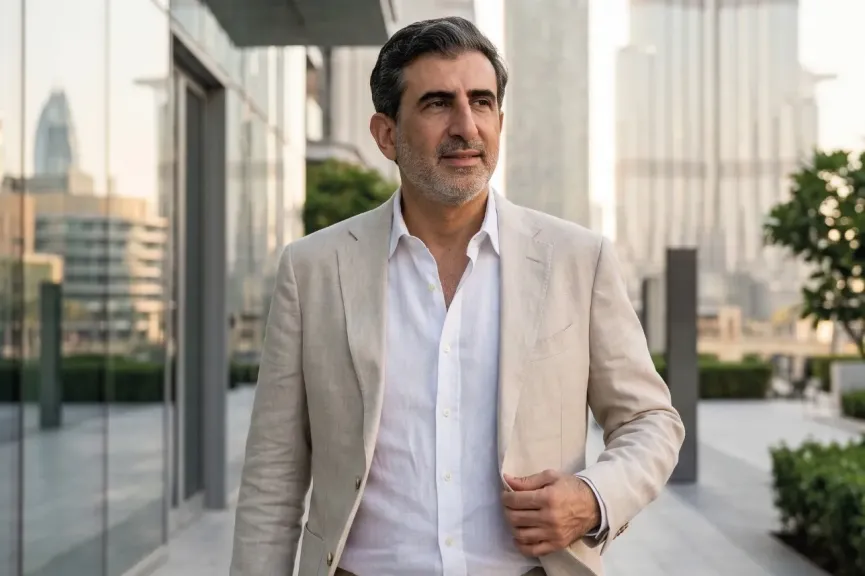
Investment entrepreneur Samer Choucair affirmed that Knowledge Economic City signing a contract worth 117.6 million riyals with Astra Construction to carry out the electromechanical, architectural, and external works for the Riyadh Schools complex within the Knowledge Economic City project in Madinah represents an important execution step reflecting the progress of Saudi Vision 2030 projects from the planning stage into the stage of building productive assets.
Samer Choucair explained that the contract, which spans 10 months and begins work on July 12, 2026, gives institutional investors a clear signal of accelerating execution on one of the main components of the Knowledge Economic City project, while also strengthening clarity around the project's timelines and cash flows, factors that are essential when assessing long-term investment opportunities in real estate development and social infrastructure sectors.
Choucair said that the importance of this contract goes beyond its direct financial value, as it reflects an advanced model combining real estate development with educational operation, creating multi-use assets capable of generating stable cash flows compared with traditional real estate models that rely more heavily on the sale-and-delivery cycle.
Samer Choucair noted that the earlier strategic partnership between Knowledge Economic City and Riyadh Schools Holding, affiliated with the Misk Foundation, represents an example of integration between a real estate developer and a specialized operator, with the developer responsible for building the infrastructure while the academic partner focuses on operations and delivering educational services according to global standards.
Choucair added that this type of partnership aligns with Saudi Vision 2030's direction, which focuses on developing human capital, raising education quality, and strengthening private sector participation in developing social infrastructure, noting that integrating educational projects within economic cities helps build integrated communities that combine housing, work, services, and knowledge.
Samer Choucair explained that institutional investors, sovereign wealth funds, and private equity funds have become more focused on assets offering revenue clarity and a direct link to long-term national priorities, affirming that education and social infrastructure projects are gaining growing importance as sectors with continuous structural demand, particularly in economies undergoing rapid demographic and economic transformation.
Choucair noted that awarding the execution works to Astra Construction gives a positive signal about Knowledge Economic City's ability to convert strategic agreements into projects on the ground, an important factor in lowering the risk premium typically associated with major economic city projects.
Choucair added that the monthly payment mechanism tied to actual completion certificates helps manage cash flows efficiently and provides a more disciplined framework for project execution, strengthening investor confidence in developers' ability to manage long-term projects according to clear timelines.
Samer Choucair affirmed that Knowledge Economic City represents an important model in developing knowledge-based cities built on specialized services, as its role is not limited to urban development but extends to building an economic ecosystem based on education, innovation, and high-value-added services.
Choucair noted that the education sector has become an area attracting growing interest from global investors, given its ability to provide stable operating revenue, in addition to its role in supporting long-term economic productivity, adding that the success of partnership models between real estate developers and educational operators could open the door to replicating the experience in other projects within the Kingdom.
Samer Choucair pointed out that institutional investors will monitor key indicators in the coming period, including the pace of construction completion, the transition to the operational phase, the extent to which the project is reflected in Knowledge Economic City's financial performance, alongside any future expansions in educational and knowledge-based projects linked to economic cities.
Choucair affirmed that the continued execution of Vision 2030-linked projects helps build a practical track record that strengthens the confidence of local and international investors, and leads to improved appeal of strategic sectors and lower cost of capital over the long term.
Samer Choucair concluded by affirming that investing in education infrastructure is not merely the development of service facilities, but an investment in the competitiveness of the Saudi economy, explaining that projects combining real estate, education, and knowledge will be among the areas most capable of attracting institutional capital in the coming years.