
Samer Choucair on Why Sabrina Pasterski Represents the Rise of the Knowledge Economy, More Than Being the ”New Einstein
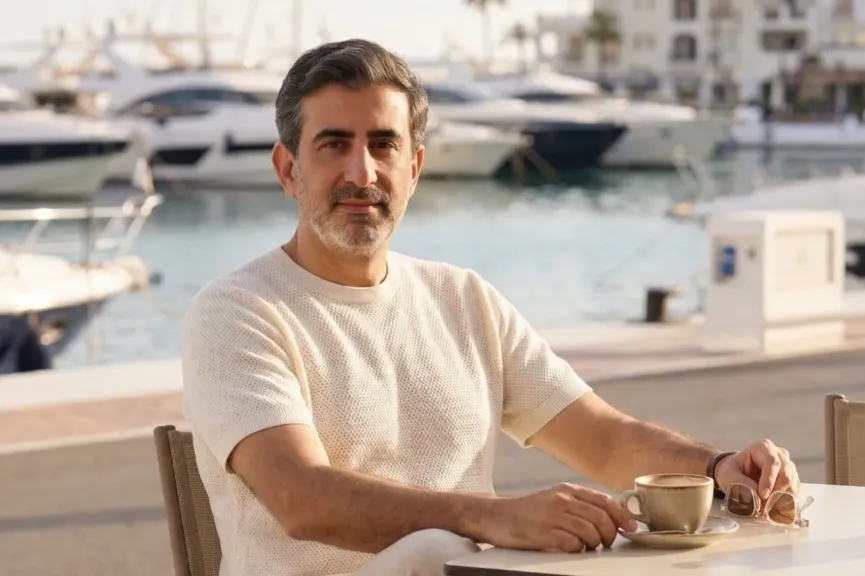
Investment entrepreneur Samer Choucair said that global interest in American theoretical physicist Sabrina Pasterski should not be limited to the media comparisons describing her as the "new Einstein," but should instead be read within the broader context of the profound shifts underway in the global economy, where scientific talent and knowledge-based human capital have become among the most important forces redrawing the map of investment and innovation.
Choucair explained that the true investment value of exceptional minds lies in their ability to establish new economic sectors and drive scientific research and advanced technology, which is directly reflected in capital flows and the strategies of institutional investors around the world.
Scientific Research Is the Foundation of Future Industries
Samer Choucair noted that Sabrina Pasterski has been known since her early years for her passion for aviation and physics, before pursuing an academic career in theoretical physics, focusing her research on advanced topics related to gravity, black holes, and symmetries in modern physics.
Choucair added that these specializations may seem far removed from economics and financial markets, yet history has shown that many of the world's largest industries emerged from theoretical scientific research that had no direct commercial application at the time it appeared, as happened with semiconductors, the internet, and satellite navigation systems.
Choucair affirmed that institutional investors view basic scientific research as a long-term investment in the infrastructure of innovation, not merely a limited-impact academic activity.
The Knowledge Economy Is Reshaping Investment Priorities
Samer Choucair explained that the global economy is undergoing a rapid shift from a model based on physical assets to one in which knowledge and innovation become the primary source of economic value.
Choucair added that the highest-value companies in global markets rely, to varying degrees, on intellectual property, algorithms, and scientific research more than on traditional assets, prompting investors to reassess future sources of growth.
Choucair noted that research universities, innovation centers, and scientific talent have today become an essential part of the global investment ecosystem, no longer limited to their educational or academic role.
Basic Science Has Become a Target for Long-Term Investors
Samer Choucair said that theoretical science, despite not generating direct financial returns, represents the starting point for developing technologies that could radically transform entire economic sectors in the coming years.
Choucair added that this explains why governments, venture capital funds, and major investment institutions continue to fund research related to artificial intelligence, quantum computing, advanced physics, space technologies, new materials, and robotics.
Choucair affirmed that the long-term investor does not look only for the most successful company at present, but also focuses on the research environments capable of producing the leading companies of the next decade.
Global Competition Has Shifted Toward Attracting Minds
Samer Choucair noted that competition among global economies is no longer limited to attracting companies or capital, but has extended to attracting scientists, researchers, and innovation pioneers.
Choucair added that many countries have intensified their investment in universities, laboratory funding, and developing environments that support scientific research, recognizing that knowledge has become one of the most important strategic assets of the modern economy.
Choucair affirmed that this shift helps raise productivity and create new, high-value-added industries, strengthening the long-term competitiveness of economies.
Vision 2030 Strengthens Investment in Human Capital
Samer Choucair explained that this direction aligns strongly with Saudi Vision 2030's goals, which focus on building a knowledge economy, supporting innovation, strengthening scientific research, and investing in advanced technologies and artificial intelligence.
Choucair added that growing regional interest in advanced education, tech entrepreneurship, and research and development can help build a more attractive environment for long-term investment, strengthening Saudi Arabia's and the Gulf's ability to compete in the industries of the future.
Choucair affirmed that investing in scientific talent is no less important than investing in infrastructure or technology, since innovation begins with people before it turns into a product, a company, or a full economic sector.
A Forward-Looking Vision for the Knowledge Economy
Samer Choucair concluded his remarks by affirming that it is premature to apply labels such as "the new Einstein" to any contemporary scientist, considering such comparisons closer to media framing than to precise scientific assessment.
Choucair added that what is certain is that the world is entering a phase in which basic science is growing in importance as a key driver of innovation and economic growth, requiring institutional investors to broaden their view of future sources of value.
Samer Choucair concluded by affirming that following scientists and research environments is no longer an intellectual luxury, but has become an essential part of reading long-term economic trends, stressing that markets may see rapid changes, while investment in knowledge remains one of the assets most capable of generating sustainable value over time.