
Samer Choucair on What Rising U.S. Debt-Servicing Costs Mean for Emerging Markets
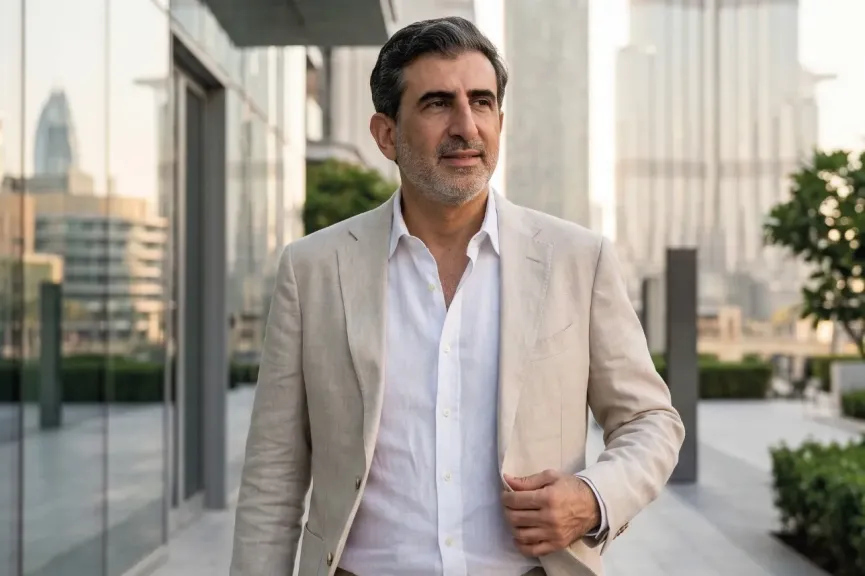
Investment entrepreneur Samer Choucair said that net interest payments on the U.S. federal debt approaching the trillion-dollar mark during fiscal year 2026 represents a structural shift in American public finance, one likely to push institutional investors to reassess capital allocation strategies and long-term sovereign risk management.
Choucair added that estimates from the U.S. Congressional Budget Office (CBO) show total national debt reaching approximately $39.4 trillion, while net interest payments totaled around $970 billion during fiscal year 2025, with the figure expected to exceed $1 trillion in 2026.
Choucair explained that this development is placing growing pressure on the federal budget and shrinking the fiscal space available for discretionary spending, pushing investors to seek diversification opportunities in markets with stronger growth fundamentals and more disciplined fiscal policies, with a focus on productive assets in emerging economies.
Rising Interest Costs Are Redrawing the Global Investment Map
Samer Choucair noted that the rising cost of servicing U.S. debt is placing direct pressure on global capital flows, as interest payments have become one of the largest items in federal spending, at times surpassing defense spending and consuming a growing share of tax revenues.
Choucair added that this reality is forcing sovereign wealth funds and asset managers to reassess the real returns offered by U.S. Treasury bonds, particularly amid ongoing risks tied to the public debt trajectory and the possibility that interest rates remain elevated in the coming years.
Choucair affirmed that these variables are gradually pushing investment portfolios toward rebalancing between traditional assets and structural growth opportunities less tied to the dynamics of U.S. public finance.
U.S. Debt Continues to Climb
Samer Choucair explained that total U.S. national debt reached approximately $39.4 trillion as of July 2026, while debt held by the public reached around $31.7 trillion.
Choucair added that net interest payments rose from $881 billion in fiscal year 2024 to $970 billion in 2025, with the figure expected to surpass $1 trillion in 2026, then rise to approximately $2.1 trillion by 2036 according to CBO estimates.
Choucair noted that this increase resulted from the accumulation of public debt over recent years, alongside rising average interest rates following the end of the era of highly accommodative monetary policy.
Choucair affirmed that interest payments have now become the third-largest spending category in the U.S. budget after Social Security and healthcare, reducing the government's capacity to respond to future economic shocks.
Direct Implications for Capital Markets
Samer Choucair said that the rising cost of debt servicing is directly affecting the U.S. Treasury bond market, with a growing volume of issuance needed to finance a deficit expected to reach approximately $1.9 trillion in fiscal year 2026.
Choucair added that the continuation of this trajectory could lead to upward pressure on long-term bond yields, particularly if global demand for safe-haven assets gradually declines.
Choucair explained that the dollar's status as the world's reserve currency continues to support demand for Treasury bonds, though investors are now paying closer attention to real returns after accounting for inflation and sovereign risk.
Choucair affirmed that managing exposure to U.S. government bonds now requires more careful assessment of maturities and liquidity levels, while avoiding excessive concentration in a single asset that could be affected by U.S. fiscal policy decisions.
Investors Are Rebalancing Their Portfolios
Samer Choucair noted that sovereign wealth funds, pension funds, and private investment firms currently face the challenge of rebalancing their investment portfolios.
Choucair added that U.S. Treasury bonds still offer high levels of liquidity and relative safety, but rising debt-servicing costs are gradually reducing their appeal as a primary source of stable long-term returns.
Choucair explained that interest is increasingly shifting toward alternative assets, including intrinsic-value equities, infrastructure, and real assets, in addition to emerging markets with structural growth opportunities.
Choucair affirmed that effective diversification does not mean abandoning safe assets, but rather spreading risk across multiple sources of growth, while prioritizing governance and productivity factors when selecting investments.
Saudi Arabia Offers a Promising Investment Alternative
Samer Choucair explained that Gulf economies, chief among them Saudi Arabia, offer a different model built on strong fiscal fundamentals and long-term economic reform programs under Vision 2030.
Choucair added that the Kingdom holds substantial financial reserves and continues to implement programs to diversify revenue and expand the contribution of non-oil sectors to the economy.
Choucair noted that a stronger dollar supports oil revenues denominated in the U.S. currency, while investments in infrastructure, manufacturing, the digital economy, and artificial intelligence offer opportunities to deploy sovereign and private capital away from the volatility tied to U.S. debt.
Choucair affirmed that investing in high-productivity, well-governed Saudi sectors provides a natural hedge against global financial volatility and helps build sustainable value for institutional investors.
Investment Opportunities Amid Continued Pressure
Samer Choucair noted that investors are watching, over the next twelve months, the trajectory of U.S. Treasury bond issuance and Federal Reserve decisions on interest rates.
Choucair added that over the medium term, between three and five years, pressure on discretionary spending in the United States is likely to persist, potentially opening the door for assets tied to real growth within emerging markets.
Choucair explained that over the long term, between five and ten years, economies able to maintain fiscal discipline and boost productivity will be the biggest beneficiaries of institutional capital flows.
Choucair affirmed that investors should focus on intrinsic value and structural competitiveness rather than reacting to short-term volatility in sovereign debt markets.
The Future of Institutional Capital Allocation
Samer Choucair concluded by affirming that the U.S. dollar and Treasury bonds will remain a core component of global investment portfolios thanks to market depth and high liquidity, though the continued rise in debt-servicing costs makes over-reliance on them less suitable than in the past.
Choucair added that institutional investors who succeed in combining selective exposure to safe assets with disciplined expansion into structural growth opportunities, particularly those linked to Saudi Vision 2030, will be best positioned to adapt to the new global financial environment.
Choucair concluded by saying that the coming period requires continuous monitoring of the U.S. deficit trajectory and its impact on global interest rates, while maintaining sufficient flexibility to reallocate assets in line with evolving economic data and financial markets.