
Samer Choucair on Why Risk Discipline Is the Key to Investing in Energy Right Now
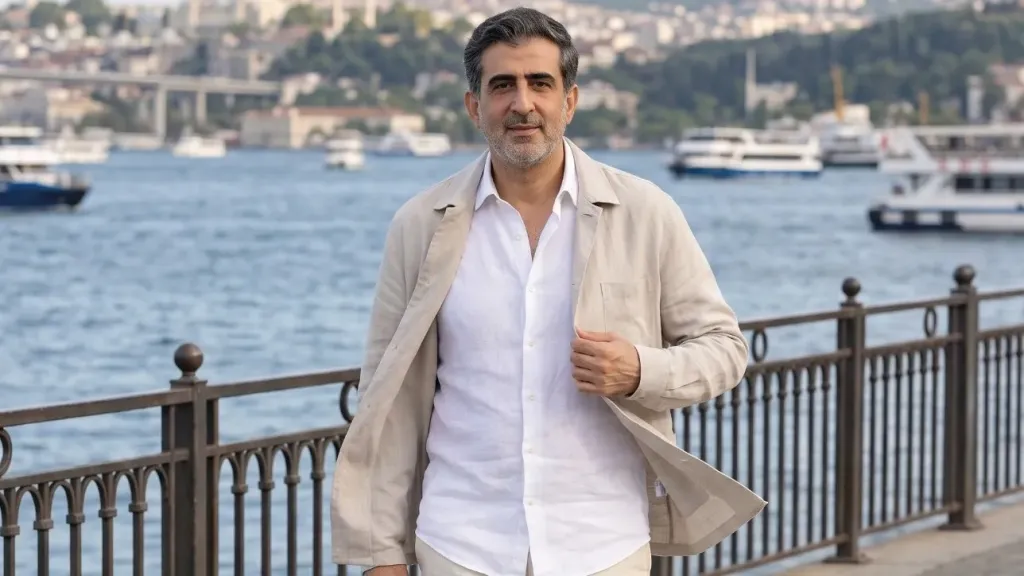
Investment entrepreneur Samer Choucair affirmed that the escalating geopolitical tensions in the Strait of Hormuz, following U.S. military strikes on Iranian targets carried out in response to attacks on commercial vessels in the strait, require institutional investors to immediately reassess capital allocation in the energy sector and emerging markets, balancing short-term opportunities against structural risks that could affect the stability of global supply chains and economic growth.
Samer Choucair explained that the Strait of Hormuz is one of the world's most important strategic energy corridors, with approximately 20.9 million barrels per day of oil and condensates passing through it, equivalent to roughly 20% of global liquid petroleum consumption, alongside nearly a quarter of the world's seaborne oil trade, noting that recent developments pushed Brent crude prices up by more than 4% in some sessions, with futures reaching levels close to $78 per barrel in some trading.
Choucair added that this escalation has notably raised the geopolitical risk premium, requiring investors to distinguish between the potential short-term gains oil-producing countries, particularly in the Gulf, may see, and the broader risks that could affect the global economy if disruptions persist over time.
Samer Choucair noted that the latest escalation represents a new test of global markets' ability to absorb geopolitical shocks at one of the most critical chokepoints for energy supply, affirming that the impact of these developments is not limited to rising oil prices, but extends to higher shipping and insurance costs and the repricing of risk across various asset classes, from oil futures to the shares of companies most exposed to energy cost volatility.
Choucair added that managers of sovereign wealth funds, hedge funds, and family offices are currently facing complex investment decisions, as rising oil revenues could support some Gulf economies in the near term, while high energy costs weigh on the profit margins of global companies and raise the likelihood of imported inflation.
Choucair affirmed that the Strait of Hormuz will remain the main export corridor for oil coming from Saudi Arabia, the UAE, Iraq, Kuwait, and Qatar, most of which is bound for Asian markets, explaining that any sustained decline in shipping traffic or rise in transit costs would directly affect global energy prices and fuel a further rise in the geopolitical risk premium.
Choucair noted that historical data show that disruptions in this vital corridor typically lead to a rapid rise in shipping costs and insurance premiums, raising import costs for energy-dependent economies.
He said that institutional investors are likely to closely watch daily vessel movements and any signs of rerouted shipping or the use of alternative routes as early indicators of the scale of impact, adding that the current rise in the risk premium offers a limited window to rebalance portfolios toward measured exposure to the energy sector, while maintaining strict risk discipline and avoiding excessive concentration in a single geographic region.
Samer Choucair explained that Brent crude prices rose by more than 4% during some recent sessions amid concerns over supply disruption, with contracts settling at their highest levels in several weeks, reflecting the return of the geopolitical risk premium to markets.
Choucair added that oil and gas producers may benefit from improved profit margins in the near term, while refining, transport, and energy-intensive industries face growing pressure from rising costs.
Choucair noted that demand for hedging contracts and options in derivatives markets is also expected to rise, with some hedge funds moving to build long positions in commodities or adopt strategies that benefit from increased volatility, while the energy sector may see relatively better performance in equity markets compared with other sectors if energy costs continue to climb.
He said that traditional asset managers are likely to favor investing in companies with strong balance sheets and the ability to pass rising costs on to end consumers, while reducing exposure to more financially fragile companies.
Samer Choucair affirmed that Gulf economies, led by Saudi Arabia and the UAE, could benefit from any sustained rise in oil prices through improved fiscal revenues and stronger government budgets, providing additional room to fund economic diversification projects under Vision 2030, including infrastructure, tourism, and non-oil industries.
Choucair added that continued volatility or escalating tensions could, in turn, affect foreign direct investment flows and investor confidence in regional capital markets, including Gulf financial markets.
Choucair noted that the shares of energy companies listed on Gulf markets could see growing interest from local and international investors in the coming period.
He said that the additional expected revenues could support the accelerated execution of some economic diversification projects, though continued volatility could push sovereign wealth funds to build up reserves or expand their use of financial hedging tools to maintain stable long-term cash flows.
Samer Choucair explained that institutional investors, whether sovereign wealth funds, pension funds, or hedge funds, face the challenge of balancing short-term opportunities against structural risks, with some likely to increase exposure to energy and commodities through futures or sector-linked equities, while others prefer to strengthen their holdings in safe-haven assets or reduce exposure to emerging markets more sensitive to rising energy costs, adding that the mergers and acquisitions market could also see selective activity in the energy and logistics sectors.
He said that hedge funds and family offices are likely to increase their positions in oil futures and volatility-linked products, while traditional investors focus on credit quality and the ability to adapt to a higher-cost environment, with hedging against currency and inflation risk remaining a priority for globally exposed investment portfolios.
Samer Choucair concluded his remarks by affirming that investors will spend the next twelve months watching global inventory levels, the response of the OPEC+ alliance, and any signs of de-escalation or further escalation in the region, explaining that continued disruption could lead to broader inflationary pressure, pushing central banks toward more cautious monetary policy, with knock-on effects for bond and equity markets.
Choucair added that over a three-to-five-year horizon, this situation could accelerate investment in diversifying energy sources, developing alternative shipping routes, and building more resilient logistics infrastructure outside traditional corridors.
Samer Choucair affirmed that institutional investors must look beyond the current volatility, since present conditions could speed up the shift toward more diversified energy sources and broader investment in logistics infrastructure, stressing that discipline in risk management and a focus on long-term value will remain the decisive factors for success in an investment environment marked by ongoing geopolitical uncertainty.