
Samer Choucair on How New Heat-Safety Standards Are Raising the Bar for Saudi Arabia”s 2034 World Cup Investments
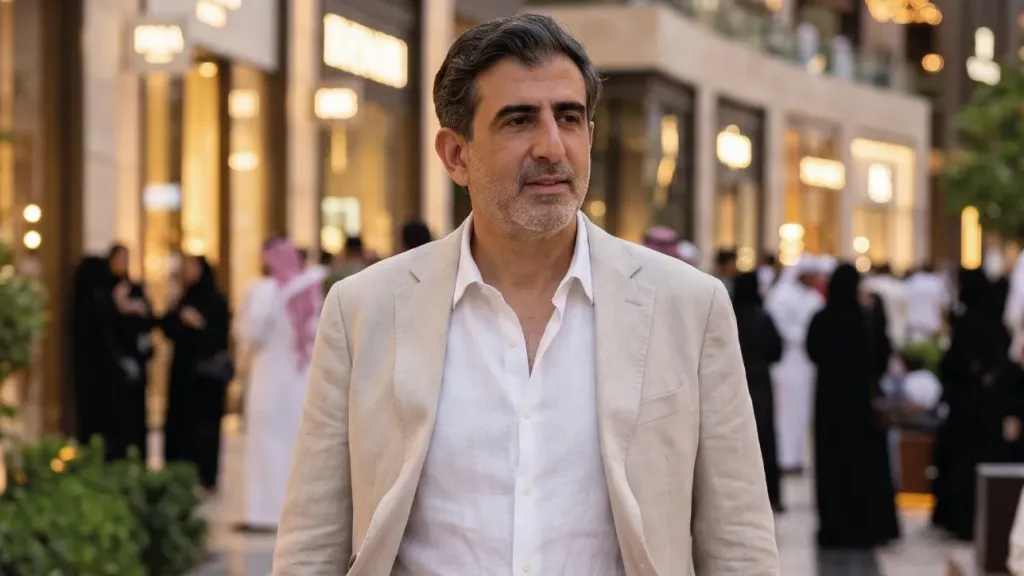
Investment entrepreneur Samer Choucair said that the infrastructure sector for major sporting tournaments is undergoing rapid structural change driven by growing attention to climate safety standards and player protection, explaining that the 2026 World Cup has revealed a clear divergence between FIFA's standards and those of FIFPRO, the global players' union, in handling the risks of high temperatures.
Choucair added that no match in the current tournament has yet reached FIFA's maximum intervention threshold, while a notable number of matches have exceeded the more conservative limits recommended by FIFPRO, a gap carrying direct implications for the cost of designing and operating future stadiums, particularly as Saudi Arabia prepares to host the 2034 World Cup.
Choucair explained that Saudi Arabia plans to build and develop 15 world-class stadiums across five major cities, with an estimated cost for the stadiums alone ranging between $20 billion and $25 billion, within broader infrastructure investments that could reach tens of billions more, affirming that these developments will push sovereign wealth funds and family offices to reassess capital allocation strategies, prioritizing projects that integrate climate resilience standards from the design stage, ensuring long-term economic viability and strengthening returns from the tourism and entertainment sectors.
Climate Has Become a Key Factor in Evaluating Sports Investments
Samer Choucair noted that climate factors have become one of the most important criteria for evaluating investments linked to sports infrastructure, as project success is no longer tied solely to construction quality but also to the ability to ensure the continuity of sporting events amid changing climate conditions.
Choucair added that the debate over Wet Bulb Globe Temperature (WBGT) limits during the 2026 World Cup reflects a complex balancing act between player protection requirements and considerations of scheduling and operational costs, noting that these challenges will directly carry over to future host nations, chief among them Saudi Arabia, which is preparing to organize the 2034 edition in a desert environment requiring advanced engineering solutions.
Choucair affirmed that institutional investors now view these variables as a core part of assessing long-term operational risk, their impact on the value of sports and entertainment assets, and the capacity of these projects to support economic diversification goals under Saudi Vision 2030.
The 2034 World Cup Represents a Driver of Economic Diversification
Samer Choucair explained that investment in sport and entertainment has become one of the main pillars of economic diversification strategies in Gulf states, chief among them Saudi Arabia, noting that the Public Investment Fund is building an integrated ecosystem that includes modern stadiums, training centers, entertainment facilities, and hotels, aimed at raising the contribution of non-oil sectors to GDP.
Choucair added that hosting the 2034 World Cup is not merely a global sporting event, but forms a platform for attracting broad tourism flows and creating sustainable jobs, provided the infrastructure achieves high operational efficiency across varying climate conditions.
Choucair noted that current estimates include broad investments in developing airports, transport networks, and increasing hotel sector capacity, within a giga-project portfolio valued at more than a trillion dollars, though it simultaneously faces pressure to balance execution speed, spending efficiency, and long-term sustainability.
Differing International Standards Raise Design Requirements
Samer Choucair said that FIFA applies a wet bulb globe temperature threshold of 32 degrees Celsius as the minimum for imposing mandatory cooling breaks, with the possibility of postponing or canceling matches at this level, while FIFPRO recommends preventive measures at much lower levels, starting from 26 degrees Celsius for cooling breaks and 28 degrees Celsius for postponement or cancellation.
Choucair added that analysis of the current World Cup matches showed a notable number exceeded FIFPRO's limits, even though no match reached FIFA's approved maximum threshold, reflecting a clear difference in risk-management philosophy between the two bodies.
Choucair explained that FIFA focuses on handling extreme cases to preserve the stability of the tournament schedule, while FIFPRO places greater priority on preventive measures, increasing pressure on organizing bodies to develop advanced engineering solutions, including integrated cooling systems, smart roofs, and advanced stadium temperature-control technologies, in addition to personal cooling solutions for players.
Choucair affirmed that these requirements mean, for Saudi projects, the need to exceed minimum international requirements, which could raise capital costs during the initial execution phases.
Saudi Stadiums Are Preparing to Meet Global Standards
Samer Choucair noted that Saudi plans for hosting the 2034 World Cup include building and developing 15 stadiums distributed among Riyadh, Jeddah, Khobar, Abha, and NEOM, including four existing stadiums undergoing development, three under construction, and eight entirely new stadiums.
Choucair added that these projects include massive sports facilities, most notably King Salman International Stadium, set to host the opening and final matches, noting that some designs rely on retractable roofs and advanced climate-control systems to address environmental conditions.
Choucair explained that the Public Investment Fund recently announced a review of costs for a number of projects and the redesign of some of them, aimed at raising spending efficiency as part of a broader cost-rationalization policy, though integrating sustainability and climate resilience standards could, in turn, raise costs in certain areas even as savings are achieved elsewhere.
Climate Technologies Are Opening New Investment Opportunities
Samer Choucair affirmed that tightening heat-safety standards is opening promising opportunities for companies specializing in advanced cooling technologies, pitch surface management, and sustainable design, explaining that institutional investors, including sovereign wealth funds and family offices, are currently reassessing their portfolios in alternative assets linked to sport and entertainment, focusing on projects capable of withstanding climate risk without affecting returns.
Choucair added that these opportunities are not limited to stadiums alone, but extend to surrounding real estate development, the hospitality sector, and logistics services, noting that stadiums with high climate efficiency will become long-term assets capable of hosting diverse events year-round, boosting return on investment and reducing seasonal risk.
Governance and Risk Management Will Determine Project Success
Samer Choucair said that the success of these projects depends heavily on strict governance for cost management, alongside transparency in risk assessment, explaining that the financial pressures facing some giga-projects confirm the need to balance grand ambitions with realistic execution capacity.
Choucair added that investors are closely watching how relevant authorities balance accelerating completion with raising sustainability standards, particularly amid the ongoing global debate over player-protection standards during major tournaments.
Choucair affirmed that projects that succeed in integrating modern technologies for managing climate risk will be better positioned to attract international partnerships and foreign direct investment, while projects that do not prioritize these considerations may face pressure on their financial valuations and their ability to achieve their economic targets.
The Future of Sports Investment in the Kingdom
Samer Choucair concluded by affirming that as the 2034 World Cup approaches, the Kingdom's ability to provide climate-resilient infrastructure will be a key factor in strengthening its position as a global destination for hosting major events.
Choucair added that the lessons learned from the 2026 World Cup, whether related to heat-safety standards or operating costs, will serve as an essential reference for planners and investors in the coming years.
Choucair affirmed that institutional capital will gradually move toward projects that prove their efficiency in managing climate and operational risk, with a focus on the compounding returns generated by developing tourism and entertainment and strengthening the Kingdom's international image.
Samer Choucair concluded by saying that converting climate challenges into a competitive advantage through engineering innovation and disciplined strategic planning represents the real opportunity to achieve Vision 2030's goals without exposing budgets or timelines to unaccounted-for pressure, noting that investors who recognize these variables early will be best positioned to benefit from the coming wave of investment in sustainable infrastructure and global sporting events.