
Samer Choucair: The Next Wave of Healthcare Investment Will Be Built on Turning Routine Medical Data into Predictive Tools
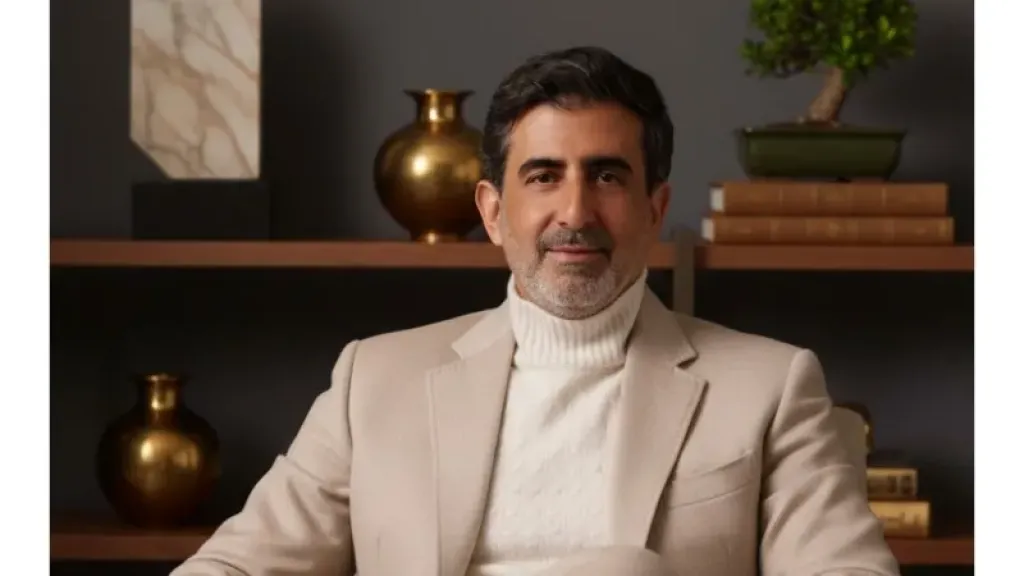
Investment leader Samer Choucair affirmed that innovation in predictive medical diagnostics represents one of the most important future investment trends, noting that healthcare systems' ability to extract greater value from data they already possess will reshape the delivery of healthcare while opening significant opportunities for institutional investors, sovereign wealth funds, and strategic investors.
Choucair explained that the scientific advancement surrounding the use of biomarkers derived from routine blood tests—including the measurement of immature granulocytes within a complete blood count (CBC)—reflects a significant shift from a reactive healthcare model that addresses disease only after complications arise to a predictive model focused on identifying risks early and improving treatment decisions before conditions worsen.
Samer Choucair said, "Innovations that leverage existing healthcare infrastructure, such as using data generated from routine blood tests to predict future health risks, represent investment opportunities with a dual impact. They improve clinical outcomes while enhancing healthcare spending efficiency by reducing the need for costly interventions during advanced stages of disease."
Choucair added that the laboratory diagnostics sector is undergoing a strategic transformation driven by growing global demand for more efficient healthcare solutions, particularly as chronic diseases and cardiovascular conditions continue to represent some of the world's most significant health and economic challenges.
He noted that the global laboratory diagnostics market continues to expand due to rising demand for advanced testing, the growing adoption of artificial intelligence in medical data analysis, and ongoing advancements in precision medicine. At the same time, the cardiac biomarker market is experiencing rapid growth as healthcare systems increasingly rely on tools that enable physicians to identify high-risk patients earlier and allocate medical resources more effectively.
Choucair explained that the investment value of these innovations extends well beyond the medical test itself, encompassing an integrated ecosystem that includes laboratory analyzers, artificial intelligence software, healthcare data analytics platforms, and clinical decision-support systems. Samer Choucair said, "Institutional investors today are no longer evaluating opportunities based solely on market size. They are looking for companies capable of building scalable solutions that combine scientific innovation with commercial viability while integrating into the broader digital transformation of healthcare. Businesses that can transform medical data into actionable clinical decisions will be among the strongest long-term value creators."
He added that manufacturers of advanced blood analysis equipment, healthcare software developers, medical artificial intelligence companies, and healthcare providers investing in predictive analytics are all well positioned to benefit from this structural transformation within the industry.
Choucair pointed out that this trend is fundamentally changing capital allocation across healthcare, as investors increasingly favor companies with business models focused on prevention and operational efficiency rather than solely treating patients after illnesses develop.
He further explained that low-cost innovations capable of operating within existing healthcare infrastructure possess a particularly attractive investment profile because they reduce capital expenditure requirements and accelerate clinical adoption compared with technologies that require entirely new systems. Samer Choucair said, "The most compelling investment opportunities in the future of healthcare will belong to companies that know how to transform underutilized assets, such as existing medical data, into practical solutions that improve quality of care while lowering costs. This is where financial returns intersect with meaningful economic and social impact."
Discussing the Gulf region and Saudi Arabia, Choucair emphasized that healthcare transformation under Saudi Vision 2030 provides a strategic environment for adopting advanced medical technologies and localizing healthcare industries. He noted that investments in diagnostics, medical artificial intelligence, and precision medicine align closely with the Kingdom's objective of building an innovation-driven, knowledge-based economy.
He added that Saudi Arabia possesses several competitive advantages that position it to accelerate adoption of these technologies, including substantial investment in digital healthcare infrastructure, continued expansion of the private healthcare sector, and stronger partnerships between local institutions and global biotechnology and diagnostics companies.
Samer Choucair said, "Saudi Arabia and the Gulf region have a strategic opportunity to build smarter and more sustainable healthcare systems by investing in technologies that combine preventive care with advanced data analytics. These investments not only strengthen the healthcare sector but also contribute to building a more diversified and resilient economy."
Choucair stressed that successful investment in this field requires a thorough understanding of both scientific and regulatory considerations. He highlighted the importance of rigorous clinical validation, obtaining necessary regulatory approvals, protecting healthcare data, and maintaining public trust in the responsible use of medical information.
He explained that investment risks within advanced diagnostics include slower-than-expected clinical adoption, regulatory challenges, and the need to demonstrate both economic and medical value at scale. However, he noted that these challenges also create opportunities for investors capable of identifying companies supported by strong scientific foundations and clear commercial strategies.
Samer Choucair said, "Successful investment leaders do not simply pursue the most exciting technologies—they identify solutions capable of creating lasting transformation within markets. In healthcare, real value will belong to those who successfully connect science, data, and economic efficiency."
He concluded by emphasizing that healthcare investment is increasingly moving toward integrated models that combine technology, medicine, and data, adding that companies capable of delivering accurate, scalable predictive tools will become essential components of the global healthcare ecosystem.
Concluding his remarks, Samer Choucair said, "Healthcare investment is no longer limited to developing new drugs or sophisticated medical devices. It is increasingly centered on building intelligent systems that transform available information into decisions that save lives while improving economic efficiency. That is the essence of strategic investment—creating value for both investors and society."