
Samer Choucair: Meta–Reliance Partnership Signals Global Capital”s Shift Toward Digital Infrastructure
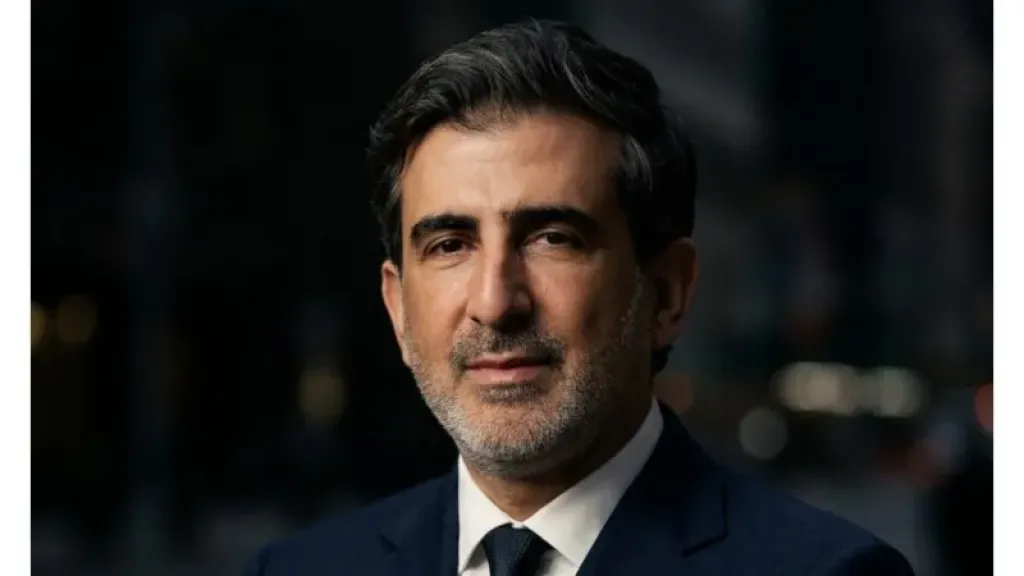
Investment leader Samer Choucair said the strategic partnership announced between Meta Platforms and Reliance Industries to develop a dedicated 168-megawatt artificial intelligence data center in Jamnagar, Gujarat, marks a defining moment in the global race to build AI infrastructure. He added that the project also intensifies competition with the ambitious plans led by the Adani Group, which aims to invest $100 billion in renewable energy-powered data centers by 2035.
Choucair explained that the image of Reliance Industries Chairman Mukesh Ambani speaking at the AI Impact Summit India 2026, against a backdrop featuring the summit's branding and the Hindi slogan emphasizing "Prosperity for All," represented more than a media appearance. Instead, it reflected India's emergence as a leading force in the global digital economy.
He emphasized that these developments demonstrate a clear shift in institutional capital allocation toward digital infrastructure and the assets supporting it across high-growth emerging markets, creating significant opportunities for the energy, construction, and logistics sectors.
Digital Infrastructure Enters an Unprecedented Growth Phase
Samer Choucair noted that Meta's decision to lease the AI-focused data center from Reliance comes at a time when demand for cloud computing and artificial intelligence services in India is accelerating rapidly, driven by nationwide digital transformation and increasing enterprise adoption of hybrid and multi-cloud environments.
He pointed out that industry forecasts indicate India's data center market is expected to achieve compound annual growth exceeding 15% over the coming years, with the sector projected to more than double in size between 2030 and 2034.
According to Choucair, this expansion is fueled by three primary drivers: growing demand for training and operating AI models, supportive government initiatives such as the India AI Mission, and increasing interest from global technology companies seeking reliable local partners capable of meeting data localization requirements while reducing network latency.
Capital Expenditure Accelerates Across Digital Infrastructure
Samer Choucair said the announcement sends a strong signal to institutional investors and sovereign wealth funds that a new cycle of capital expenditure has already begun in digital infrastructure.
He explained that the partnership strengthens Reliance's position across the AI value chain by leveraging its integrated operations spanning telecommunications through Jio, energy, and retail. At the same time, it raises competitive pressure on the Adani Group, which previously announced plans to invest $100 billion to develop up to 5 gigawatts of renewable-powered data center capacity by 2035.
"The Meta-Reliance partnership is far more than a data center leasing agreement," Choucair said. "It establishes a new model for how global technology companies can enter emerging markets by partnering with local businesses that possess integrated capabilities in energy, logistics, and infrastructure, fundamentally reshaping the risk-return equation for investors seeking exposure to the data center industry."
Energy, Construction, and Technology Stand to Benefit
Samer Choucair identified the energy sector—particularly renewable energy—as one of the biggest beneficiaries of the expansion, noting that modern data centers require stable, scalable, and sustainable electricity supplies.
He explained that Adani's strategy is heavily centered on green energy, while Reliance benefits from combining conventional and renewable energy assets, providing greater operational flexibility. He also highlighted that the construction and civil infrastructure sectors are expected to experience rising demand for data center campuses, advanced cooling technologies, and fiber-optic network deployment.
Choucair added that the technology and cloud computing industries are also poised to benefit as Meta expands its enterprise cloud capabilities, leveraging its vast global user base and advertising revenues to finance future growth. While this could increase competitive pressure on existing cloud providers, he believes it will also expand the overall size of the market.
Diversifying Investment Across the AI Value Chain
Samer Choucair stressed that institutional investors should evaluate the artificial intelligence ecosystem as an integrated value chain rather than focusing exclusively on major technology companies.
He argued that the most compelling investment opportunities increasingly lie at the intersection of renewable energy, data centers, and telecommunications infrastructure, encouraging investment funds and family offices to assess businesses with diversified exposure across these sectors while prioritizing sustainability and strong corporate governance to enhance their attractiveness to global partners.
The Ambani–Adani Rivalry Reshapes Competition
Samer Choucair described the growing competition between the Ambani and Adani groups as one of the defining characteristics of India's investment landscape.
He explained that Reliance relies on vertical integration across telecommunications, energy, and retail, while Adani's strategy builds on its strengths in ports, airports, and renewable energy to expand its presence in the data center industry.
According to Choucair, Meta's partnership provides Reliance with a significant operational and strategic advantage, although he believes the broader investment competition between the two groups is likely to continue for many years.
India's Economy Provides Strong Growth Foundations
Samer Choucair observed that the announcement comes as India's economy continues to deliver robust growth, supported by policies encouraging foreign direct investment in digital infrastructure.
He noted that expanding data center capacity will substantially increase electricity demand, creating additional investment opportunities in power transmission networks, energy storage systems, and grid modernization projects.
However, he added that higher global interest rates mean companies must continue demonstrating the long-term economic viability of their large-scale capital investments to maintain investor confidence and secure ongoing financing.
Saudi Arabia and the Gulf Can Replicate the Model
Samer Choucair said the collaboration between global technology firms and local industrial leaders in India offers valuable lessons for Gulf economies, despite the project itself being centered in the Indian market.
He noted that Saudi Arabia, under Vision 2030, continues accelerating investments in the digital economy, smart cities, artificial intelligence, and data centers, adding that the region's greatest opportunities lie in attracting international partnerships while maintaining technological sovereignty and integrating renewable energy into digital infrastructure to generate sustainable long-term returns.
Significant Opportunities Accompanied by Execution Risks
Samer Choucair acknowledged that the sector faces several important risks, including large-scale project execution challenges, ensuring access to competitively priced energy, evolving regulations surrounding data localization, and the possibility of excess capacity should AI demand grow more slowly than anticipated.
At the same time, he believes the greatest opportunities will belong to companies capable of securing long-term contracts with global technology firms while maintaining strong renewable energy portfolios.
He added that success in this sector requires a long-term investment perspective and a willingness to absorb substantial upfront capital expenditures, emphasizing that investors who prioritize governance and sustainability standards will be best positioned to generate stable returns while effectively managing risk.
Strategic Outlook
Samer Choucair concluded by saying institutional investors should closely monitor future expansion announcements from Reliance, Adani, Meta, and other global technology companies operating in India, while also following developments in energy policy and government incentives, particularly in Gujarat.
He added that monitoring similar developments across Gulf markets will be equally important, given the close alignment between regional economic diversification strategies and rising global demand for digital infrastructure.
Choucair concluded that the image of Mukesh Ambani addressing the AI summit symbolized much more than a conference appearance—it reflected the reality that emerging economies have become the primary arena for global competition in artificial intelligence and advanced computing.
He emphasized that investors who recognize the structural transformation taking place across digital infrastructure, and who understand the increasingly interconnected relationship between technology, energy, and capital allocation, will be best positioned to identify the winners of the next global investment cycle as artificial intelligence continues reshaping the world economy.