
Samer Choucair: Content Regulation in India”s Film Industry Reshapes Investment Decisions in the Creative Economy
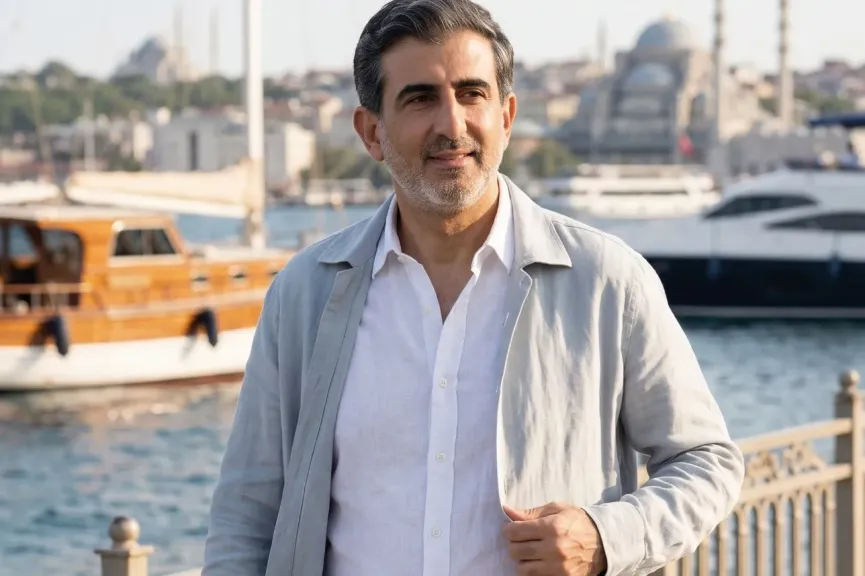
Investment expert Samer Choucair said recent regulatory developments affecting the film and media industry in emerging markets, including India, highlight the importance of evaluating the institutional environment when allocating capital to the creative economy. He noted that sector growth alone is not enough to guarantee sustainable investment returns unless it is supported by clear and predictable regulatory frameworks.
Samer Choucair explained that the global media and entertainment industry is undergoing a structural transformation driven by digital expansion, rising demand for content, and the continued growth of streaming platforms and live events. However, regulatory and political risks have become increasingly important factors in assessing investment opportunities, particularly in industries built around content, creativity, and intellectual property.
"The creative economy depends on the ability to transform ideas and content into sustainable economic value," Samer Choucair said. "A transparent regulatory environment and strong institutional predictability have become essential considerations for investors. Long-term capital seeks markets that provide room for growth while minimizing the risk of unexpected regulatory intervention."
He pointed to India as an important example of a market that combines significant opportunities with regulatory challenges. While the country's media and entertainment sector continues to benefit from rapid digitalization and a vast consumer base, it also faces issues related to content regulation and policy decisions that can influence revenue timing and asset valuations.
Samer Choucair added that institutional investors and sovereign wealth funds are placing increasing emphasis on governance standards and regulatory stability as core components of risk assessment, alongside traditional indicators such as market size and growth potential.
"Investors today are not only searching for high-growth markets—they are looking for environments capable of converting growth into sustainable financial value," Samer Choucair said. "Regulatory predictability has become a competitive advantage that attracts high-quality, long-term capital."
He noted that regulatory challenges in certain media markets create opportunities for other regions to develop more competitive creative ecosystems. According to Samer Choucair, Gulf countries, led by Saudi Arabia, are actively building integrated entertainment industries as part of broader economic diversification strategies.
He emphasized that Saudi Arabia's Vision 2030 represents a model for transforming entertainment, culture, sports, and creative production into productive economic sectors through investments in infrastructure, local talent development, global events, and content-related industries.
"The transformation taking place in Saudi Arabia's entertainment sector reflects a long-term vision that recognizes creative industries as economic growth engines rather than simply consumer activities," Samer Choucair said. "Investment in cinema, gaming, live events, and cultural tourism has the potential to create integrated economic ecosystems with sustainable long-term value."
He further explained that the Kingdom's large-scale development projects present diverse investment opportunities across entertainment infrastructure, film production, local content creation, digital media technologies, and tourism centered on cultural and entertainment experiences.
Samer Choucair stressed that capital allocation within the creative economy requires a careful balance between growth opportunities and operational and regulatory risks. He emphasized the importance of building long-term strategic partnerships between governments and the private sector to ensure project sustainability.
"Successful investment in creative industries is determined not by spending alone, but by the ability to build integrated ecosystems that combine talent, technology, infrastructure, and strong governance," Samer Choucair said. "These are the elements that transform creative projects into long-term economic assets."
He added that the global entertainment industry is expected to continue expanding, supported by digital transformation, evolving consumer preferences, and increasing demand for immersive experiences. Nevertheless, investors will need to distinguish more carefully between markets based on institutional quality and regulatory stability.
Samer Choucair also noted that investment opportunities across the Gulf continue to grow alongside rising spending on tourism, entertainment, cultural industries, and major events, positioning the region to become a leading destination for creative production and foreign direct investment.
"Major investment opportunities emerge when clear economic vision is combined with capital and operational expertise," Samer Choucair said. "Markets that build creative ecosystems founded on governance and sustainability will be best positioned to attract high-quality investment in the years ahead."
He concluded by emphasizing that institutional investors should adopt broader evaluation frameworks that consider regulatory conditions, governance quality, intellectual property protection, and alignment with long-term economic trends.
Concluding his remarks, Samer Choucair said, "The creative economy will remain one of the world's most important long-term growth drivers. Success, however, requires a strategic vision that extends beyond individual projects or events. Sustainable value is created by building ecosystems capable of producing content, attracting audiences, and generating lasting economic impact."