
Samer Choucair: IMF Outlook Signals a New Investment Cycle for the Middle East and North Africa. Investors Have a Window to Position Before the Next Growth Phase
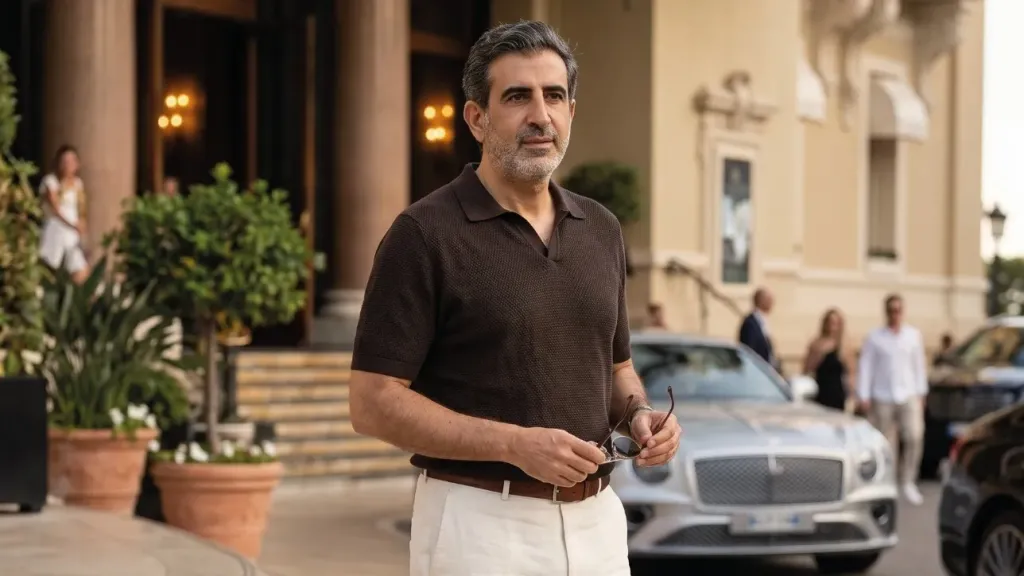
Investment leader Samer Choucair said the International Monetary Fund’s latest outlook for the Middle East and North Africa points to an important economic transition, characterized by short-term fluctuations followed by a strong recovery. He noted that this cycle presents a strategic opportunity for investors who are prepared to build long-term positions before the region enters its next expansion phase.
Choucair explained that the IMF projects regional economic growth of 3.3% in 2025, followed by a slowdown to 0.5% in 2026, with some underlying indicators contracting by as much as 1.6%, before rebounding sharply to 7.3% in 2027.
He added that this trajectory should not be interpreted as a sign of structural weakness but rather as a natural correction ahead of a new period of expansion supported by economic reforms and large-scale capital investment, particularly across the Gulf region.
A Transitional Year Before Stronger Growth
Samer Choucair said the region’s growth in 2025 reflected resilience despite persistent inflationary pressures and global geopolitical uncertainty. He explained that the expected slowdown in 2026 represents a transitional adjustment driven by changing government spending priorities and broader global economic conditions.
He noted that the projected acceleration to 7.3% growth in 2027 reflects expectations of a stronger expansion fueled by continued structural reforms, rising government investment, and the rapid execution of major development projects throughout the region.
According to Choucair, transitional periods such as 2026 often represent the most attractive entry point for long-term investors because market valuations tend to become more attractive before economic recoveries gather momentum.
He said investors with a long-term perspective understand that markets often reward those who invest during periods of uncertainty rather than after growth is already reflected in asset prices.
Key Drivers Supporting the Recovery
Samer Choucair explained that several economic factors are expected to support regional growth heading into 2027, with energy markets and oil revenues remaining among the most influential drivers of government spending across the Middle East.
He added that economic reform programs, particularly Saudi Vision 2030, will continue to play a central role in supporting long-term growth through diversification initiatives and sustained investment in non-oil industries.
Choucair also highlighted improvements in the investment climate and the continued expansion of major infrastructure developments, including NEOM and renewable energy projects, which are expected to strengthen the region's ability to attract foreign direct investment.
Sectors Positioned to Benefit Most
Samer Choucair said infrastructure and construction are likely to be among the biggest beneficiaries of increased government spending expected before and during 2027 as strategic projects continue moving forward.
He added that renewable energy will remain a major destination for investment as governments accelerate green transition programs, while tourism and entertainment—particularly in Saudi Arabia and the United Arab Emirates—are expected to benefit from expanding visitor economies and large-scale tourism developments.
Choucair also believes technology and the digital economy will maintain strong investment momentum as governments and private companies continue investing in artificial intelligence, digital services, and advanced technology infrastructure.
At the same time, he noted that some traditional industries dependent on domestic consumer demand could experience pressure during 2026, particularly if global interest rates remain elevated for longer than expected.
Institutional Investors Preparing for the Next Cycle
Samer Choucair explained that institutional investors are increasingly allocating capital toward fixed-income instruments linked to government-backed projects, alongside investment funds focused on digital transformation and clean energy.
He said the current transition provides an opportunity to rebalance investment portfolios ahead of the next growth cycle, adding that long-term investments in Saudi Arabia could deliver attractive returns by 2027, supported by continued public offerings, capital market expansion, and sustained investment in strategic development projects.
Choucair also noted that sovereign wealth funds and family offices are well positioned to take advantage of lower market valuations during 2026 by building long-term positions before economic momentum strengthens.
Balancing Risks and Opportunities
Samer Choucair acknowledged that investors must continue monitoring geopolitical developments, commodity price volatility, and potential shifts in global monetary policy.
However, he stressed that these challenges do not diminish the region's long-term investment appeal, particularly as governments continue implementing structural reforms, improving governance standards, and increasing investment in productive sectors.
He added that successful investors will need greater flexibility in portfolio management while focusing on industries supported by public investment and long-term economic transformation.
Long-Term Outlook
Samer Choucair concluded that the IMF’s latest projections point to a broader economic transformation across the Middle East and North Africa, with the coming years potentially marking the beginning of a new investment-led growth cycle driven by reform, infrastructure development, and private-sector expansion.
He said institutional investors should closely monitor fiscal and monetary policy developments while maintaining exposure to sectors such as infrastructure, energy, tourism, and technology, which are expected to benefit most from the region’s next phase of economic growth.
Choucair concluded that long-term investment success will come not from chasing markets after they have already rallied, but from identifying opportunities during transitional periods and building diversified portfolios aligned with Saudi Vision 2030 and the broader economic transformation taking place across the Middle East and North Africa.