
Samer Choucair: Greenland Emerges as a Strategic Investment Frontier Amid Global Competition for Critical Minerals
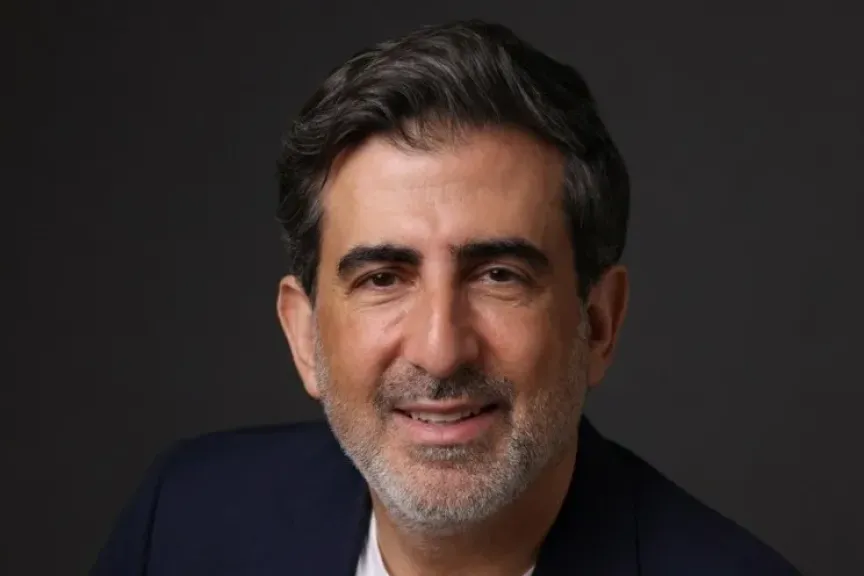
Investment expert Samer Choucair said rising geopolitical tensions surrounding Greenland reflect a fundamental shift in global competition for critical minerals and rare earth elements, emphasizing that these developments are prompting institutional investors and sovereign wealth funds to reassess their exposure to global supply chains while prioritizing politically stable jurisdictions capable of securing strategic resources.
Choucair explained that Danish Prime Minister Mette Frederiksen's reaffirmation of Denmark's commitment to defending "every inch" of NATO territory, amid renewed U.S. interest in Greenland, highlights how access to critical resources has become both an economic and national security priority rather than simply a geopolitical issue.
He added that these global developments align closely with the objectives of Saudi Vision 2030, which places mining among the Kingdom's most important strategic industries for economic diversification and industrial resilience.
Greenland Draws Global Strategic Attention
Choucair noted that Greenland possesses confirmed rare earth reserves estimated at approximately 1.5 million metric tons, alongside significantly larger potential resources that include world-class projects such as Tanbreez and Kvanefjeld, both considered among the most significant rare earth developments globally.
He explained that while these projects have yet to reach full commercial production due to infrastructure limitations, harsh Arctic conditions, regulatory requirements, and environmental considerations, melting ice and rapidly expanding global demand are improving their long-term development prospects.
Choucair added that China continues to account for roughly 60% of global rare earth production and more than 90% of refining and processing capacity, making geopolitical developments in alternative resource regions such as Greenland increasingly important for global mineral markets.
He noted that the global rare earth market is projected to reach approximately $4.54 billion in 2026, with compound annual growth expected to exceed 10% through 2034, driven by accelerating demand from electric vehicles, wind energy, data centers, advanced electronics, and defense industries.
Reshaping Global Supply Chains
According to Choucair, recent developments signal the early stages of a broader restructuring of global critical mineral supply chains as governments and institutional investors seek to diversify sources of supply and reduce concentration risk.
He explained that "friendshoring" strategies continue gaining momentum across the United States and Europe, with Greenland increasingly viewed as a strategic long-term supplier because of its relationship with Denmark and NATO.
However, Choucair emphasized that developing Greenland's mining sector will require substantial long-term capital investment, advanced extraction technologies, and extensive infrastructure, making it particularly suitable for patient institutional capital rather than short-term investors.
Critical Minerals Lead the Next Investment Cycle
Choucair believes the mining industry is positioned to become one of the primary beneficiaries of these structural changes, particularly projects located outside China that possess significant rare earth reserves.
He added that defense and aerospace industries are expected to remain major drivers of demand for high-performance minerals as military spending continues to increase across NATO countries.
He also highlighted the accelerating transition toward electric vehicles and renewable energy, which continues to boost demand for critical elements such as neodymium, dysprosium, and terbium, all of which play essential roles in permanent magnets and advanced manufacturing technologies.
Choucair further noted that continued Arctic ice melt could gradually create new shipping routes across the region, although considerable environmental, logistical, and security challenges remain.
A Long-Term Capital Allocation Strategy
Choucair stressed that investing in critical minerals requires patient capital supported by long-term strategic planning and disciplined risk management.
He said investors should prioritize real assets operating within stable political environments and supported by strong governance standards.
According to Choucair, partnerships combining operational expertise with long-term institutional financing are likely to generate more sustainable returns than speculative investments exposed to commodity price volatility.
He added that Saudi Arabia is well positioned to strengthen its presence in the global mining industry through initiatives such as the Manara Minerals joint venture between the Public Investment Fund and Ma'aden, alongside Ma'aden's long-term investment strategy of approximately $110 billion focused on phosphate, aluminum, gold, copper, and critical minerals.
Saudi Arabia Expands Its Global Mining Role
Choucair said competition for critical minerals is no longer limited to countries such as China, Australia, the United States, and Canada, with Saudi Arabia increasingly emerging as an important participant through its National Mining Strategy and Vision 2030 initiatives.
He noted that the Kingdom's estimated mineral wealth, valued between $1.3 trillion and $2.5 trillion, provides a strong foundation for developing an integrated mining ecosystem that combines domestic resource development with strategic international investments across global supply chains.
He also highlighted Riyadh's annual Future Minerals Forum as an important platform strengthening Saudi Arabia's position as an international hub for mining investment, collaboration, and policy dialogue.
Risks and Opportunities for Investors
Choucair cautioned that investors should continue monitoring several key risks, including project delays arising from environmental approvals, commodity price fluctuations, and evolving geopolitical and trade tensions.
At the same time, he believes these developments create attractive opportunities in mining projects located within politically stable jurisdictions, mineral recycling technologies, advanced processing capabilities, and partnerships between Gulf investors and international mining companies.
He emphasized that investors capable of identifying geopolitical shifts early will be better positioned to build diversified portfolios capable of delivering resilient long-term returns.
Looking Ahead
Choucair concluded that securing access to critical resources will remain one of the defining economic priorities of the coming decade as investment in exploration, refining, and processing capacity outside China continues to accelerate.
He encouraged institutional investors to closely monitor political and economic developments across the Arctic region while prioritizing investments that combine commercial viability, sustainability, and geopolitical stability.
He concluded that critical minerals have become one of the foundations of the modern global economy, and that strategic investments made today will play a decisive role in building more resilient, competitive, and diversified economies in the years ahead, consistent with the ambitions of Saudi Vision 2030.