
Samer Choucair: Governance and Transparency Have Become the Foundation of the Global Football Industry”s Economic Value
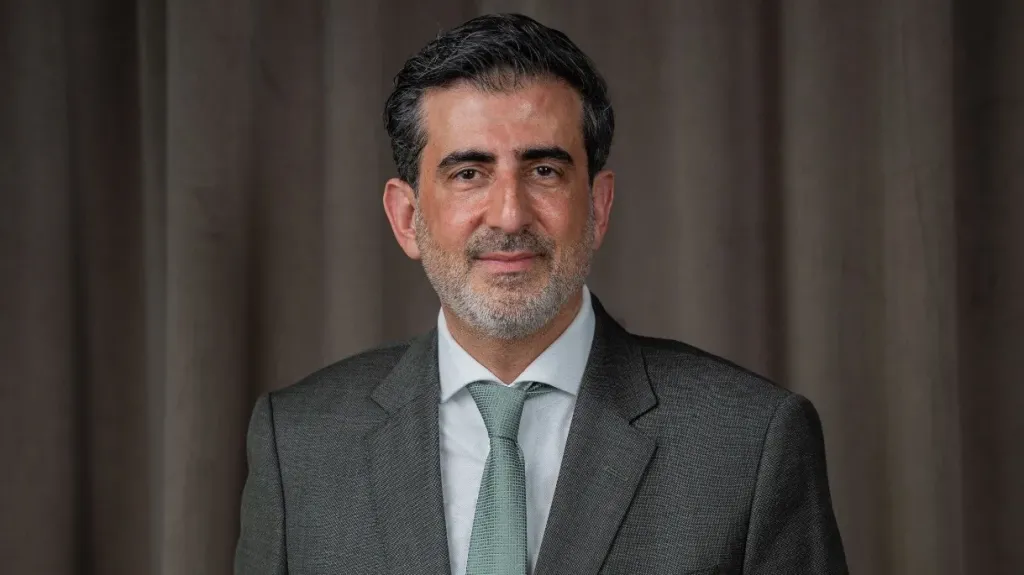
Investment expert Samer Choucair stated that the 2026 FIFA World Cup demonstrates that football is no longer merely a sporting competition but has evolved into a fully integrated economic and investment industry connected to tourism, technology, media, commercial sponsorship, and soft power. He emphasized that every major match now carries economic and strategic implications that extend far beyond the final score.
Choucair said that the photograph captured by media photographers at Lumen Field in Seattle, showing the Belgian goalkeeper stretching out his yellow-gloved hand in a final attempt to stop the ball while a U.S. player falls in front of goal with thousands of spectators in the background, encapsulates the nature of modern football as an industry where sporting emotion intersects with massive investments and global economic interests.
He explained that the image represents the fine line between success and failure in a single moment, while simultaneously illustrating the immense economic impact surrounding major tournaments, where every match becomes a global platform for investment, marketing, and brand development.
Choucair added that, according to circulating reports, Belgium defeated the United States 4–1 in the Round of 16 of the 2026 FIFA World Cup before a large crowd. However, discussion surrounding the match extended beyond the sporting performance, with broader debate emerging over certain governance-related decisions, reinforcing the importance of institutional independence and transparent decision-making within international sport.
The Economic Importance of Institutional Credibility
Choucair noted that any controversy surrounding regulatory or organizational decisions at major tournaments affects far more than the atmosphere of competition. It also influences the confidence of fans, sponsors, and investors, as the value of modern sport increasingly depends on the credibility of the institutions responsible for governing it.
He added that the image also highlights the scale of investment behind every major football match. Packed stadiums generate significant economic activity across tourism, hotels, restaurants, transportation, and retail, while advertising boards and commercial partnerships demonstrate the close integration between sport and the global economy.
According to Choucair, FIFA World Cup tournaments have become among the world's most powerful economic engines, stimulating numerous industries including broadcasting, media rights, sponsorship, sports technology, and logistics, while simultaneously enhancing the international profile of host cities and nations.
Long-Term Development Beyond the Tournament
Choucair explained that investments associated with major sporting events continue long after the final whistle, contributing to infrastructure development, transportation improvements, and stronger investment and tourism appeal for host cities in the years ahead. As a result, such tournaments increasingly form part of broader long-term economic development strategies.
He pointed out that the visibility of global brands throughout the tournament, including official sponsors, illustrates the growing role of sports sponsorship as one of the most effective tools for strengthening corporate brands and expanding international market presence.
He emphasized that sports sponsorship is no longer simply a form of advertising but has become a strategic investment in global influence. The participation of multinational companies from diverse industries reflects the private sector's confidence in sport's economic power and its unparalleled ability to reach hundreds of millions of consumers worldwide through a single event.
Digital Transformation Creates New Investment Opportunities
Choucair stated that the global football industry has become increasingly connected to the digital economy, with digital platforms and social media significantly expanding the commercial value of matches through content creation, audience engagement, advertising, analytics, and data-driven insights. This evolution is creating new investment opportunities for companies specializing in sports technology.
He explained that developments across the sports sector confirm that governance has become one of the most critical drivers of economic success, as international investors seek environments characterized by transparency, institutional stability, and sound governance to ensure sustainable investments while minimizing long-term risks.
Saudi Arabia and the Gulf as Emerging Sports Investment Hubs
Choucair noted that Gulf countries, particularly Saudi Arabia, are presenting an advanced model for leveraging sport as a driver of economic diversification through investments in clubs, major tournaments, infrastructure, and global sporting events, all aligned with the objectives of Vision 2030 to build a diversified and sustainable economy.
He added that continued expansion of sports investment across the region requires ongoing regulatory development and stronger governance and transparency frameworks, as these factors have become essential in attracting international capital and strategic partnerships.
The Future of the Global Sports Economy
Choucair emphasized that global sport is entering a new phase in which the integration of economics, technology, and sustainability will become a primary engine of growth, opening significant investment opportunities in fields such as artificial intelligence for sports, advanced data analytics, digital fan experiences, and environmentally sustainable sports infrastructure.
He added that international experience consistently demonstrates that countries treating sport as a comprehensive industry generate benefits extending far beyond athletic competition, including stronger local economies, increased tourism, job creation, innovation, and enhanced global reputation.
Choucair concluded by stating that the future of world football will ultimately be determined not only by match results or championship titles, but by the ability of sports institutions to strengthen governance, transparency, and institutional independence while preserving the confidence of both supporters and investors in one of the world's largest industries.
He concluded: "Sport has become a fully integrated global economy. Every successful investment in this sector begins with governance and transparency. The greater the confidence in sports institutions, the greater their ability to attract investment, achieve sustainable growth, and create economic value that extends far beyond the playing field."