
Samer Choucair: Those who can transform space into a real economy will own one of the greatest growth opportunities of the future
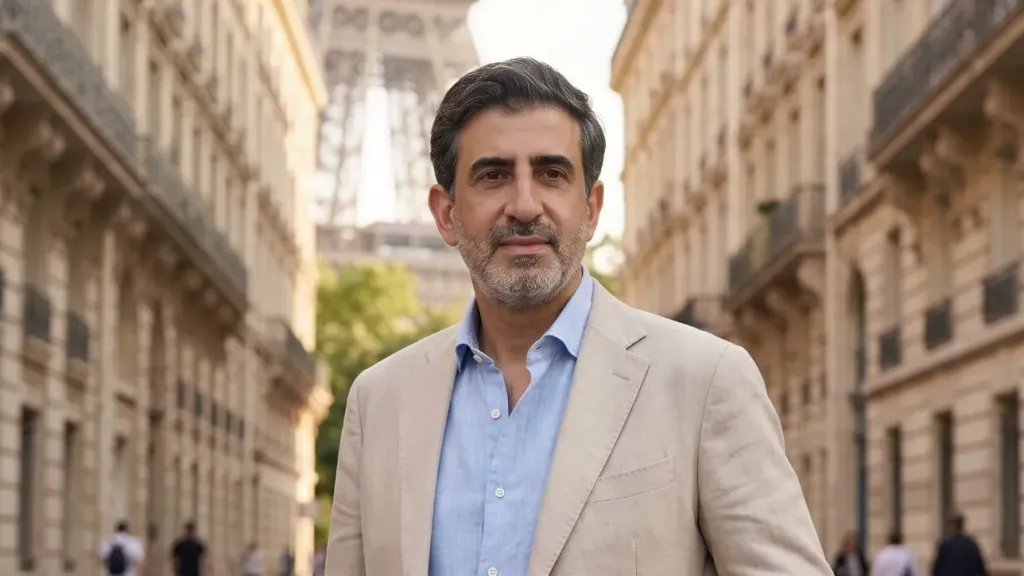
Investment entrepreneur Samer Choucair stated that the space economy is no longer a distant field limited to scientific exploration, but has become one of the world's most strategic industries, reshaping the global economy. He noted that the rapid advancement of satellite technologies, in-orbit asset servicing, space debris management, and space-based data services is creating significant investment opportunities whose economic value extends far beyond traditional industries.
Choucair said that NASA's mission to recover and service a malfunctioning space telescope clearly illustrates the transformation taking place within the space sector. Assets operating in orbit are no longer viewed solely as scientific instruments; they have become high-value economic assets that require maintenance, management, and protection, giving rise to an entirely new global market for companies, investors, and nations that invest early in these capabilities.
He added that the global space economy is entering a pivotal phase, driven by growing demand for satellite data, communications services, Earth observation, remote sensing, and artificial intelligence applications powered by space-based data. He emphasized that countries investing today in the technological and human capabilities needed for this sector will be among the world's leading economic powers in the future.
Choucair explained that Saudi Arabia has a strategic opportunity to strengthen its position within the global space economy under the objectives of Vision 2030, which seeks to diversify the economy, develop future-focused industries, attract high-quality investments, and build globally competitive industrial and technological ecosystems.
He pointed out that Saudi Arabia's space sector has evolved in recent years from a stage of ambition to one of implementation, supported by national efforts to advance satellite technologies, strengthen research and development, expand international cooperation, and build specialized human capital.
Choucair stressed that investing in space extends far beyond launching satellites. It encompasses an integrated economic ecosystem that includes manufacturing space components, developing software, analyzing satellite data, providing Earth observation applications, offering commercial satellite services, and creating innovative startups capable of serving both domestic and international markets.
He stated that Saudi Arabia and the Gulf region possess several competitive advantages that position them to play a larger role in the global space industry, including economic stability, strong investment liquidity, government support for future-oriented projects, and the ability to establish strategic partnerships with leading international space organizations and companies.
Choucair added that the next phase should focus investment on high-value sectors such as satellite manufacturing, space-data services, artificial intelligence technologies linked to space applications, and knowledge and technology transfer through international partnerships. Early investment in these areas, he noted, can provide investors with a sustainable long-term competitive advantage.
He emphasized that Vision 2030 provides a strategic framework for transforming future industries into genuine economic growth engines, and that the space sector has the potential to combine innovation, investment, national capability building, and the creation of high-quality jobs for future generations.
Choucair explained that investment opportunities across Saudi Arabia's and the Gulf's space economy include establishing specialized manufacturing facilities for satellite components and subsystems, developing companies that provide space-data analytics for key industries such as energy, agriculture, water management, and smart cities, as well as investing in emerging space technology startups.
He further emphasized that building a strong space industry requires a long-term vision, patient capital, and disciplined risk management. Unlike conventional industries, he said, the space sector demands sustained investment in research and technology before achieving full commercial returns.
Choucair concluded that the most important lesson from recent global developments in the space industry is that the greatest opportunities belong to those capable of combining strategic vision with effective execution. He noted that the space economy will become a central arena of economic competition among nations in the years ahead.
In his closing remarks, Choucair stressed that Saudi Arabia has a historic opportunity to establish a meaningful presence in the global space economy. Investing in the sector, he said, is not simply an investment in technology, but an investment in the future of the economy, knowledge, and national competitiveness.
He concluded: "Space is no longer a distant frontier separated from the economy—it has become its natural extension. Those who can transform space innovation into real economic value will secure one of the strongest positions in the economy of the future."