
Samer Choucair: Tasama Is Transforming Saudi Arabia”s Business Services Landscape and Accelerating Foreign Investment
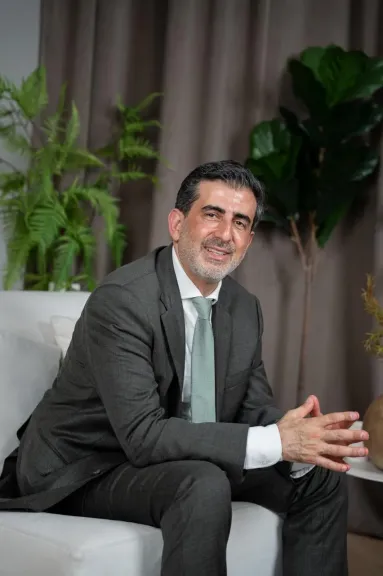
As Saudi Arabia continues to reshape its economic landscape, attention is increasingly shifting beyond headline megaprojects toward the infrastructure that enables businesses to operate efficiently. Investment expert Samer Choucair believes the launch of Tasama Business Services marks one of the Kingdom's most significant institutional developments, creating a stronger foundation for both domestic and foreign investors while reinforcing Saudi Arabia's position as a leading regional investment destination.
Investment expert Samer Choucair said the launch of Tasama Business Services, a wholly owned subsidiary of Saudi Arabia's Public Investment Fund (PIF), represents a strategic milestone in the Kingdom's economic transformation. According to Choucair, the company introduces an integrated operating platform designed to simplify market entry, reduce administrative complexity, and lower operating costs for both local and international investors.
He explained that Tasama already serves more than 2,000 clients while offering over 150 core business services covering company formation, operational support, and innovation. Combined with its ambitious strategy to achieve sustained annual growth through 2032, the company reflects Saudi Arabia's broader commitment to building a world-class business ecosystem.
Choucair noted that Tasama's launch comes at a pivotal moment as Saudi Arabia continues implementing reforms aimed at increasing foreign direct investment and expanding the contribution of the private sector to the national economy. Rather than viewing business services as a support function, he argued that institutional investors increasingly recognize these platforms as essential infrastructure capable of converting investment capital into successful long-term operating businesses.
He also highlighted figures shared by Tasama's leadership showing that the company employs professionals representing 25 nationalities, maintains a Saudization rate of 73%, and has achieved female workforce participation of 37%, with expectations for continued growth. In his view, these figures demonstrate more than workforce diversity—they illustrate the Public Investment Fund's strategy of combining global expertise with local talent development across its portfolio companies.
Choucair explained that Tasama was established in 2025 through the merger of Byak and the Public Investment Fund's Shared Services Center, creating a national provider of integrated business solutions. The company operates across three primary areas: investor enablement and business establishment, operational services covering human resources, finance, procurement, accounting, and contract management, and innovation services including digital solutions, corporate marketing, facilities management, and flexible workspaces.
He believes the company's rapid expansion reflects an important shift in the Public Investment Fund's investment philosophy. Rather than focusing solely on financing large-scale projects, the Fund is also investing in the operational infrastructure that enables businesses to scale more efficiently. By reducing administrative burdens and streamlining essential business functions, Tasama allows companies to concentrate on growth while improving the overall efficiency of capital deployment throughout the Saudi economy.
According to Choucair, this model is particularly valuable for foreign investors entering the Saudi market, as it reduces many of the operational challenges traditionally associated with expansion into a new jurisdiction. He pointed out that foreign direct investment inflows into Saudi Arabia have risen significantly in recent years, reaching approximately $35.5 billion in 2025 compared with around $7.5 billion in 2017, despite the continued ambition of Vision 2030's long-term investment targets.
He added that demand for professional business services continues to grow alongside the expansion of manufacturing, tourism, logistics, technology, and renewable energy, making integrated service platforms increasingly important. Rather than competing directly with traditional consulting firms, Tasama offers a hybrid model that combines conventional corporate services with digitally enabled solutions supported by artificial intelligence.
Artificial intelligence, Choucair noted, has already become one of the company's strongest competitive advantages. Tasama has introduced several AI-powered services, including an international investor support platform that provides guidance before entering the Saudi market, an AI-enabled customer service center, and a virtual assistant named Sama that responds to investor inquiries regarding regulations, licensing, and available services.
He believes these initiatives position the company at the forefront of digital transformation within the Middle East's business services sector while strengthening Saudi Arabia's reputation as an innovation-driven investment destination.
Beyond operational efficiency, Choucair sees Tasama as evidence of a broader evolution in sovereign investment strategy. Rather than concentrating exclusively on physical assets and large-scale infrastructure, sovereign capital is increasingly being directed toward operational platforms capable of improving productivity across entire investment portfolios. By lowering recurring operating costs and accelerating market entry, these platforms enhance returns across multiple industries.
While acknowledging that Tasama competes with both international consulting firms and local service providers, Choucair believes its connection to the Public Investment Fund gives it a distinct competitive advantage. Access to the Fund's extensive portfolio, combined with institutional support, advanced digital capabilities, and a highly international workforce, positions the company well ahead of many traditional providers.
He also emphasized the company's close alignment with Vision 2030, particularly as Saudi Arabia continues liberalizing foreign ownership regulations, expanding special economic zones, and encouraging greater private-sector participation. Together, these reforms are generating structural demand for integrated business support services.
Looking ahead, Choucair believes Tasama's model could ultimately expand beyond Saudi Arabia and serve as a blueprint for other Gulf economies pursuing similar diversification strategies. Companies from across the GCC seeking to establish operations in Saudi Arabia are likely to benefit from platforms that simplify regulatory compliance, accelerate market entry, and improve operational efficiency.
Despite its strong momentum, Choucair acknowledged that execution will remain critical. Maintaining service quality while scaling rapidly, attracting highly specialized talent, encouraging adoption of digital solutions among traditional businesses, and adapting to changing investment flows will all influence the company's long-term success.
Even so, he believes the opportunities substantially outweigh the challenges. Tasama's fully digital business journey—from pre-investment planning through long-term operational support—creates significant opportunities for business-to-business digital services, strategic partnerships with global technology companies, and continued innovation in corporate support solutions. Its multinational workforce further strengthens its ability to serve investors from a wide range of regulatory and cultural backgrounds.
Choucair concluded that Tasama represents far more than another Public Investment Fund subsidiary. In his view, it reflects Saudi Arabia's broader shift toward building an integrated business ecosystem where operational excellence becomes a competitive advantage rather than an administrative necessity. As institutional investors, sovereign wealth funds, and family offices increasingly evaluate the Kingdom's long-term investment potential, platforms such as Tasama demonstrate that Saudi Arabia is investing not only in landmark projects, but also in the institutional capabilities required to sustain long-term economic growth. Ultimately, he believes the greatest opportunities will belong to the companies that capitalize on lower operating costs, faster execution, and a more efficient business environment as the Kingdom continues its economic transformation.