
Samer Choucair: Saudi Market Liquidity Signals a Strategic Shift. Institutional Investors Are Looking Beyond Blue Chips
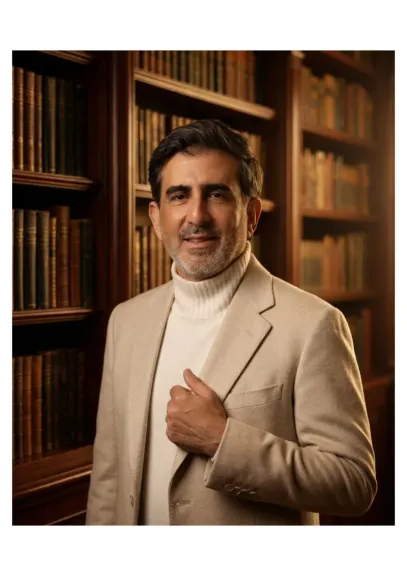
The recent pullback in Saudi Arabia's stock market tells only part of the story. Beneath the headline decline, institutional investors are actively reallocating capital toward sectors positioned to benefit from the Kingdom's long-term economic transformation, signaling that liquidity remains strong even as market leadership begins to shift.
Investment expert Samer Choucair said the Saudi Stock Exchange's benchmark Tadawul All Share Index (TASI) closing at 10,827 points, its lowest weekly finish in three months, should not be interpreted as a sign of weakening investor confidence. Instead, he believes the market is undergoing a strategic rotation of capital, with investors reallocating funds toward sectors positioned to benefit from Saudi Arabia's long-term economic transformation.
According to Choucair, the 11 percent increase in market liquidity alongside the decline in the index highlights an important distinction between falling prices and declining investment activity. Rather than indicating reduced participation, the increase in trading volume suggests that institutional investors are actively repositioning their portfolios, directing capital toward previously underperforming stocks and medium- and small-cap companies outside the traditional blue-chip sectors.
He explained that the recent market movement reflects a healthy phase of portfolio rebalancing following an extended period of strong performance. Higher trading activity accompanying a lower index level points to increased selectivity rather than broad-based selling, as investors reassess valuations against the backdrop of Saudi Arabia's ongoing structural economic reforms.
Reviewing TASI's performance between March and the end of June 2026, Choucair noted that the index climbed steadily from approximately 10,800 points to above 11,500 points by mid-April before entering a sustained correction that ultimately brought it back to 10,827 points. In his view, such a correction is a natural development following a prolonged rally and reflects investors adjusting expectations in response to both domestic and international economic developments.
One of the week's most notable features, he added, was the apparent contradiction between rising liquidity and declining prices. Rather than supporting the broader market, increased trading activity concentrated in weaker-performing stocks intensified downward pressure on certain sectors. Choucair explained that this pattern is often associated with institutional profit-taking and strategic portfolio reallocation, as investors seek attractive valuations among companies that have experienced significant price corrections.
He emphasized that elevated liquidity should not automatically be viewed as a bullish indicator. The quality and destination of that liquidity are equally important. When trading activity becomes concentrated in declining stocks, increased turnover may reflect repositioning rather than renewed optimism.
Choucair observed that while sector-wide gains remained limited during the week, an increasing share of market liquidity flowed toward medium- and small-cap companies instead of the traditional market leaders in banking, energy, and basic materials. This shift, he believes, reflects growing investor interest in sectors expected to benefit from Vision 2030, including tourism, entertainment, manufacturing, logistics, and emerging technologies.
As Saudi Arabia continues diversifying its economy, institutional investors are broadening their investment focus beyond established blue-chip companies. Choucair argued that this evolution presents significant opportunities for sovereign wealth funds, asset managers, family offices, and private equity firms seeking exposure to businesses with strong fundamentals and long-term growth potential supported by government investment and structural reforms.
However, he cautioned that greater selectivity also requires more rigorous fundamental analysis. While many mid-sized companies offer attractive growth prospects, investors should distinguish between businesses benefiting from genuine structural improvements and those experiencing only temporary trading momentum.
According to Choucair, the selective rotation of capital demonstrates the increasing maturity of Saudi Arabia's capital markets. Institutional investors are gradually building more diversified portfolios aligned with the Kingdom's evolving economic structure rather than relying primarily on traditional heavyweight stocks. At the same time, he noted that weakness in large-cap shares may also reflect external factors, including fluctuations in commodity prices and shifts in global monetary policy, making continued monitoring of macroeconomic data and foreign investment flows essential.
Despite the constructive nature of the current rotation, Choucair warned that investors should remain cautious. If selling pressure eventually spreads into sectors currently attracting fresh capital, broader market sentiment could deteriorate. He also stressed the importance of monitoring valuation metrics such as price-to-earnings ratios across sectors, investment fund flows, and indicators of government and private capital expenditure to assess whether the current pattern remains a healthy redistribution of capital or develops into a more significant market correction.
Even so, Choucair believes periods of correction often create some of the best long-term investment opportunities. Companies that previously traded at elevated valuations may now offer more attractive entry points, particularly those positioned to benefit from Saudi Arabia's ongoing structural reforms. Continued improvements in corporate governance, transparency, and operational performance among medium-sized companies could further enhance their appeal to both domestic and international institutional investors as Saudi Arabia's capital market continues attracting global capital.
He also sees growing opportunities for sovereign wealth funds and family offices to increase exposure to businesses operating in tourism, logistics, and emerging technology, sectors that provide greater diversification while offering stronger long-term growth prospects than many traditional industries.
Looking ahead, Choucair believes the direction of TASI will depend largely on whether this sector rotation remains orderly. If capital continues flowing into fundamentally strong medium- and small-cap companies while corporate earnings improve, the current correction could establish a foundation for gradual market recovery. Conversely, if portfolio rotation evolves into widespread selling, investors will need to pay closer attention to economic indicators and broader market conditions.
He concluded that institutional investors should continue adopting a disciplined, selective investment approach grounded in fundamental analysis while remaining focused on the broader structural trends reshaping Saudi Arabia's economy. In his view, the recent decline in TASI should be interpreted within the context of evolving capital allocation rather than weakening confidence. The combination of elevated trading activity, strategic sector rotation, and continued economic diversification suggests that Saudi Arabia's market remains in the midst of a deep structural transformation, creating meaningful long-term opportunities for investors prepared to look beyond short-term market volatility.