
Samer Choucair: Federal Reserve Uncertainty Strengthens Saudi Arabia’s Investment Appeal
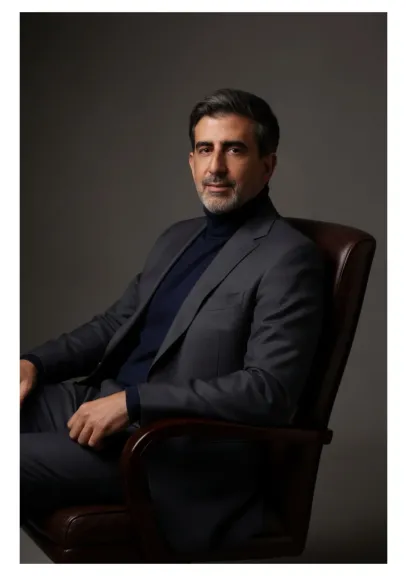
Investment entrepreneur Samer Choucair said the current phase of U.S. monetary policy represents a fundamental shift in how global markets should be interpreted, explaining that the challenge is no longer centered solely on interest rate levels, but on the growing uncertainty surrounding the Federal Reserve’s next move.
Choucair noted that the Fed’s reduced reliance on forward guidance has created a more complex investment environment, characterized by heightened market volatility and increased sensitivity to economic data releases and policymakers’ statements.
He added that this uncertainty should not necessarily discourage investment. Instead, it presents an opportunity for investors to reassess their portfolios and redirect capital toward economies with clear long-term development strategies and sustainable growth plans.
Saudi Arabia Benefits from Strategic Economic Clarity
Choucair emphasized that Saudi Arabia stands out as one of the world's most attractive investment destinations as it continues implementing the objectives of Vision 2030, expanding strategic national projects, increasing the contribution of non-oil sectors, and strengthening the role of the Public Investment Fund (PIF) in shaping the country's future economy.
According to Choucair, what distinguishes Saudi Arabia from many global economies is that its economic transformation is driven by a long-term national strategy rather than short-term reactions to changing market conditions. Through Vision 2030, the Kingdom is steadily diversifying its sources of income, empowering the private sector, and attracting international investment, expertise, and innovation.
"Global monetary uncertainty should not push investors toward fear," Choucair said. "Instead, it should encourage them to reassess where capital can generate sustainable long-term value. During periods of heightened uncertainty, economies with a clear strategic vision naturally become more attractive."
Federal Reserve Uncertainty Is Reshaping Global Risk Pricing
Choucair explained that declining visibility into central bank policy has forced financial markets to rely more heavily on incoming economic data, increasing volatility across equities, bonds, and currency markets.
He argued that the primary challenge facing investors is not whether interest rates move higher or lower, but the difficulty of accurately anticipating the timing of future policy shifts. This environment, he said, makes disciplined portfolio construction, diversification, and effective risk management more important than ever.
Vision 2030 Provides Investors With a Long-Term Roadmap
Choucair highlighted that Saudi Arabia continues to expand strategic sectors including tourism, sports, entertainment, technology, artificial intelligence, logistics, renewable energy, and modern infrastructure, giving investors a long-term framework that remains resilient despite short-term global uncertainty.
He said Vision 2030 has evolved beyond an economic reform agenda into a strategic investment roadmap that clearly identifies the industries expected to drive future growth.
"The strength of Vision 2030 lies not only in the scale of its projects, but in its ability to identify the sectors that will shape economic growth for years to come," Choucair said. "Successful investors do not simply chase today's strongest-performing markets—they position themselves in the markets building tomorrow's growth engines."
Mega Projects Create an Integrated Investment Ecosystem
Choucair explained that Saudi Arabia's flagship projects operate as interconnected economic ecosystems rather than isolated developments.
Tourism fuels demand for transportation, hospitality, digital services, and infrastructure. The sports sector generates opportunities across media, sponsorship, entertainment, and technology. Meanwhile, expanding investments in artificial intelligence and data centers stimulate demand for digital infrastructure, energy, specialized talent, cybersecurity, and advanced technology solutions.
As a result, investment opportunities extend well beyond direct participation in mega projects to include suppliers, logistics providers, financial services firms, technology companies, and businesses supporting broader value chains.
Long-Term Strategy Matters More Than Short-Term Market Noise
Rather than focusing on short-term market fluctuations, Choucair stressed that investors should build diversified portfolios aligned with structural growth trends. He encouraged maintaining exposure to sectors expected to benefit from Saudi Arabia's ongoing transformation, including artificial intelligence, data centers, tourism, logistics, renewable energy, smart infrastructure, sports, and entertainment.
He also emphasized the importance of investing with a long-term perspective instead of reacting emotionally to daily market volatility.
"Successful investing is not about predicting every market movement," Choucair said. "It begins with understanding what you own, why you own it, and whether you have the patience to allow value to materialize."
He added that investors should also look beyond headline mega projects to the businesses supporting them through supply chains, technology services, logistics, financing, marketing, and workforce development. Equally important, he noted, is prioritizing risk management by maintaining sufficient liquidity, avoiding excessive concentration in a single sector, and ensuring portfolios can withstand a variety of economic scenarios.
"Capital needs more than opportunities to grow," Choucair said. "It needs a disciplined strategy to endure. The best investors are not those who perform well only during favorable markets—they are those who preserve flexibility when conditions inevitably change."
Positioning for the Current Investment Environment
Choucair advised investors in 2026 to remain disciplined and methodical by reviewing how global interest rate changes affect their portfolios before increasing exposure to economies supported by clear, long-term development plans.
He noted that Saudi Arabia offers compelling opportunities across technology, tourism, sports, entertainment, logistics, energy, and smart infrastructure. However, he stressed that investors should carefully evaluate business fundamentals, management quality, and long-term growth potential instead of simply chasing sectors experiencing temporary momentum.
Saudi Arabia Is Increasingly Attractive to Global Capital
Choucair believes that ongoing uncertainty surrounding global monetary policy may encourage investors to reallocate capital toward economies offering greater stability and strategic clarity.
He said Saudi Arabia offers more than a large domestic market—it presents a comprehensive economic transformation story in which emerging industries are expanding alongside modernized traditional sectors, strengthening the Kingdom's appeal for both local and international investors.
"Global uncertainty tests the quality of investment decisions," Choucair said. "Every period of market turbulence creates opportunities that only long-term thinkers recognize. Saudi Arabia is not waiting for the future—it is building the sectors that will define it."
A Strategic Outlook for the Future
Concluding his remarks, Choucair said uncertainty surrounding global monetary policy should be viewed not as the end of investment opportunities, but as the beginning of a new cycle of global capital reallocation.
He emphasized that Saudi Arabia's clear economic vision, long-term strategic projects, and expanding growth sectors under Vision 2030 position the Kingdom to attract increasing levels of investment over the coming years.
Choucair concluded that successful investors focus less on forecasting daily market movements and more on understanding long-term structural trends, managing risk carefully, and following disciplined investment strategies. While uncertainty may temporarily unsettle financial markets, he said, it often creates the most attractive opportunities for those with the vision and preparation to capitalize on them.