
Samer Choucair: A Mature Market Attracts Serious Investors, Not Speculators
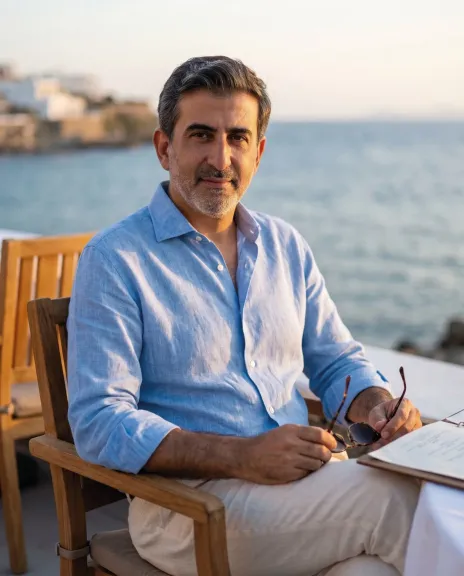
Investment entrepreneur Samer Choucair said that Saudi Arabia's new 2% fee on certain real estate transactions involving non-Saudis represents a strategic step that reflects the continued maturity of the Kingdom's investment environment. He explained that the measure is designed not to maximize government revenue but to establish a clear regulatory framework that promotes market stability and attracts investors with long-term strategies.
The 2% fee, which now applies to certain real estate transactions involving non-Saudis in Riyadh, Makkah, Madinah, and Jeddah, reflects Saudi Arabia's broader investment philosophy of balancing economic openness and foreign investment with the need to protect the property market from excessive speculation and short-term volatisting
Compared with the standard 5% Real Estate Transaction Tax applied to most transactions, the new 2% fee is relatively modest. Rather than creating additional financial burdens, the regulation aims to strengthen compliance with non-Saudi property ownership rules while maintaining the Kingdom's attractiveness as an investment destination.
"The moment a country introduces transparent and reasonable regulations, it is not creating barriers—it is creating certainty," Choucair said. "Clear rules attract strategic investors who plan for the next decade, not the next few months. Saudi Arabia is sending a strong message that it welcomes high-quality capital committed to long-term development rather than speculation."
He noted that this approach enhances transparency within the Saudi real estate market while reducing speculative activity, creating greater opportunities for investors focused on projects connected to Saudi Vision 2030.
Saudi Arabia's real estate sector has evolved beyond meeting domestic housing demand to become one of the Kingdom's primary engines of economic diversification. Major developments such as NEOM, The Red Sea Project, Qiddiya, Diriyah, and ROSHN continue generating strong demand for residential, commercial, tourism, and logistics properties while expanding opportunities across the broader economy.
The sector is also experiencing rapid transformation through sustainability initiatives and advanced property technologies, including green buildings, integrated communities, and PropTech solutions. These developments continue to enhance the Kingdom's investment environment and increase its appeal to international investors.
Samer Choucair explained that the 2% fee supports this transformation by encouraging full compliance with property ownership regulations, reducing legal and operational risks while signaling to international investors that Saudi Arabia offers an increasingly professional, transparent, and well-regulated market.
"In emerging markets, investors often fear uncertainty more than cost," Choucair said. "When regulations are clear and fees are fully transparent, investors can confidently build financial models extending ten years into the future. That is exactly how strategic investors evaluate opportunities."
He added that greater regulatory clarity creates attractive opportunities for local and international property developers, real estate investment funds, infrastructure investors, PropTech companies offering compliance and analytical solutions, and individual investors seeking to diversify their portfolios through high-quality assets supported by sustainable economic growth.
Looking ahead, he encouraged investors to focus on three key priorities. First, prioritize quality over quantity by selecting strategically located assets and integrated developments, particularly projects connected to ROSHN and emerging tourism destinations, rather than pursuing speculative investments in less developed areas. Second, view the new fee as a normal cost of entering a mature and professionally regulated market, where compliance provides a competitive advantage and strengthens relationships with regulators and local partners. Third, diversify intelligently across premium residential properties, offices in emerging economic districts, and tourism and logistics assets linked to Vision 2030 projects.
"The Kingdom is no longer simply an emerging market," Choucair said. "Saudi Arabia has become a strategic destination for investors seeking growth supported by a clear national vision, modern infrastructure, and political stability. Modest regulatory fees such as the 2% charge are part of that equation because they demonstrate that the market is being managed with a long-term investment mindset."
He added that the continued implementation of Saudi Vision 2030, the expansion of Public Investment Fund projects, and growing interest from international investors—particularly from Asia—will further strengthen transparency and governance across the Saudi real estate sector. The new regulations, he said, represent another milestone in the Kingdom's long-term strategy to build a globally competitive property market that combines attractive investment opportunities with sound governance.
Concluding his remarks, Samer Choucair emphasized that investors who view regulation as an opportunity rather than a constraint will be best positioned to achieve sustainable returns over the coming years. He encouraged investors and entrepreneurs to incorporate the 2% fee into their financial planning, focus on assets aligned with Vision 2030 and the four designated cities, establish strong local partnerships, remain informed about regulatory developments, and maintain a disciplined long-term investment perspective.
"The real opportunity is not avoiding the fee," Choucair concluded. "It is understanding why it exists and how it contributes to making Saudi Arabia's property market stronger, more transparent, and more attractive for long-term investment."