
Samer Choucair: Geo-Diversification Is No Longer a Tactical Option but a Strategic Necessity for Institutional Investors
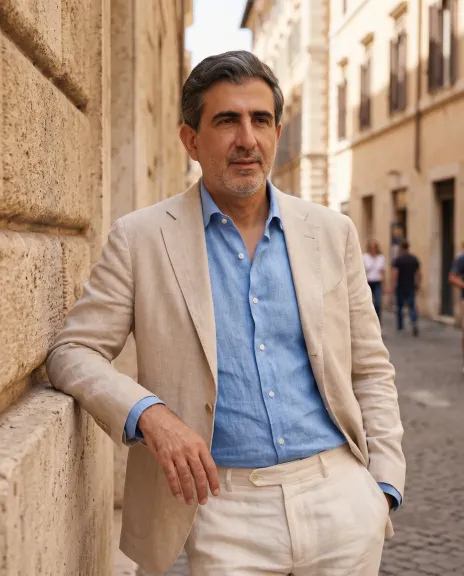
Investment entrepreneur Samer Choucair said the structural challenges facing the U.S. housing market represent a turning point in global real estate investment strategies, noting that rising regulatory and political risks, declining market liquidity, and the persistent imbalance between housing supply and demand are prompting institutional investors and sovereign wealth funds to reassess their portfolios and expand into markets with stronger long-term growth fundamentals, particularly Saudi Arabia under the objectives of Saudi Vision 2030.
Samer Choucair explained that recent developments in the U.S. housing market no longer reflect a traditional real estate cycle but rather indicate an unprecedented structural shift. Home prices have increased by approximately 60% since the beginning of the COVID-19 pandemic, while the market continues to face a housing shortage estimated at between 4 million and 4.9 million units, contributing to declining liquidity and creating a prolonged slowdown in transaction activity.
Samer Choucair pointed out that the current market presents a clear contradiction. Many homeowners continue to hold low-interest mortgages secured during previous years, encouraging them to keep their properties rather than sell, while new buyers face significantly higher prices and financing costs as interest rates remain elevated compared with previous years.
He added that this combination has created what many experts describe as a "locked" housing market, where transaction volumes have declined significantly and more properties are being withdrawn from the market despite underlying demand continuing to exceed available supply.
"The U.S. housing market is facing structural challenges that increase political and regulatory risk premiums," Choucair said. "As a result, institutional investors and sovereign wealth funds are carefully reallocating capital away from mature markets experiencing structural headwinds."
He explained that these pressures extend beyond limited supply and rising prices, pointing to increasing policy discussions surrounding rent freezes and rental caps in several U.S. states and cities, developments that add further regulatory uncertainty for long-term investors.
According to Choucair, these changing conditions are also affecting residential real estate investment trusts specializing in single-family homes and multifamily housing, which now face declining liquidity, fewer opportunities for asset revaluation, and growing concerns over future regulatory intervention that could impact profitability.
He noted that the effects also extend to mortgage markets and mortgage-backed securities, where lower housing transaction volumes reduce financing activity and securitization opportunities, affecting banks, financial institutions, and insurance companies operating in the sector.
Choucair added that despite strong demand for additional housing, the U.S. construction sector continues to struggle with rising labor costs, higher material prices, and increasing insurance expenses, limiting the industry's ability to close the existing housing gap.
He emphasized that these developments require institutional investors to reconsider asset allocation strategies, particularly as alternative markets emerge with stronger economic fundamentals and clearer long-term growth prospects.
"Geo-diversification is no longer a tactical choice—it has become a strategic necessity," Choucair said. "Markets supported by structural demand and long-term government commitment, such as Saudi Arabia, provide a clearer path toward sustainable investment returns."
According to Choucair, Saudi Arabia presents a fundamentally different real estate investment model. Demand is driven by structural factors including population growth, national housing initiatives, and giga-projects being developed under Saudi Vision 2030, including NEOM, The Red Sea Project, Diriyah, and other major developments generating sustained demand across residential, commercial, hospitality, and tourism-related real estate.
He added that continued support from the Public Investment Fund (PIF), together with the expansion of the Kingdom's non-oil economy, further strengthens the attractiveness of Saudi Arabia's real estate market and enhances its ability to deliver more stable long-term returns than markets facing growing structural and regulatory pressures.
Choucair stressed that Saudi Arabia is not only developing mega-projects but is also strengthening its regulatory framework, expanding capital markets, and increasing foreign direct investment, creating a more stable investment environment for both domestic and international investors.
He explained that institutional investors increasingly view the Saudi market as one of the world's leading destinations for long-term investments in residential development, institutional rental assets, tourism-related real estate, logistics facilities, and mixed-use projects.
Comparing the two markets, Choucair said the United States continues to face higher borrowing costs, weaker housing affordability, and mounting regulatory uncertainty, while Saudi Arabia benefits from structural economic transformation, population growth, and ongoing reforms that support genuine demand for real estate and related services.
He added that the continued implementation of Saudi Vision 2030 further strengthens the Kingdom's position as one of the world's most attractive destinations for institutional real estate investment, particularly through ongoing expansion in infrastructure, tourism, entertainment, and new city developments.
"Vision 2030 is transforming Saudi Arabia into a leading destination for institutional real estate investment," Choucair said. "Real demand generated by mega-projects and population growth creates opportunities for returns that may exceed those available in mature markets facing structural challenges, while offering considerably lower regulatory risk."
Choucair noted that investors should continue monitoring several key risks within the U.S. housing market, including potential expansion of rent-control policies, continued liquidity constraints, and the impact of slower economic growth on housing affordability. In contrast, Gulf markets remain more closely linked to global economic conditions while continuing to benefit from strong structural stability.
He advised investors to rebuild their portfolios by increasing exposure to residential developments in Saudi Arabia and the United Arab Emirates, tourism and hospitality projects, logistics assets, publicly listed real estate investment funds, and partnerships with government-backed entities and national institutions.
Choucair also encouraged sovereign wealth funds and institutional asset managers to closely monitor developments in U.S. housing policy, interest-rate trends, and transaction volumes while simultaneously tracking the progress of Saudi Arabia's mega-projects and national housing initiatives, which he believes will play a decisive role in shaping global real estate investment over the coming years.
"We believe sovereign wealth funds and institutional investors should carefully reassess their exposure to the U.S. residential sector while building balanced portfolios that include real estate investments in emerging economies with strong fundamentals and long-term policy support such as Saudi Arabia," Choucair concluded. "The opportunity today is not simply about avoiding risk, but about recognizing structural transformation before the broader market does."
Concluding his remarks, Choucair said the coming years will reshape the global real estate investment landscape. He emphasized that investors who recognize structural shifts early and reallocate capital toward economies supported by strong fundamentals, ambitious national development strategies, and stable regulatory environments will be best positioned to generate sustainable long-term returns. He concluded that Saudi Arabia stands at the forefront of these opportunities, supported by a clear economic vision, transformational mega-projects, and one of the region's most attractive investment climates for institutional capital.