
Samer Choucair: Traditional Markets Are the True Training Ground for Entrepreneurs
Investment entrepreneur Samer Choucair said that success stories beginning in traditional marketplaces and evolving into major investment enterprises represent some of the most inspiring economic models in the Arab world. He noted that the entrepreneurial journey of Moroccan businessman Noureddine Zine demonstrates how practical experience, gradual growth, and disciplined execution can ultimately lead to the creation of sustainable investment institutions.
Choucair explained that the interview conducted by Al Arabiya Business with Noureddine Zine goes far beyond telling a personal success story. Instead, it highlights an economic journey that underscores the importance of the real economy and the vital role traditional commerce continues to play in shaping entrepreneurs and building businesses capable of long-term expansion.
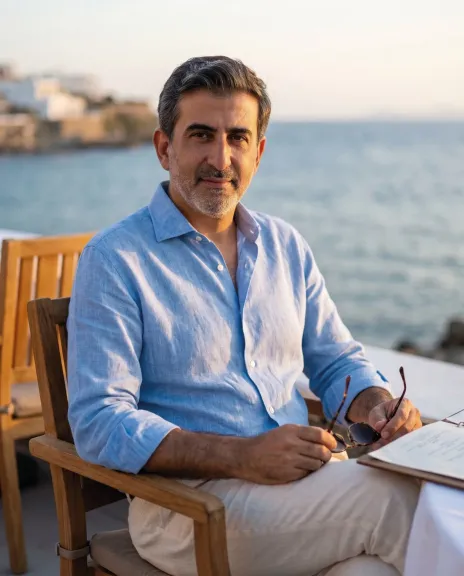
He pointed out that the image of Noureddine Zine sitting confidently in a professional studio, dressed in formal business attire while discussing how he built his commercial empire, symbolizes both a personal and economic transformation. It reflects the evolution of an entrepreneur who began his career in traditional marketplaces before establishing an investment group carrying his own name.
According to Choucair, that single image represents years of hard work, learning, and practical experience, illustrating the transition from the informal economy to professionally managed institutions—a transformation that forms the foundation of sustainable economic growth in many emerging markets.
Choucair noted that, as described in the interview, Noureddine Zine first learned the fundamentals of trade alongside his father, highlighting the importance of passing business knowledge from one generation to the next within family enterprises. He emphasized that direct exposure to the marketplace remains an educational experience that no academic curriculum can fully replace.
He explained that starting in local weekly markets gave Zine a deep understanding of consumer behavior, supply and demand, risk management, and negotiation before he gradually expanded into Casablanca's Derb Omar market, one of Morocco's largest wholesale trading centers for clothing and textiles.
Choucair described this gradual progression as an ideal model of sustainable entrepreneurship, stressing that lasting success rarely comes from immediately launching large-scale projects but instead results from steadily accumulating expertise while building strong commercial relationships.
He added that one of the most valuable lessons from Zine's journey was his honest description of entrepreneurship as a path of both profits and losses. According to Choucair, setbacks became opportunities to learn and ultimately laid the foundation for establishing Zine Capital as a diversified investment group.
"Business empires are not born overnight," Choucair said. "They are built through patience, continuous learning, and the ability to transform setbacks into opportunities. Successful investors are measured not only by their victories but by how effectively they turn failures into experience that creates sustainable growth."
Choucair also observed that the contrast between Zine's professional appearance today and his beginnings in open-air markets reflects a broader transition from the informal economy toward structured corporate management, where governance, institutional identity, and professionalism have become essential drivers of growth and investor confidence.
He added that the body language displayed during the interview conveys important economic symbolism. Confident posture and composed gestures reflect years of navigating market volatility, while a calm smile represents the maturity that develops through repeated cycles of success and adversity.
According to Choucair, the professional image projected through formal attire and a corporate environment sends an important message about the value of institutional branding. In today's global economy, success depends not only on commercial skills but also on building trust with investors, financial institutions, and strategic partners.
Choucair emphasized that Noureddine Zine's story is particularly relevant as Morocco continues strengthening the role of the private sector as a key engine of economic growth and job creation. Traditional commerce, he noted, remains one of the country's most effective sources of entrepreneurial talent and practical business education.
He explained that although Morocco's economy is supported by industries including phosphates, manufacturing, agriculture, and tourism, traditional markets and wholesale trading centers continue to serve as real-world business schools where entrepreneurs develop management, negotiation, and decision-making skills.
According to Choucair, Zine's experience proves that human capital developed through daily business practice can be just as valuable as formal education and often becomes the decisive factor in building companies capable of sustainable expansion.
He also highlighted Morocco's growing opportunity to strengthen this model through the African Continental Free Trade Area (AfCFTA), which is opening new pathways for Moroccan businesses to expand across African markets and strengthen their regional presence.
Choucair identified several important lessons from Zine's entrepreneurial journey. The first is the importance of starting small and scaling gradually, allowing entrepreneurs to build practical expertise and commercial networks before launching larger investment ventures. The second is recognizing that financial losses are a natural part of business cycles, particularly in industries exposed to changing prices and global economic conditions. He also emphasized the importance of transferring knowledge across generations, arguing that learning from founders and experienced family members creates stronger corporate cultures built on practical expertise and professional values.
He further noted that Zine's career illustrates the importance of continuous adaptation, evolving from traditional merchandise trading into leading an investment organization that embraces modern business trends, including e-commerce, global supply chains, and innovative financing tools.
"Traditional markets are far more than places to buy and sell," Choucair said. "They are genuine business schools that teach entrepreneurs how to understand markets, manage risk, negotiate effectively, and build lasting trust with customers and partners."
Looking ahead, Choucair believes Morocco's economy offers promising opportunities as digital transformation accelerates, infrastructure expands, and green industries continue to develop. He expects local entrepreneurial success stories to inspire a new generation of founders capable of building globally competitive companies.
He added that future Moroccan business leaders are likely to combine the practical knowledge gained from traditional marketplaces with modern capabilities such as digital analytics, e-commerce, and innovative financing, further strengthening the competitiveness of the country's private sector.
Choucair also noted that the success of Zine Capital could encourage new forms of collaboration between private enterprises and financial institutions, improving economic resilience and supporting sustainable long-term growth.
Concluding his remarks, Choucair said, "Noureddine Zine's story proves that genuine success does not begin with large amounts of capital. It begins with a commitment to learning, discipline, and the belief that every setback contains the opportunity to build something even greater. Economies that encourage this type of entrepreneurship are the ones most capable of achieving sustainable growth and developing nationally competitive businesses."
He concluded that entrepreneurial journeys like Zine's serve as powerful examples throughout the Arab world, demonstrating that building successful business empires depends not on where entrepreneurs begin, but on the clarity of their vision, their commitment to continuous learning, and their ability to evolve alongside changing markets.