
Samer Choucair: 2% Fee on Certain Non-Saudi Real Estate Transactions Reflects the Maturity of Saudi Arabia’s Property Market
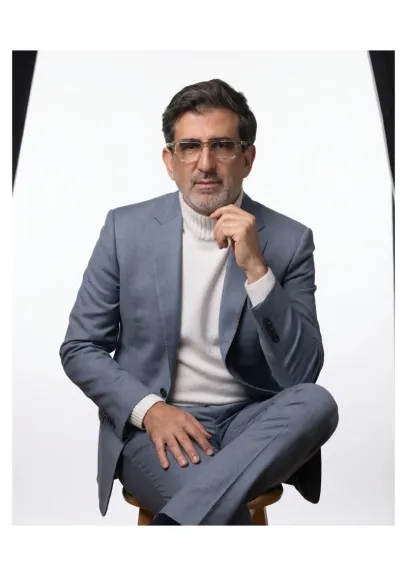
Investment entrepreneur Samer Choucair said the new executive regulations governing non-Saudi real estate ownership represent a strategic step that reflects the continued evolution of Saudi Arabia’s regulatory environment. He noted that a well-regulated property market built on clear rules strengthens investor confidence, attracts high-quality capital, and encourages long-term investment in line with the objectives of Saudi Vision 2030.
Choucair explained that the rapid urban transformation taking place across Saudi Arabia’s major cities, featuring skyscrapers, world-class infrastructure, business districts, and modern developments, highlights the scale of the Kingdom’s economic transformation. He emphasized that the real estate sector has become one of the key drivers of economic diversification, with large-scale urban projects, smart cities, and sustainability initiatives creating an integrated investment environment capable of attracting investors from around the world.
Choucair noted that the executive regulations, published through the Official Gazette Umm Al-Qura, introduce a 2% fee on certain real estate transactions involving non-Saudis' real property rights in four major cities: Riyadh, Makkah, Madinah, and Jeddah. The regulations also provide for a 0% fee on other eligible transactions, establish penalties of up to SAR 10 million for violations, and introduce a unified electronic platform for registering and monitoring transactions, enhancing transparency and regulatory efficiency.
According to Choucair, these measures are far more than administrative amendments; they demonstrate the growing maturity of Saudi Arabia’s real estate market and reinforce the Kingdom’s commitment to attracting strategic investments that contribute to sustainable economic development.
He explained that the 2% fee applies to certain transactions involving non-Saudis’ real property rights within the four designated cities, including sales, transfers of ownership, mortgages, and assignments of property rights. Other real estate transactions, including certain initial purchases or transactions outside these cities, remain subject to existing regulations, including the 5% Real Estate Transaction Tax, applicable exemptions, compliance mechanisms, and enforcement measures designed to ensure full adherence to the regulatory framework.
Choucair stressed that the primary objective of the new regulations is to organize foreign participation in the property market in a manner that supports sustainable development while discouraging short-term speculation, in line with the broader goals of Vision 2030.
He added that while some investors may initially view the 2% fee as an additional cost, a long-term investment perspective reveals far greater benefits.
"The success of an investment is determined not only by the size of the opportunity, but also by the quality of the environment in which it exists. Clear regulations, stable policies, and strong institutions create lasting value for investors," Choucair said.
He explained that a transparent regulatory framework supported by a unified digital platform enhances investor protection and increases confidence among both domestic and international investors. He added that the new regulations encourage long-term investment rather than speculative buying and selling, noting that developers undertaking integrated projects in Riyadh, Jeddah, Makkah, or Madinah are likely to view the 2% fee as relatively small compared with the long-term returns expected from future growth.
Choucair also pointed out that the timing of the new regulations coincides with the continued implementation of major national projects such as Diriyah, King Salman Park, Riyadh Metro, The Red Sea Project, AlUla, Qiddiya, and NEOM, all of which are expected to generate sustained demand for residential, commercial, hospitality, and logistics real estate over the coming years.
He emphasized that the real estate sector occupies a central position within Saudi Vision 2030, which aims to increase the contribution of non-oil sectors to more than 50% of GDP, raise homeownership rates, attract 150 million annual visitors by 2030, and expand special economic zones and global logistics hubs.
According to Choucair, these national objectives will continue to drive demand across residential, commercial, tourism, and mixed-use developments, making Saudi Arabia one of the region's most attractive real estate investment destinations.
"The new executive regulations demonstrate the maturity of the Saudi market and the Kingdom's commitment to attracting long-term strategic investments rather than speculative capital. Smart investors see regulation as an opportunity to build sustainable partnerships that support the objectives of Vision 2030," he said.
Choucair added that the strongest opportunities today extend beyond traditional property transactions into integrated developments combining residential communities, tourism, entertainment, and commercial services. While the four major cities will remain key investment hubs, he noted that significant opportunities are also emerging across new economic zones and giga-projects throughout the Kingdom.
He stressed that successful investment in Saudi Arabia now requires a long-term strategic perspective aligned with the transformation of the non-oil economy.
"Investing in Saudi Arabia today requires a long-term vision. Those who understand the structural transformation of the Kingdom's non-oil economy and align their investments with national mega-projects are likely to benefit from exceptional opportunities over the next 10 to 15 years," Choucair said.
He also emphasized the importance of portfolio diversification, encouraging Gulf and international investors to view Saudi Arabia as an integral component of a broader regional investment strategy, particularly in high-growth sectors such as tourism, entertainment, and smart logistics.
Choucair concluded by highlighting the key factors supporting the continued attractiveness of Saudi Arabia's real estate market, including strong economic growth driven by the Public Investment Fund (PIF) and national mega-projects, increasing structural demand for housing, office space, and hospitality assets, continuous improvements in the regulatory environment and corporate governance, and the Kingdom's strategic geographic position connecting three continents.
He concluded that the new 2% fee should not be viewed as an obstacle but rather as part of a more mature and stable regulatory framework designed to support a stronger and more sustainable real estate market.
"The new executive regulations provide investors with greater clarity and confidence when making investment decisions. As Saudi Vision 2030 continues to reshape the Kingdom, Saudi Arabia offers one of the region's most attractive investment environments. Investors who understand the new regulatory framework and align their strategies with the Kingdom's major national projects will be best positioned to generate sustainable returns while contributing to a more diversified and competiti
ve Saudi economy," Choucair concluded.