
Samer Choucair: Saudi Foreign Reserves Leadership Confirms the Kingdom”s Financial Strength and Investment Appeal
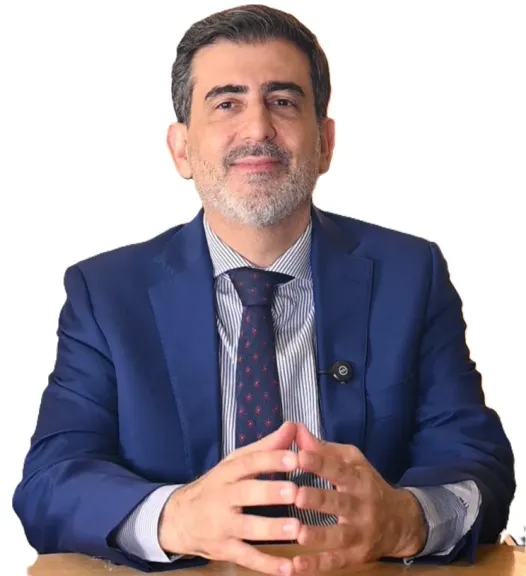
When a nation leads the Arab world in foreign currency reserves at 463.9 billion dollars while simultaneously executing the most ambitious economic diversification program in the region's history, the investment signal is unmistakable. Investment entrepreneur Samer Choucair issued a press statement affirming that Saudi Arabia's position at the top of Arab nations in foreign currency reserves reflects deep financial strength that directly underpins the Kingdom's ability to sustain Vision 2030's transformative investment programs regardless of global economic volatility.
He explained that the Saudi Central Bank's foreign currency reserves reaching roughly 463.9 billion dollars place the Kingdom in a position of exceptional financial resilience, providing substantial buffers against external shocks while simultaneously enabling continued investment in the strategic projects and economic reforms driving non-oil growth.
He noted that this reserve strength isn't a static asset but an active economic enabler, as the confidence it provides to international investors, rating agencies, and global partners translates directly into lower financing costs, stronger credit ratings, and enhanced ability to attract quality foreign direct investment across priority sectors.
He added that the Kingdom's reserve position reflects the success of fiscal consolidation efforts alongside continued strong hydrocarbon revenues, creating a financial foundation that supports both immediate economic stability and long-term strategic investment without creating unsustainable debt burdens.
He affirmed that the combination of strong foreign reserves, a well-capitalized Public Investment Fund with assets exceeding 925 billion dollars, and continued non-oil revenue growth creates a uniquely robust financial ecosystem supporting sustained investment in Vision 2030's priorities across energy, tourism, technology, logistics, and advanced industries.
He pointed out that Saudi Arabia's financial strength relative to regional peers creates a meaningful competitive advantage in attracting global capital, as investors increasingly prioritize markets combining growth potential with financial stability, a combination the Kingdom demonstrates more convincingly than any other economy in the region.
He noted that the reserve leadership also reflects the Kingdom's growing export diversification, with non-oil exports and re-exports contributing an increasing share of foreign currency inflows alongside hydrocarbon revenues, confirming that Vision 2030's economic transformation is generating genuine foreign currency earning capacity across multiple sectors.
He explained that this financial strength creates specific investment opportunities, as the Kingdom's ability to sustain large-scale infrastructure investment through economic cycles provides a more predictable operating environment for investors in construction, engineering, logistics, and professional services sectors tied to major project implementation.
He added that the financial ecosystem surrounding the Kingdom's reserve management, including the development of sukuk markets, expansion of investment instruments, and growing sophistication of capital market infrastructure, creates additional investment opportunities for financial sector participants seeking exposure to the Kingdom's economic growth.
Choucair affirmed that investors should view Saudi Arabia's reserve strength not as an abstract macroeconomic indicator but as a concrete investment signal, reflecting the Kingdom's capacity to sustain the level of public investment and economic reform that drives returns across Vision 2030-aligned sectors.
He called on investors to connect macroeconomic strength indicators with sector-specific investment decisions, explaining that the Kingdom's financial resilience directly supports investment cases in sectors dependent on sustained government spending and stable operating environments, including infrastructure, education, healthcare, and digital economy development.
He concluded his press statement by affirming that Saudi Arabia's leadership in Arab foreign currency reserves represents a pillar of the Kingdom's investment appeal that complements its growth story, noting that the combination of financial strength, clear development vision, accelerating economic reform, and expanding non-oil economic activity makes the Saudi market one of the most compelling long-term investment destinations available to regional and global investors seeking sustainable returns aligned with Vision 2030's transformative economic goals.