
Samer Choucair Offers a Strategic Reading of Germany”s 2026 World Cup Elimination and Its Investment Implications for Saudi Arabia
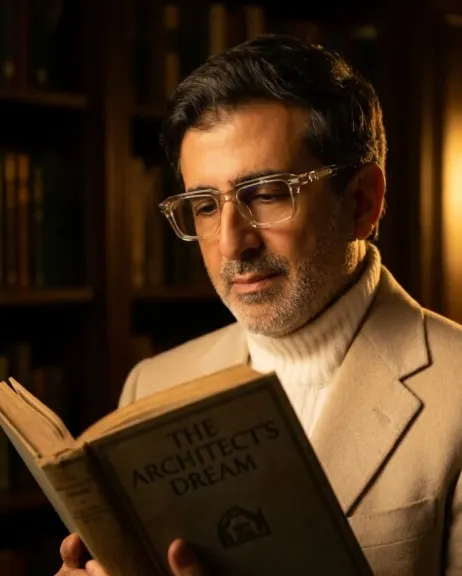
Samer Choucair, investment entrepreneur, said that the German national team's exit from the 2026 World Cup against Paraguay on penalties in the round of 32 carries implications extending beyond the boundaries of sporting competition, affirming that what international media analyses described as a "deserved elimination" offers investors an important economic lesson: that historic success alone isn't enough to maintain standing, whether in sports or global markets.
He explained that the widely circulated image of the German national team player leaving the pitch in a state of frustration has come to reflect a clear economic reality, namely that economies and institutions that stop evolving and adapting to changes gradually lose their competitive ability, while genuine opportunities emerge in markets that continue implementing reforms and building sustainable growth fundamentals.
He added that Saudi Arabia today represents a model of this transformation, as it continues implementing Vision 2030 programs that have redrawn the national economy's contours, and provided a more attractive environment for local and foreign investment.
*Lessons From Sporting Competition Reflect on Investment Decisions*
Choucair noted that Paraguay's victory over one of the most successful national teams in football history confirms that good planning and the ability to evolve can outperform history and reputation.
He added that this concept applies directly to the world of investment, as economies relying on continuous reforms have come to be better able to attract capital than those relying only on past achievements, affirming that the smart investor no longer just looks for markets with long histories, but focuses on economies proving their ability to achieve sustainable growth and adapt to global variables.
*Saudi Arabia Confirms Its Position Among the Fastest-Growing Economies*
Choucair explained that 2026 economic indicators confirm the success of the Kingdom's economic transformation path, noting that the IMF raised its projections for Saudi GDP growth to 4.5% during 2026, making the Kingdom among the fastest-growing G20 economies.
He added that the non-oil sector's contribution rose to between 55% and 57% of GDP, with continued growth rates ranging between 4.3% and 4.9% in recent years.
He noted that Public Investment Fund assets exceeded 900 billion dollars, with annual investments exceeding 40 billion dollars directed toward economic diversification projects, alongside rising women's participation in the labor market, and declining unemployment rates to historically low levels, while the private sector targets raising its contribution to 65% of GDP by 2030, affirming that these indicators reflect a more diverse, resilient economy, less dependent on traditional oil market volatility.
*Vision 2030 Leads Investment Opportunities in Future Sectors*
Choucair noted that Vision 2030 opened broad horizons for investors in strategic sectors achieving high added value.
He explained that the tourism and entertainment sector represents one of the most prominent growth drivers, targeting raising its contribution to 10% of GDP, backed by giga projects such as NEOM, Qiddiya, and Diriyah.
He added that artificial intelligence, advanced industries, electric vehicle projects, data centers, and green technologies have come to be among the sectors attracting growing investment, alongside the logistics services and infrastructure sector, which is seeing major expansion thanks to projects such as King Salman International Airport and special economic zones, affirming that these shifts represent long-term investment opportunities built on strong economic foundations, not temporary trends.
*Samer Choucair: Successful Investment Begins With Understanding Structural Shifts*
Choucair explained that genuine investment opportunities aren't realized through chasing short-term market movements, but through investing in economies implementing sustainable structural reforms.
He added that the Public Investment Fund plays a pivotal role in supporting these shifts, by attracting private capital and contributing to reducing investment risk, strengthening investor confidence in the Saudi economy.
He affirmed that understanding regulatory reforms, improving the business environment, and the continued expansion of the private sector's role represents among the most important factors investors should build their decisions on in the period ahead.
*Long-Term Vision Creates the Most Successful Investors*
Choucair noted that investors should focus on investments directly tied to Vision 2030 projects, while diversifying their investment portfolios within Gulf markets, considering Saudi Arabia the main axis of regional growth in the coming years.
He added that investment success depends on recognizing the difference between economies that rely on past achievements, and those building their future through continuous reforms and innovation.
*Saudi Arabia Continues Building an Economy Worthy of Investor Confidence*
He concluded his remarks by affirming that Germany's early exit from the 2026 World Cup offers a clear example that competition demands continuous evolution, the same message that applies to global economies.
He added that Saudi Arabia continues cementing its position as one of the most investment-attractive markets, thanks to the economic diversification programs and structural reforms Vision 2030 is leading, affirming that investors who recognize the depth of these transformations will be best positioned to achieve sustainable returns in the coming years.