
Samer Choucair: Saudi Arabia Topping the Largest Arab Economies Confirms Vision 2030”s Success
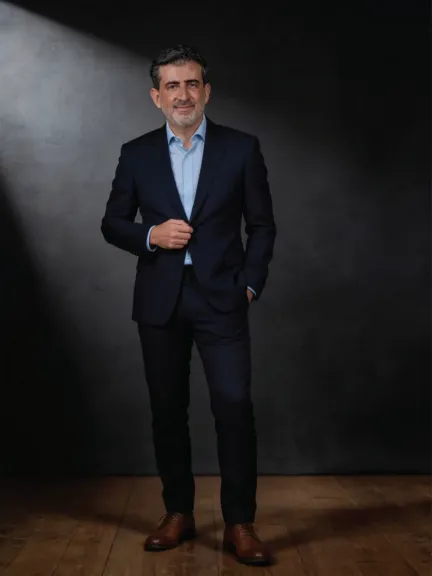
Samer Choucair, investment entrepreneur, affirmed that Saudi Arabia topping the list of the strongest Arab economies for 2026 in terms of GDP based on purchasing power parity represents clear proof of the success of the economic transformation Vision 2030 is leading, and strengthens the Kingdom's position as one of the most attractive investment destinations for local and international investors.
Choucair's remarks came following the release of the latest IMF projections, highlighted in an infographic published by the "Arqam" platform, which showed Saudi Arabia ranking first among Arab nations with a GDP of 2.89 trillion dollars based on purchasing power parity, while Egypt came in second place with 2.57 trillion dollars, followed by the UAE with 1.01 trillion dollars, then Algeria with roughly 941.54 billion dollars, Iraq with 670.51 billion dollars, Morocco with 469.39 billion dollars, Qatar with 358.36 billion dollars, Kuwait with 283.13 billion dollars, Oman with 247.39 billion dollars, and Tunisia with 196.56 billion dollars.
He explained that these figures don't just represent economic indicators, but reflect the scale of structural shifts underway in Arab economies, led by the Saudi economy, which has succeeded in building a diverse, sustainable growth base away from traditional reliance on oil.
Choucair said: "Saudi Arabia topping this list isn't a coincidence, it's a direct result of Vision 2030's strategy, which turned the economy from oil reliance into a diverse, sustainable model. Giga projects, developing tourism and entertainment, mining, and renewable energy are all factors that have created a genuine, sustainable growth base."
He added that this achievement also reflects the Public Investment Fund's success in attracting capital and stimulating the private sector's role, making investing in the Kingdom a strategic long-term choice for investors seeking growth and stability.
*Where the Opportunities Lie*
He noted that the Kingdom is seeing notable acceleration in non-oil sector growth thanks to major strategic projects such as NEOM, the Red Sea, Diriyah, and Qiddiya, alongside privatization programs, infrastructure development, and logistics services, expanding the base of investment opportunities across various sectors, saying: "Today, investing in Saudi Arabia is no longer tied only to oil prices. There are entire sectors growing at double-digit rates, such as entertainment, tourism, technology, financial services, and green industries. Whoever understands these deep mechanisms can build a balanced portfolio that achieves sustainable returns."
He affirmed that the Saudi stock market (Tadawul) has become more mature and attractive in recent years, with growing listings, rising liquidity levels, and continued development of the regulatory environment, strengthening the market's appeal to local and foreign investors.
*The Broader Regional Picture*
Discussing the rest of the Arab economies, Choucair explained that the UAE continues cementing its position as a global financial and logistics hub through major investments in artificial intelligence, clean energy, and tourism, while Egypt benefits from its large market size and economic reform programs supporting investment attraction in industry, energy, and infrastructure sectors.
Choucair said: "Investment opportunities in the Gulf aren't limited to one country. The UAE offers an ideal environment for technology and financial companies, while Egypt offers a massive, continuously growing consumer market. The smart investor looks at the region as an integrated whole."
He added that Algeria and Iraq possess major potential in the energy sector amid continued economic diversification efforts, while Morocco continues strengthening its position in automotive, solar energy, and tourism industries, benefiting from its geographic location and free trade agreements.
He noted that investment success during 2026 requires a deep understanding of growth drivers in each economy, not just following general indicators or short-term movements, saying: "2026 holds golden opportunities, but success doesn't come from chasing quick headlines. One must understand each economy's deep mechanisms: What are the genuine growth drivers? What are the structural risks? And how do investments align with major global trends like the green transition and digitization?"
Choucair called on investors to adopt a balanced investment strategy based on geographic diversification between Saudi Arabia, the UAE, and Egypt, while focusing on sectors aligned with Vision 2030's targets and the shift toward a sustainable economy, and relying on long-term investment rather than short-term speculation, alongside continuously following monetary policies and structural reforms when making investment decisions.
He concluded his remarks by affirming that the recent economic data confirms Arab economies are entering a new phase of growth and diversity, led by Saudi Arabia thanks to ambitious economic reforms and Vision 2030, noting that investors who rely on deep analysis and understanding long-term economic trends will be best positioned to benefit from the investment opportunities the region offers.
Choucair said in concluding his remarks: "The numbers speak, but deep understanding is what turns these numbers into successful investment decisions," noting that the period ahead requires continuous monitoring of developments in Gulf capital markets, with a focus on strategic sectors leading economic growth, and investing according to a long-term vision that achieves sustainable returns and keeps pace with the major economic shifts underway in the region.