
Samer Choucair: AI Is No Longer a Race for the Biggest Models, but for the Most Efficient Use
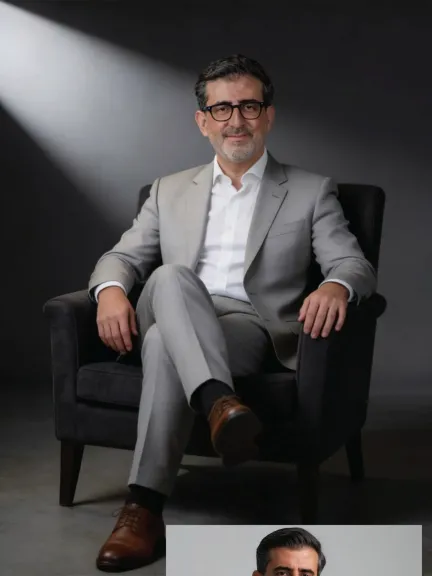
Samer Choucair, investment entrepreneur, affirmed that the accelerating developments in "smart distillation" or knowledge distillation techniques in artificial intelligence represent a strategic turning point in the global economy, and open unprecedented investment horizons for Saudi Arabia to strengthen its position as a regional and global AI hub within Vision 2030's targets.
He explained that the debate circulating on social media platforms, which highlighted the possibility of transferring the capabilities of giant AI models developed with investments reaching hundreds of millions or even billions of dollars into smaller, more efficient models at low cost, reflects a genuine technical shift gaining major momentum during 2026, and redrawing the rules of competition in this vital sector.
He noted that the global race between the United States and China no longer depends only on developing the biggest models, but on the ability to run more efficient, lower-cost, more customizable models, making knowledge distillation technology one of the most important developments in the modern AI industry.
He added that frontier AI models previously required massive investments to train, limiting their development to a limited number of global companies, but distillation technologies have changed this equation by transferring large models' capabilities into smaller, more resource-efficient models, while maintaining high performance levels in logical, mathematical, and analytical tasks.
He explained that this technology relies on training a small model to mimic a large model's performance using less data and more efficient infrastructure, leading to significantly reducing development and operating costs, while providing models that can be easily customized to serve sectors such as energy, healthcare, financial services, and the Arabic language.
Samer Choucair said: "Smart distillation technology doesn't just reduce costs, it enables Saudi Arabia to develop specialized models that directly serve Vision 2030, whether in improving the energy sector's efficiency, developing smart government services, or supporting fintech startups. Smart investing today isn't in building giant models from scratch, it's in the infrastructure and applications that benefit from these capabilities with high efficiency."
*The Kingdom's Energy Advantage*
He affirmed that the Kingdom possesses an important competitive advantage represented by the abundance of traditional and renewable energy sources, a fundamental factor in the AI industry, which relies heavily on electricity, noting that distillation technologies raise model operating efficiency and reduce their energy consumption, strengthening the economic feasibility of investments in data centers and digital infrastructure.
He added: "The Kingdom possesses a unique competitive advantage represented by abundant, renewable energy. Artificial intelligence consumes enormous amounts of electricity, and distillation technologies make operations more efficient. This means investing in data centers and energy sources dedicated to artificial intelligence will achieve sustainable returns over the long term."
He noted that the global competition between the United States and China makes the concept of technical sovereignty more important than ever, affirming that Saudi Arabia has an opportunity to build a balanced technical ecosystem that benefits from the best global partnerships while developing its national capabilities simultaneously, saying: "The race between America and China requires investors to focus on technical sovereignty. Saudi Arabia, through its balanced partnerships, can build strong local capabilities while maintaining access to the latest technologies. The real opportunity lies in companies building infrastructure or developing local applications backed by these distilled models."
*Vision 2030's AI Infrastructure Push*
He explained that these opportunities coincide with the major expansion the Kingdom is experiencing in AI infrastructure, led by the Saudi Data and Artificial Intelligence Authority and HUMAIN, a Public Investment Fund subsidiary, as massive investments are being implemented in advanced computing centers, in cooperation with global companies, through deploying hundreds of thousands of GPU units and building specialized AI factories, alongside establishing integrated zones dedicated to AI applications and cloud computing.
He affirmed that these investments place the Kingdom in an advanced position to benefit from smart distillation technologies, because they reduce the need for massive resources for each new model, and accelerate the development of practical applications serving various economic sectors.
He noted that global projections point to continued strong growth in the AI market in the coming years, with its size reaching roughly 376 billion dollars during 2026, while estimates point to artificial intelligence potentially contributing more than 135 billion dollars to the Saudi economy by 2030, equivalent to roughly 12.4% of GDP.
*Where the Opportunities Lie*
Samer Choucair called on investors and companies in the Gulf to focus on three main pillars: investing in supporting infrastructure, including data centers, renewable energy, and high-speed networks; developing local applications relying on AI models customized for the Arabic language and government services, healthcare, and energy sectors; and building strategic partnerships with national entities and global companies, achieving balance between benefiting from modern technology and preserving technical and data sovereignty.
He concluded his remarks by saying: "Artificial intelligence is no longer a race for who owns the biggest model, but for who uses it most smartly and efficiently. Saudi Arabia today possesses the tools and vision to be at the forefront."
He affirmed that 2026 represents a strategic turning point where global technical progress meets massive national investments and clear developmental will, placing Saudi Arabia in a distinguished position to lead the next phase in the AI economy, while companies and investors who recognize this shift early will benefit most from the coming growth wave in Saudi and Gulf markets.