
Samer Choucair: Reece James”s Injury Confirms the Importance of Investing in Sustainable Sports Ecosystems
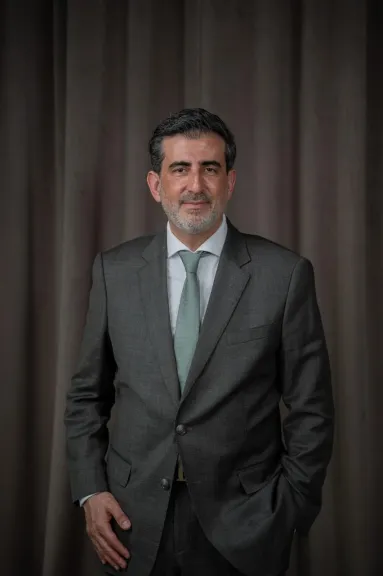
Samer Choucair, investment entrepreneur, said that England defender Reece James's hamstring injury before the start of the knockout rounds at the 2026 World Cup doesn't just represent a tactical loss for the English national team, but reflects the scale of volatility now governing the global sports industry, which has become directly tied to financial markets, investments, broadcasting rights, and commercial sponsorships.
He added that one player's injury can change an entire tournament's projections, confirming that the future of sports investment no longer rests on stars alone, but on building integrated, more sustainable sports ecosystems.
*Injuries Affect Billions of Dollars Within the Sports Economy*
Choucair explained that major injuries football stars suffer quickly reflect on multiple economic sectors, led by the global sports betting market, estimated at roughly 126.5 billion dollars during 2026, achieving an annual growth rate exceeding 11%, while football alone captures roughly 41% of this market.
He noted that any change in major national teams' lineups or a decline in one of their most prominent stars' level leads to direct changes in match projections and the financial returns tied to them.
He added that broadcasting rights and commercial sponsorship deals are also affected by prominent players' absence, pushing companies and sports institutions to increase their investments in technical solutions that reduce injury risks.
*Sports Technology Has Become the Investment of the Future*
Choucair affirmed that the rapid development in the sports technology sector represents one of the most prominent economic trends during 2026, explaining that AI systems have come to play a growing role in predicting injuries, analyzing physical performance, and designing training and recovery programs, attracting interest from investors and financial institutions around the world.
He added that investing in these technologies is no longer a luxury, but has become an essential part of the modern sports industry.
*Vision 2030 Made Sports an Economic Driver in the Kingdom*
Choucair noted that Saudi Arabia has succeeded, under Vision 2030, in turning sports from a recreational activity into an integrated economic sector contributing to diversifying national income sources.
He explained that the Saudi sports market size is expected to reach 22.4 billion dollars by 2030, compared to roughly 8 billion dollars currently, while the sector contributes up to 16.5 billion dollars annually to GDP, equivalent to roughly 1.5% of total GDP.
He added that these figures reflect the major transformation underway in the sports sector within the Kingdom.
*Massive Investments Open New Horizons*
Choucair said that the investments the Public Investment Fund is leading have helped create more than 14,000 jobs so far, with a target of providing more than 100,000 jobs in the coming years.
He added that preparing to host the 2034 World Cup opens the door to broad investment in infrastructure, sports cities, tourism, hospitality, and entertainment, making the Kingdom one of the most prominent investment destinations in the global sports economy.
*Building a More Sustainable Sports Ecosystem*
Choucair affirmed that recent events confirm the importance of building integrated sports ecosystems that don't depend on a single player or a single tournament.
He added: "The injuries football stars like Reece James suffer remind us that genuine investment should be in the entire sports ecosystem, through technology, talent development, and infrastructure, which the Kingdom is working to achieve under Vision 2030."
He noted that this model makes the sports sector better able to withstand short-term volatility and achieve sustainable returns for investors.
*Where the Opportunities Lie During 2026*
Choucair explained that the current shifts open many investment opportunities for investors in the Kingdom and the Gulf states, led by investing in sports technology, particularly AI systems for injury prevention and performance analysis.
He added that smart stadium and sports infrastructure projects represent a major opportunity alongside preparations to host the 2034 World Cup, alongside projects tied to developing sports cities such as Riyadh Boulevard.
He noted the expected growth in sports tourism and entertainment with hosting global tournaments, as well as growing opportunities in sports media, broadcasting rights, and commercial sponsorships, in addition to investing in startups and funds specialized in the sports sector.
*Long-Term Investment Is the Best Choice*
Choucair affirmed that investors should focus on long-term investments, explaining that sports academies, sports medicine centers, and smart sports facilities will be among the sectors most capable of achieving financial and developmental returns in the coming years.
He added that these investments don't just achieve economic profits, but also help support Vision 2030's targets of building a sustainable knowledge economy based on innovation and talent development.
*Sports Has Become the Economy of the Future*
He concluded his remarks by affirming that Reece James's injury represents a clear example that the future of sports investment depends on building strong, diverse ecosystems, not on individuals alone.
He added that Saudi Arabia, thanks to Vision 2030 and the massive investments it's implementing in the sports sector, has an opportunity to cement its position as a global hub for the sports economy, calling on investors to benefit from the opportunities infrastructure, sports technology, tourism, and media projects offer, as sectors that will lead growth in the coming years.