
Samer Choucair: Green Data Centers in Saudi Arabia Represent the Most Important Investment Bet Amid the Escalating Global Water Crisis
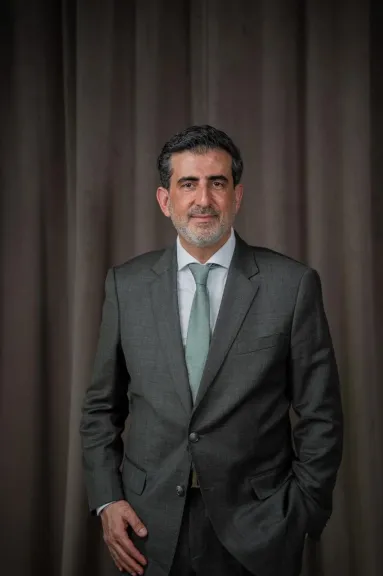
Samer Choucair, investment entrepreneur, said that the aerial image that recently circulated of massive white facilities proposed for construction near the Ogallala Aquifer in the United States reflects a global shift extending beyond being an environmental issue, explaining that it represents a clear indicator of the challenges the rapid expansion of artificial intelligence is placing on natural resources, chiefly water.
He added that proposals for establishing giant data centers above the largest groundwater reservoir in the United States raise genuine concerns about water security, particularly amid the unprecedented increase in demand for digital infrastructure, pushing investors to reassess the markets most capable of achieving sustainability.
*The AI Boom Pressures Water Resources*
Choucair explained that the world is experiencing an accelerating race to establish new data centers to meet growing demand for AI applications and services, noting that American data centers consumed more than 17 billion gallons of water for cooling purposes during 2023, while projections point to consumption rising to between 38 and 73 billion gallons annually by 2028.
He noted that a single Hyperscale data center could consume between 1 and 5 million gallons of water daily, pointing out that nearly two-thirds of new data centers planned or being implemented since 2022 are located in areas already experiencing high water stress, such as Texas, Nebraska, and Kansas, where a number of projects are being proposed above the Ogallala Aquifer, which supports agricultural activity in eight US states.
He affirmed that these developments are leading to growing pressure on farmers and local communities, while also raising operating costs, and pushing global companies to seek new locations offering greater resource sustainability.
*Saudi Arabia Offers a Different Model Led by Vision 2030*
Choucair affirmed that Saudi Arabia has come to offer a different model in the data center sector, thanks to the projects it's implementing under Vision 2030, explaining that the Saudi market is recording a compound annual growth rate of roughly 29% through 2030.
He added that data centers' operational capacity in the Kingdom reached roughly 222 megawatts in early 2025, with plans to add more than 760 new megawatts before the end of the decade, reflecting the scale of expansion the sector is experiencing.
He noted that investments in the sector have exceeded 4.26 billion dollars, while the number of data centers has risen roughly sixfold compared to when Vision 2030 launched.
*Major Projects Strengthen the Kingdom's Position*
Choucair said that a number of giant projects are strengthening the Kingdom's position as a regional hub for digital infrastructure, led by the partnership between NEOM and DataVolt to establish an AI-specialized campus with investments reaching 5 billion dollars, alongside launching a new cloud region for AWS during 2026, in addition to the investments Google and Microsoft are implementing within the Kingdom.
He added that these projects confirm that Saudi Arabia has become a primary destination for digital investments in the region.
*Green Data Centers Represent the Biggest Investment Opportunity*
Choucair explained that the most important element lies in expansion toward green data centers, noting that this market's size in the Kingdom is expected to exceed 4.2 billion dollars by 2034, driven by the availability of solar energy and government policies encouraging sustainability.
He added that advanced liquid cooling technologies, alongside reliance on renewable energy sources, are capable of reducing water consumption to the lowest levels, achieving a more efficient, profitable operating model over the long term.
*A Global Capital Redistribution*
Choucair affirmed that what's happening in the United States isn't just a local crisis, but represents the beginning of a global redistribution of capital, explaining that nations possessing abundant energy sources, alongside effective water resource management, will be most attractive to investment in the coming years.
He added that the Kingdom possesses all the fundamentals qualifying it to benefit from this global shift, particularly amid major government support, advanced infrastructure, and a strategic location connecting three continents.
*The Smart Investor Looks at the Full Value Chain*
Choucair noted that investors no longer focus only on establishing data centers, but have come to look at the full value chain tied to them, encompassing renewable energy projects, modern cooling technologies, and supply chains, in addition to partnerships with major entities, led by the Public Investment Fund.
He added that economic indicators during 2026 reflect a clear acceleration in this direction, particularly with the launch of new cloud regions, and the continued expansion of AI projects within the Kingdom.
*Investment Recommendations for Gulf Investors*
Choucair affirmed that global demand for artificial intelligence will keep data centers at the forefront of economic growth driving sectors, but success will belong to investors who adopt a sustainability-based model.
He noted that the most prominent investment opportunities lie in investing in solar-powered green data center projects, entering partnerships with NEOM projects and special economic zones, expanding into advanced cooling technologies and related supply chains, and capitalizing on government incentives and partnerships with the private sector and sovereign funds.
He concluded his remarks by affirming that the genuine opportunity is no longer limited to establishing new data centers, but lies in building an integrated, sustainable digital ecosystem, noting that Saudi Arabia possesses the fundamentals qualifying it to become a global hub for the digital economy by 2030 and beyond, thanks to combining renewable energy, government support, massive investment, and commitment to sustainability.