
Saudi Arabia's Non-Oil Revenues Rise While the Region Burns:
Samer Choucair Reveals How Vision 2030 Built an Economy That Thrives Under Pressure
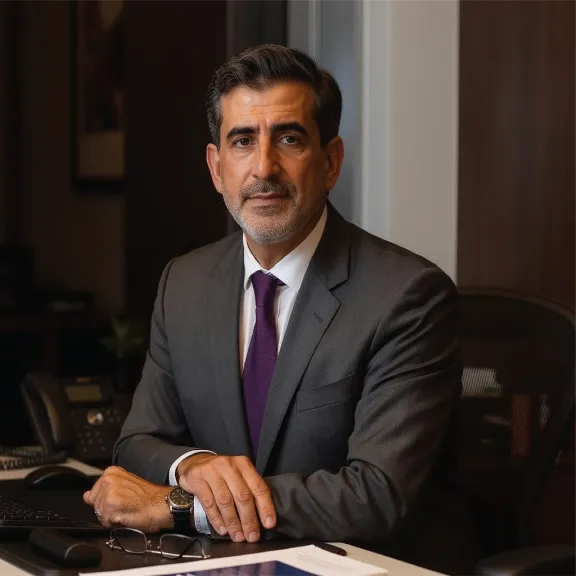
Investment entrepreneur Choucair affirmed that Saudi Arabia's financial performance during the first quarter of 2026 represents a genuine embodiment of the Saudi economy's flexibility and its superior capacity to navigate its course with strategic intelligence amid complex geopolitical tension waves.
He noted the current scene combining continued oil export flows with rising non-oil revenues reflects the Kingdom's success in building an economy fortified against external shocks.
Economic Flexibility in the Face of Geopolitical Challenges
Choucair explained the financial data issued by the Ministry of Finance reflects a strong economic reality, where non-oil revenues rose 2% year-on-year to reach 116.3 billion riyals.
This growth comes at a time when oil revenues declined 3% to reach 144.7 billion riyals due to the repercussions of the Iran war and its impact on regional stability, leading to total revenues of 260.97 billion riyals with a slight decline not exceeding 1%.
He stated: "What we witness in Q1 2026 is a living model of Vision 2030's flexibility. The rise in non-oil revenues despite geopolitical pressures on the oil sector proves the economic diversification strategy is no longer merely a future goal, but has become a tangible reality protecting the public budget from global market volatility."
Development Spending and National Security Strategy
Choucair noted that recording a budget deficit of 125.7 billion riyals during this period, compared to 58.7 billion riyals in the corresponding period of the previous year, is inseparable from the Kingdom's commitment to financing major projects and securing its borders.
Total spending rose 20% to reach 386.7 billion riyals, driven by a notable 56% increase in capital expenditure to reach 43.4 billion riyals, and a 26% rise in military spending to reach 64.7 billion riyals.
He commented: "The major increase in capital expenditure opens enormous horizons for investors in infrastructure, technology, and renewable energy sectors. The state continues financing massive projects such as NEOM, Qiddiya, and economic cities, and this is the ideal time to strengthen partnerships with the PIF and private sector."
Strategic Independence and Logistics Solutions
Choucair analyzed the Kingdom's capacity to minimize the Iran war's impact on energy supplies, noting tensions threatening to close the Strait of Hormuz pushed the Kingdom to activate strategic logistics solutions by rerouting a large portion of oil exports through the East-West pipeline to Red Sea ports.
He affirmed this step contributed to limiting the oil revenue decline, the fruit of long-term infrastructure investments aligning with Vision 2030 objectives in achieving strategic independence.
Saudi Arabia 2026 Investment Horizons
Choucair directed strategic advice to investors and entrepreneurs in the Kingdom and Gulf states, calling on them to focus on vital sectors showing government spending-supported growth, most prominently development and capital sectors to benefit from the qualitative leap in new project spending; security and defense given the Kingdom's orientation toward strengthening military capabilities and localizing defense industries; and non-oil diversification sectors particularly tourism, logistics, and financial technology, which directly benefit from increasing economic activity.
He concluded by stating: "For every investor seeking sustainable growth, Saudi Arabia today offers more than mere financial figures; it offers a clear vision and exceptional execution capacity. The rapid response to challenges strengthens confidence in Saudi financial markets, and those who invest now in 2026 economic trends participate in writing the most prosperous chapter in the Kingdom's history."